
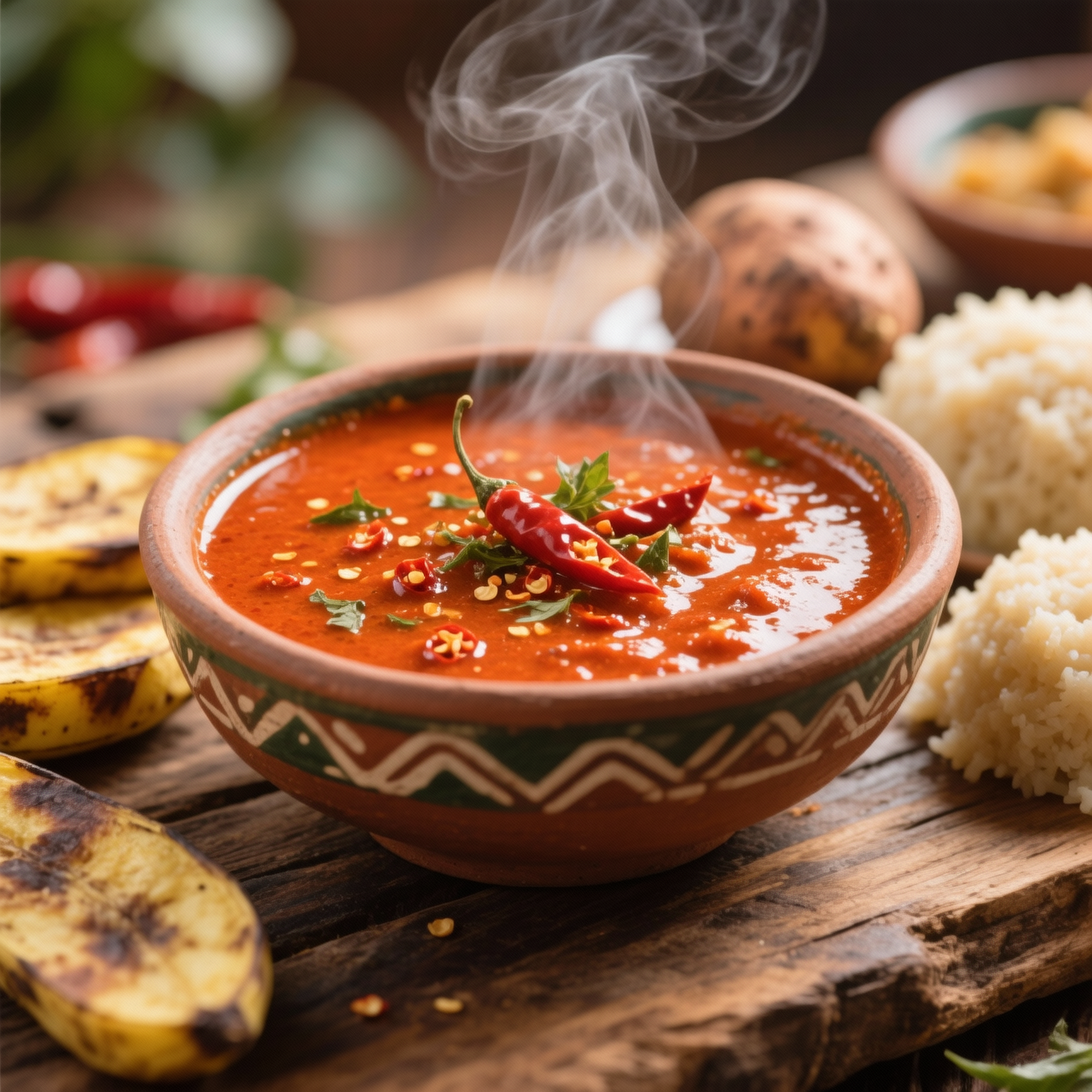
Pepper sauce (ata din din)
I first learned the rhythm of ata din din in a cramped Lagos kitchen where the air hung heavy with the sharp, fruity perfume of scotch bonnets meeting sizzling palm oil. This is not merely a condiment in West Africa; it is a foundational flavor engine, a spicy and deeply aromatic paste that transforms simple staples like roasted yam, beans, or jollof rice into profoundly satisfying meals. What makes this sauce so vital is its alchemy of patience and controlled heat. You must allow the blended peppers, onions, and tomatoes to simmer down until the raw, grassy bite completely surrenders to a rich, glossy concentrate. Too many home cooks rush this crucial stage, leaving behind a watery, acidic mixture that separates and stings the tongue. The real secret lies in frying the base slowly in generous vegetable oil until all excess moisture evaporates and the oil begins to pool on the surface, signaling that the peppers have properly caramelized. Another frequent mistake is overcrowding the skillet, which forces the peppers to steam rather than fry. When executed correctly, the heat builds gradually, warming the palate without overwhelming it. I treat this sauce as a reliable batch hero because it only deepens in complexity as it rests, making it an indispensable pantry staple that carries the vibrant spirit of the coast in every jar.
Nutrition
| Per serving | Calories | Protein | Carbs | Fat | Sat fat | Fibre | Sugar | Sodium |
|---|---|---|---|---|---|---|---|---|
| beginner | 135kcal | 2g | 11g | 9g | 1g | 3g | 6g | 280mg |
| intermediate | 165kcal | 2g | 14g | 12g | 2g | 4g | 7g | 380mg |
| expert | 310kcal | 3g | 12g | 28g | 4g | 4g | 8g | 390mg |
Per serving · Ava-estimated — a guide, not a clinical figure.
- 150 gscotch bonnet pepper— Roughly chopped before blending; remove seeds to reduce heat
- 400 gtomato— Ripe and cored
- 200 gred bell pepper— Traditionally known as tatashe; cored and roughly chopped
- 150 gyellow onion— Peeled and roughly chopped
- 25 gfresh ginger— Peeled
- 20 ggarlic— Peeled
- 120 mlvegetable oil— High-smoke-point oil recommended for frying and preservation
- 8 gfine sea salt— Adjust to taste during cooking
- 2 gdried thyme(optional)— Adds aromatic depth to the base
This beginner-friendly approach to ata din din prioritizes safety and consistency over traditional labor. We skip the tedious hand-chopping by using a standard blender or food processor to quickly puree your tomatoes, bell peppers, and scotch bonnets. If you want to save even more time, pre-peeled garlic or a high-quality tomato paste base can stand in for fresh prep. The key to mastering this sauce without burning it lies in the controlled fry-down phase. You will start with a generous amount of neutral oil to create a protective barrier, then gently simmer the blended mixture until it thickens and the raw, grassy notes disappear. Watch for the oil to separate and rise to the surface—that is your visual cue that the sauce is properly cooked and ready. We keep the heat at medium-low throughout to prevent scorching, which is the most common beginner pitfall. By the end, you will have a vibrant, deeply aromatic pepper base that can be spooned over rice, beans, or proteins immediately, or portioned into airtight containers for the freezer. This method guarantees a foolproof first batch with zero guesswork.
Equipment
- Heavy-bottomed skillet— cast iron or stainless steel works best for even heat
- Blender or food processor— ensure lid is secure before running
- Heatproof silicone spatula— for constant stirring without scratching the pan
- Disposable kitchen gloves(optional)— highly recommended when handling hot peppers
Method
- 1
Blend tomatoes, bell peppers, onions, scotch bonnets, garlic, and ginger until completely smooth.
Wear gloves to protect your hands and eyes from capsaicin.
pureeing~ 2 min - 2
Pour a generous layer of neutral oil into a heavy skillet and heat over medium until it shimmers.
Do not rush this; cold oil will make the sauce greasy.
heating~ 1 min - 3
Add diced onions and a pinch of salt, cooking until they soften and turn translucent.
Stir constantly to prevent sticking.
sweating~ 3 min - 4
Carefully pour the blended pepper mixture into the hot oil.
Expect a loud sizzle and stand back slightly to avoid splatters.
blooming~ 1 minTricky bit - 5
Reduce heat to low and simmer uncovered, stirring every few minutes until the water evaporates and the oil separates to the top.
This slow reduction concentrates flavor and removes the raw tomato taste.
reducing~ 15 min - 6
Stir in your preferred seasoning blend and cook for one final minute before removing from heat.
Taste cautiously with a clean spoon; adjust salt only if needed.
finishing~ 1 min
Cooking from frozen
Thaw overnight in the refrigerator, then warm gently in a saucepan while stirring until fully heated through.
Storage times are a guide — always use your judgement and store food safely.