
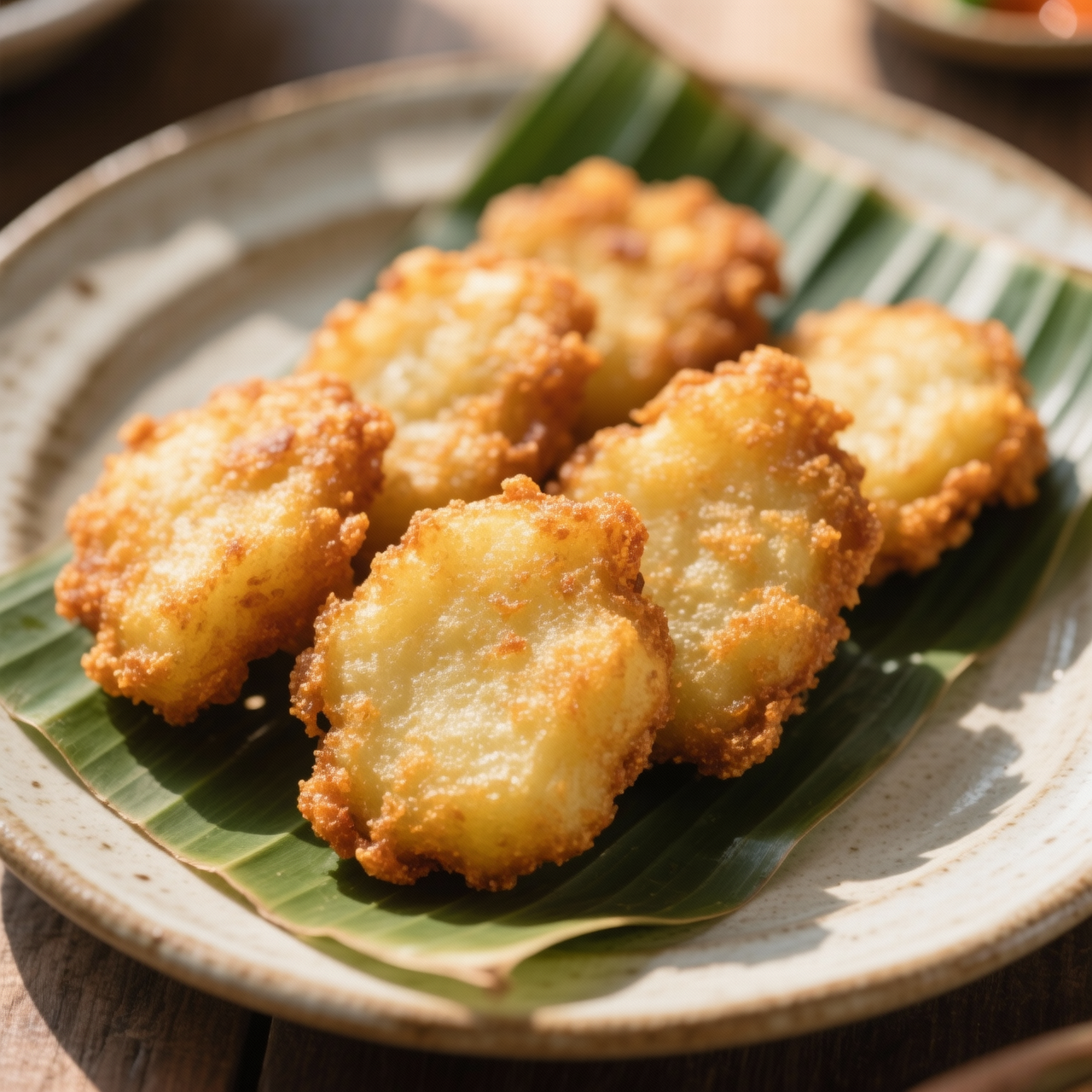
Perkedel (Potato Fritters)
Perkedel arrived in the Indonesian archipelago through Dutch colonial influence, evolving from the European potato patty into something entirely our own. Where the original relied heavily on minced meat and heavy spices, Indonesian cooks transformed it into a humble, deeply savory celebration of mashed potatoes, fresh shallots, and fragrant fried garlic. This matters because it represents the quiet ingenuity of home kitchens that turn the most basic root vegetables into something profoundly comforting. Yet, modern supermarkets have tried to package this heritage into greasy, pre-formed frozen discs that cost nearly four times more than the fresh ingredients combined. Those shop-bought imposters rely on industrial stabilizers, artificial umami boosters, and overly processed starches to mimic texture, sacrificing the delicate, earthy sweetness of real potatoes and the bright bite of fresh celery leaf. When I make perkedel from scratch, I refuse to compromise with packet mixes or canned stock. The process is straightforward but demands respect: boil the potatoes until just tender so they don’t turn gluey, mash them while warm, and fold in finely minced aromatics without overworking the mixture. The most common pitfall is adding too much binder or frying at too low an oil temperature, which causes the fritters to absorb grease and crumble on contact. By keeping your hands lightly oiled and chilling the shaped patties before frying, you achieve that perfect golden crust and tender, steamy center. This from-scratch approach isn’t just about avoiding processed shortcuts; it’s about reclaiming a dish that connects generations through simple, honest ingredients.
Nutrition
| Per serving | Calories | Protein | Carbs | Fat | Sat fat | Fibre | Sugar | Sodium |
|---|---|---|---|---|---|---|---|---|
| beginner | 285kcal | 4g | 44g | 11g | 2g | 3g | 3g | 360mg |
| intermediate | 215kcal | 4g | 27g | 10g | 2g | 2g | 1g | 520mg |
| expert | 350kcal | 8g | 46g | 15g | 3g | 5g | 2g | 410mg |
Per serving · Ava-estimated — a guide, not a clinical figure.
- 500 gpotato— peeled and cubed before boiling
- 50 gshallot— finely minced
- 10 ggarlic— minced
- 15 gcelery leaf— finely chopped
- 20 gscallion— white and light green parts only, thinly sliced
- 2 largeegg— lightly beaten
- 30 gall-purpose flour— for binding and freezing stability
- 1 gground nutmeg
- 5 gsalt— adjust to taste
- 2 gblack pepper— freshly ground
- 500 mlvegetable oil— for deep frying
Store-bought frozen potato patties often rely on hydrogenated oils, excessive sodium, and artificial stabilizers, costing around $6 for a bland, cardboard-textured box of four. This beginner-friendly version strips away the processing while keeping the technique forgiving. You will work entirely from whole ingredients: waxy potatoes boiled until tender, gently mashed by hand, and bound with a simple cornstarch slurry instead of tricky egg washes that can make beginners anxious. The flavor base uses freshly minced shallots, garlic, celery leaves, salt, white pepper, and freshly grated nutmeg—ingredients you likely have or can easily find at any grocery store. The key to success here is moisture control; drain the boiled potatoes thoroughly and let them steam-dry in a colander before mashing to prevent a gummy interior. Shape the mixture into thick, uniform discs and chill them briefly so they hold together in the pan. Fry them in neutral oil over steady medium heat until golden and crisp. This method yields a tender, deeply savory fritter that scales effortlessly. Once shaped, the raw patties freeze beautifully between parchment sheets, giving you a ready-to-cook, unprocessed staple that outperforms any supermarket alternative.
Equipment
- Heavy-bottomed skillet— cast iron or stainless steel retains steady heat for even browning
- Potato masher— a ricer works for ultra-smooth results but is not required
- Colander— essential for draining and initial steam-drying
Method
- 1
Peel the waxy potatoes and cut them into uniform two-inch cubes.
Consistent sizing guarantees even cooking and prevents mushy edges.
dicing~ 3 min - 2
Submerge the potato cubes in a large pot of cold, heavily salted water and bring to a rolling boil.
Starting in cold water allows the interior to cook evenly before the exterior softens.
boiling~ 5 min - 3
Reduce the heat to medium and simmer until a paring knife slides through the pieces with zero resistance.
Test one piece near the center of the pot for accuracy.
simmering~ 15 minTricky bit - 4
Drain the potatoes completely and return them to the hot pot to steam-dry over residual heat for three minutes.
Removing surface moisture prevents the final patties from becoming gummy.
drying~ 3 min - 5
Mash the potatoes until completely smooth, then fold in finely minced shallots, garlic, chopped celery leaves, salt, white pepper, and freshly grated nutmeg.
Mix gently to incorporate aromatics without breaking down the potato structure further.
folding~ 4 min - 6
Sprinkle cornstarch evenly over the warm mixture and knead lightly until the dough holds together firmly without crumbling.
Cornstarch provides a reliable, beginner-proof binder that crisps beautifully when fried.
binding~ 2 min - 7
Divide the dough into twelve equal portions and press each into a flat, half-inch thick disc.
Round the edges slightly with your thumb to seal them and prevent cracking during frying.
shaping~ 4 min - 8
Heat a quarter-inch of neutral oil in a heavy skillet over medium heat and fry the discs until deeply golden and crisp on both sides.
Maintain steady heat and do not overcrowd the pan to ensure proper crust formation.
pan-frying~ 8 minTricky bit - 9
Transfer the cooked patties to a wire cooling rack set over a baking sheet to drain excess oil.
Avoid paper towels, which can trap steam and soften the crispy exterior.
draining~ 2 min
Cooking from frozen
Fry directly from frozen in medium-hot oil until golden and heated through.
Storage times are a guide — always use your judgement and store food safely.