
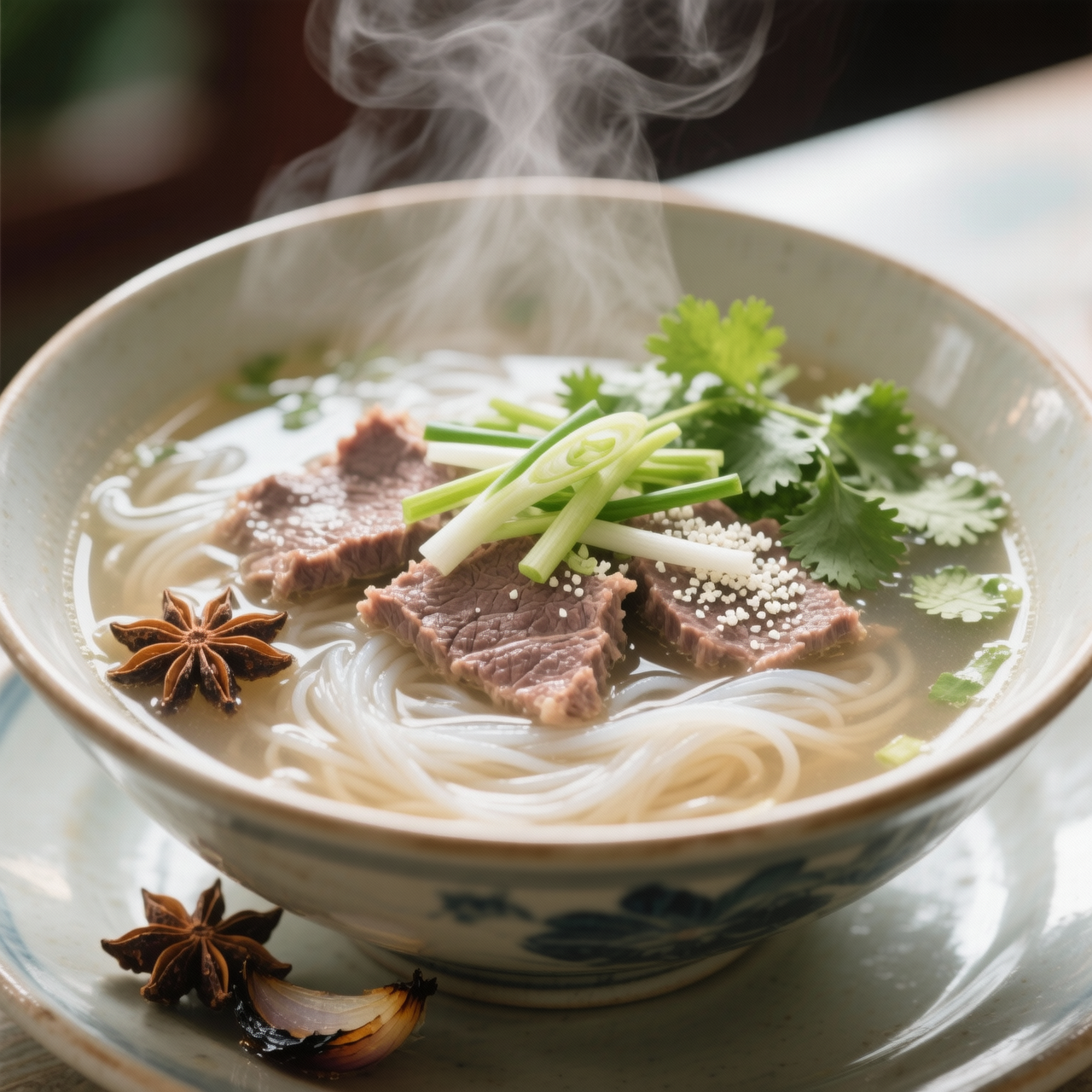
Pho Broth
I remember the first time I tasted properly made pho broth on a humid morning in Hanoi; it wasn’t just soup, it was liquid patience. The real magic happens long before the noodles hit the bowl, born from hours of coaxing collagen, marrow, and toasted spices from beef bones. Today, we’ve grown accustomed to grabbing a jar of concentrated paste or a packet of cubes from the supermarket aisle for a few dollars. It’s cheap, sure, but it delivers nothing but a sodium-heavy, one-dimensional salty splash that completely misses the gelatinous silkiness and layered aromatics that make pho what it is. Making it from scratch is non-negotiable if you want that depth. The most common mistake I see is skipping the dry-roasting of ginger and onions until they’re properly blackened, which robs the stock of its essential smoky sweetness. Another is boiling the bones aggressively instead of maintaining a lazy, glassy simmer, which emulsifies the fat and turns your broth cloudy. You have to skim relentlessly, let the star anise, cinnamon, and cloves steep like a gentle tea, and trust the clock. When you finally lift that lid after four or five hours, the kitchen smells like a quiet temple, and the broth coats your spoon with a rich, unctuous weight that no factory shortcut can replicate. It’s a batch hero for a reason, because once you taste the real thing, you’ll never go back to the powdered imposters.
Nutrition
| Per serving | Calories | Protein | Carbs | Fat | Sat fat | Fibre | Sugar | Sodium |
|---|---|---|---|---|---|---|---|---|
| beginner | 55kcal | 6g | 2g | 2g | 1g | 0g | 1g | 680mg |
| intermediate | 85kcal | 10g | 3g | 4g | 2g | 0g | 2g | 480mg |
| expert | 90kcal | 14g | 5g | 3g | 2g | 0g | 3g | 620mg |
Per serving · Ava-estimated — a guide, not a clinical figure.
- 1000 gBeef marrow bone— Rinsed and blanched to remove impurities
- 1000 gBeef knuckle bone— Split for maximum gelatin extraction
- 300 gYellow onion— Halved through the root end
- 100 gFresh ginger— Unpeeled and halved lengthwise
- 60 mlFish sauce— Vietnamese style for authentic umami depth
- 40 gRock sugar— Clear yellow lumps preferred over granulated
- 8 piecesStar anise— Whole dried pods
- 2 piecesCinnamon stick— Ceylon or Saigon variety
- 5 gWhole clove— Lightly toasted to release oils
- 5 gCoriander seed— Dry roasted until fragrant
- 3 gFennel seed— Dry roasted until fragrant
- 15 gKosher salt— Added incrementally to adjust final seasoning
- 4000 mlFiltered water— Enough to cover bones by at least five centimeters
This beginner-friendly approach strips traditional pho broth down to its essential, foolproof steps without relying on processed stock cubes or jarred pastes. Store-bought pho broths typically cost four to six dollars per quart and are packed with artificial flavor enhancers, excessive sodium, and preservatives that mask the true depth of slow-simmered bones. Here, you will build a deeply savory, clear stock using real beef bones, charred aromatics, and whole spices for a fraction of the price. The main difference from advanced methods is a streamlined roasting and simmering process: instead of blanching bones multiple times or toasting every spice individually, we will use a high-heat oven roast to quickly draw out impurities and develop a rich, clean flavor in one go. Keep an eye on the simmering stage; a gentle bubble, not a rolling boil, is crucial to prevent the broth from turning cloudy or bitter. Skim any foam that rises during the first twenty minutes, then let it quietly work its magic. This forgiving method guarantees a restaurant-quality foundation for your bowls while requiring minimal active supervision. Once strained, portion and freeze it for instant, wholesome meals on busy weeknights.
Equipment
- Heavy stockpot or Dutch oven— 8-quart minimum for bone clearance
- Rimmed baking sheet— for oven roasting
- Fine-mesh strainer— essential for clear broth
Method
- 1
Preheat oven to 400F and arrange the beef bones, onion halves, and ginger on a rimmed baking sheet.
Spread in a single layer to ensure even heat distribution.
roasting~ 20 min - 2
Transfer the roasted bones and aromatics into a large heavy pot and cover completely with cold water.
Starting cold draws out collagen gradually for a clearer stock.
cold_start~ 3 min - 3
Bring the pot to medium heat and carefully skim the gray foam from the surface as it appears.
A slotted spoon works best here; discard the scum.
skimming~ 8 minTricky bit - 4
Reduce the heat to the lowest setting so the liquid barely shimmers, then cover halfway.
A rolling boil will emulsify fat and turn the broth cloudy.
simmering~ 120 min - 5
Pour the finished liquid through a fine-mesh strainer into a clean bowl and season with fish sauce and salt.
Press gently on solids to extract maximum liquid, then discard the rest.
straining~ 5 min
Cooking from frozen
Thaw overnight in the fridge, then gently reheat on the stove until steaming, skimming any solidified fat first.
Storage times are a guide — always use your judgement and store food safely.