
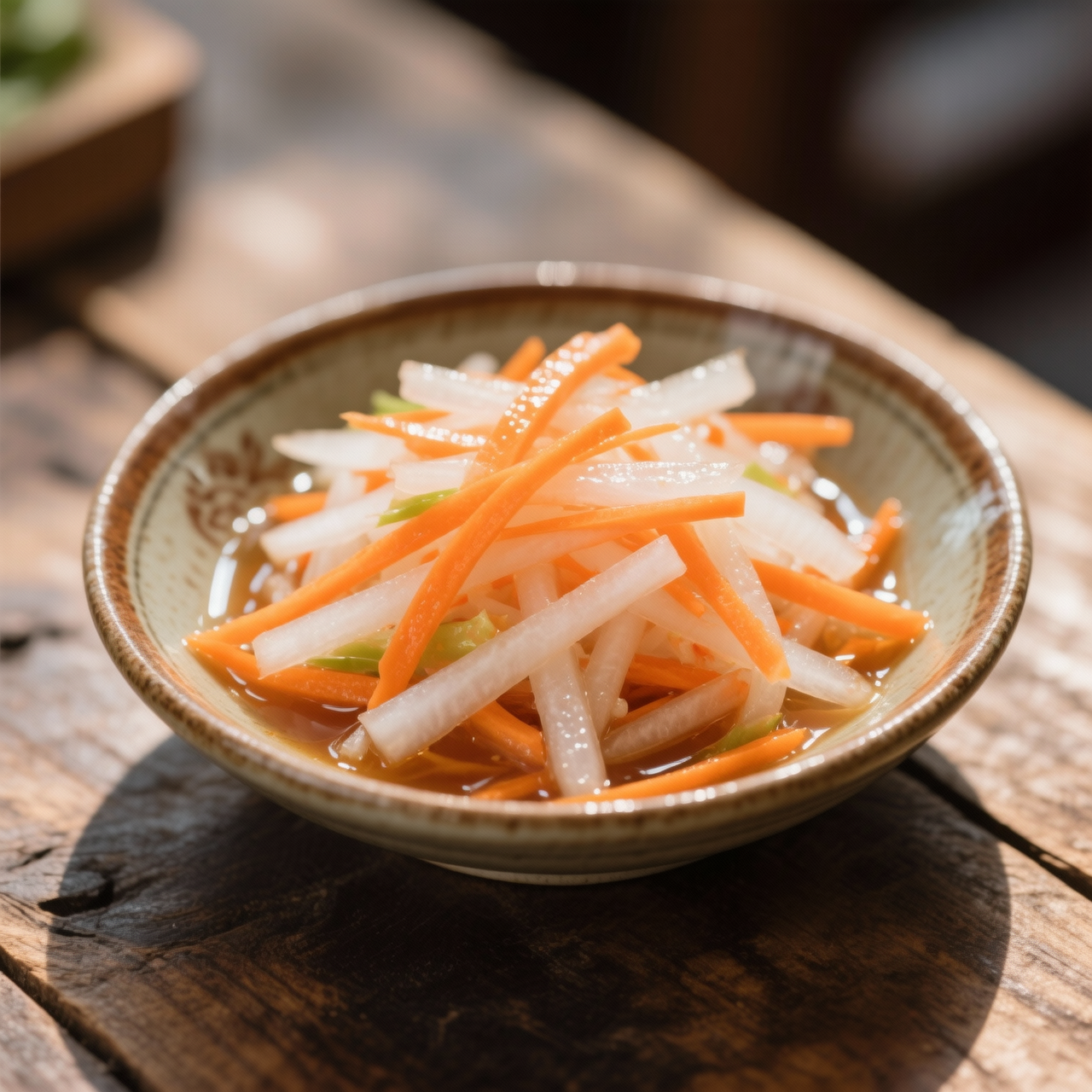
Pickled Carrot & Daikon (Do Chua)
I’ve spent years perfecting the crunch, and nothing captures the soul of a Vietnamese pantry quite like đồ chua. Born out of necessity in the bustling markets and humble home kitchens of Vietnam, this quick-pickled carrot and daikon radish started as a practical way to preserve the summer harvest, but it quickly became the bright, acidic backbone of the banh mi. When I first tried making it at home, I made the classic mistake of drowning the vegetables in vinegar and waiting too long, which turned them into sad, mushy spears rather than the crisp, snap-ready batons you need. The secret, I learned, lies in the balance: a gentle sugar-vinebrine, a quick salt massage to draw out excess moisture, and a brief resting period that lets the flavors marry without sacrificing texture. Too much salt and they turn leathery; too little time in the brine and they taste like raw, watery sticks. What makes đồ chua so essential isn’t just its tang—it’s how it cuts through rich, fatty meats and rich pâtés, bringing every bite into sharp focus. It’s a humble condiment, but when done right, it transforms a sandwich from good to unforgettable. I treat every batch like a small ritual, slicing uniformly, tasting the brine, and trusting the quiet chemistry of acid and time. If you rush it, you’ll lose the magic, but if you let it sit just long enough, you’ll have a jar that keeps your banh mi bright, balanced, and deeply authentic for weeks.
Nutrition
| Per serving | Calories | Protein | Carbs | Fat | Sat fat | Fibre | Sugar | Sodium |
|---|---|---|---|---|---|---|---|---|
| beginner | 45kcal | 0g | 11g | 0g | 0g | 2g | 9g | 320mg |
| intermediate | 28kcal | 1g | 7g | 0g | 0g | 2g | 6g | 380mg |
| expert | 35kcal | 1g | 9g | 0g | 0g | 2g | 7g | 380mg |
Per serving · Ava-estimated — a guide, not a clinical figure.
- 200 gcarrot— Peeled and cut into uniform matchsticks
- 200 gdaikon radish— Peeled and cut into uniform matchsticks
- 120 mlrice vinegar— Unseasoned
- 120 mlwarm water
- 50 ggranulated sugar
- 5 gkosher salt
This beginner-friendly version of Do Chua strips away the intimidation factor by using a straightforward quick-pickle method instead of traditional long ferments. We rely on pre-measured pantry staples and a simple hot-brine technique that guarantees crisp, tangy results in under twenty minutes. You will use a standard glass jar and a basic saucepan, with clear visual and textural cues to ensure your vegetables stay snappy rather than turning mushy. The key is keeping the brine at a gentle simmer—never a rolling boil—to preserve the vinegar’s bright acidity and prevent overcooking the roots. Watch for the exact moment the sugar and salt fully dissolve before pouring; undissolved granules will settle at the bottom and create uneven seasoning. Slice your carrots and daikon into uniform matchsticks using a box grater or julienne peeler so every piece pickles at the same rate. Once packed tightly into a clean, dry jar, the hot liquid should just cover the vegetables. Let it cool completely on the counter before sealing and refrigerating. Within two hours, your condiment is ready to brighten banh mi or rice bowls, and it safely keeps in the fridge for up to three weeks.
Equipment
- Medium saucepan— Stainless steel or non-stick works well
- Glass mason jar— 16-ounce capacity with tight-fitting lid
- Box grater or julienne peeler(optional)— Aim for uniform quarter-inch strips
- Liquid measuring cup— For accurate water-to-vinegar ratio
Method
- 1
Peel and slice the carrots and daikon into uniform quarter-inch matchsticks using a box grater or julienne peeler.
Uniform thickness ensures even pickling and prevents mushy edges.
julienning~ 5 min - 2
Combine water, rice vinegar, granulated sugar, and fine sea salt in a medium saucepan over medium heat.
Use a standard one-to-one water-to-vinegar ratio for reliable acidity.
dissolving~ 3 min - 3
Tightly pack the raw vegetables into a clean, dry glass jar, leaving exactly one inch of headspace at the top.
Press down gently with a wooden spoon to eliminate large air pockets.
tamping~ 2 min - 4
Carefully pour the hot, fully dissolved brine over the vegetables until they are completely submerged, then let the jar sit uncovered at room temperature.
Wait until the glass feels cool to the touch before sealing the lid to prevent warping.
steeping~ 30 minTricky bit
Storage times are a guide — always use your judgement and store food safely.