
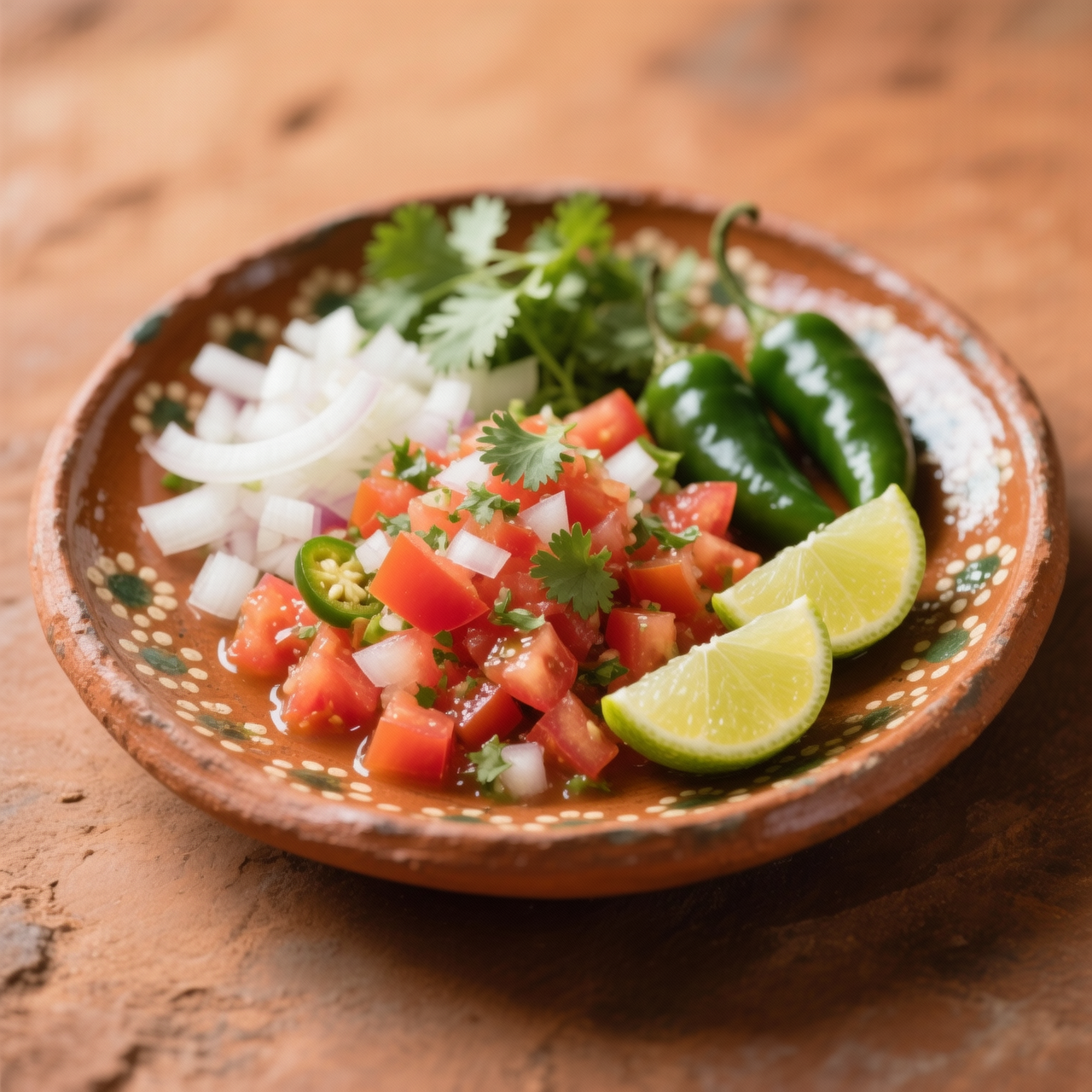
Pico de Gallo
I often think about how the vibrant, soulful essence of Mexican cuisine is captured so perfectly in Pico de Gallo. Known traditionally as salsa fresca, this uncooked condiment traces its roots back to the indigenous peoples of Mexico, long before European contact. It matters because it represents the absolute pinnacle of fresh produce, relying entirely on the exceptional quality of its raw components rather than complex cooking techniques. Common pitfalls include using underripe, mealy tomatoes, failing to deseed the jalapeños, or drowning the mixture in lime juice until it becomes a soggy mess. The secret is a precise dice and allowing the flavors to marry briefly. When you look at shop-bought alternatives, usually found in plastic tubs in the refrigerated aisle or glass jars, they typically cost around three to five dollars for a small portion. The problem with these commercial versions is glaring: they are loaded with preservatives, citric acid, and excessive sodium to extend shelf life, which completely flattens the bright, natural flavors. The texture is invariably mushy, and the onions are often pickled to prevent spoilage rather than providing a fresh bite. By making Pico de Gallo from scratch, you bypass these processed shortcuts entirely. You get a crisp, luminous salsa that actually tastes like a garden, delivering a superior crunch and authentic flavor that a mass-produced, plastic-tubbed imitation could never hope to achieve. It is a simple triumph of real ingredients over industrial convenience.
Nutrition
| Per serving | Calories | Protein | Carbs | Fat | Sat fat | Fibre | Sugar | Sodium |
|---|---|---|---|---|---|---|---|---|
| beginner | 60kcal | 2g | 12g | 0g | 0g | 2g | 4g | 500mg |
| intermediate | 33kcal | 1g | 7g | 0g | 0g | 1g | 4g | 575mg |
| expert | 120kcal | 5g | 22g | 1g | 0g | 6g | 12g | 300mg |
Per serving · Ava-estimated — a guide, not a clinical figure.
- 500 gtomato— Roma or vine-ripened, ripe but firm
- 100 gwhite onion— peeled
- 30 gjalapeño— stemmed
- 20 gcilantro— fresh, washed and dried
- 30 mllime juice— freshly squeezed
- 5 gsalt— fine sea salt
This beginner approach focuses on simple, forgiving knife skills and a crucial resting step to prevent a watery salsa. While shop-bought tub salsas cost $4 to $8 and rely on preservatives, citric acid, and pureed bases that result in a muted, soggy texture, this from-scratch method delivers a bright, crisp, and vibrant dip. You don't need a perfect restaurant dice; just aim for small, even chunks. The key trick for beginners is salting the diced tomatoes and letting them drain in a colander for 10 minutes before mixing. This simple step concentrates the tomato flavor and keeps the salsa beautifully chunky rather than turning into a watery soup. It’s a foolproof, fresh alternative that takes minimal effort but tastes worlds apart from the processed, overly acidic fridge-aisle versions, proving that real ingredients need no shortcuts. Store any leftovers in an airtight container in the refrigerator for up to three days, though it is always best enjoyed immediately.
Equipment
- Cutting board— Large enough to hold all diced vegetables comfortably
- Chef's knife— Sharp enough to easily slice through tomato skins without crushing the flesh
- Colander— For draining the salted tomatoes
- Mixing bowl— Medium sized for tossing the final salsa
Method
- 1
Wash the tomatoes, jalapeño, and cilantro thoroughly under cold running water.
Pat the tomatoes completely dry before cutting to prevent slipping.
preparation~ 2 min - 2
Cut the tomatoes in half, scoop out the watery seeds, and dice the flesh into small, even chunks.
Removing the seeds prevents the salsa from becoming too watery.
dicing~ 5 min - 3
Place the diced tomatoes in a colander, toss with a pinch of salt, and let them drain for 10 minutes.
This draws out excess liquid and concentrates the tomato flavor.
macerating~ 10 min - 4
Finely dice the white onion and mince the jalapeño, removing the seeds and ribs if you prefer less heat.
Wash your hands immediately after handling jalapeños and avoid touching your eyes.
mincing~ 3 minTricky bit - 5
Roughly chop the fresh cilantro leaves and tender stems.
The tender stems pack just as much flavor as the leaves.
chopping~ 1 min - 6
Transfer the drained tomatoes to a mixing bowl, add the onion, jalapeño, cilantro, lime juice, and remaining salt, then gently fold together.
Taste and adjust salt or lime juice as needed before serving.
folding~ 2 min
Storage times are a guide — always use your judgement and store food safely.