
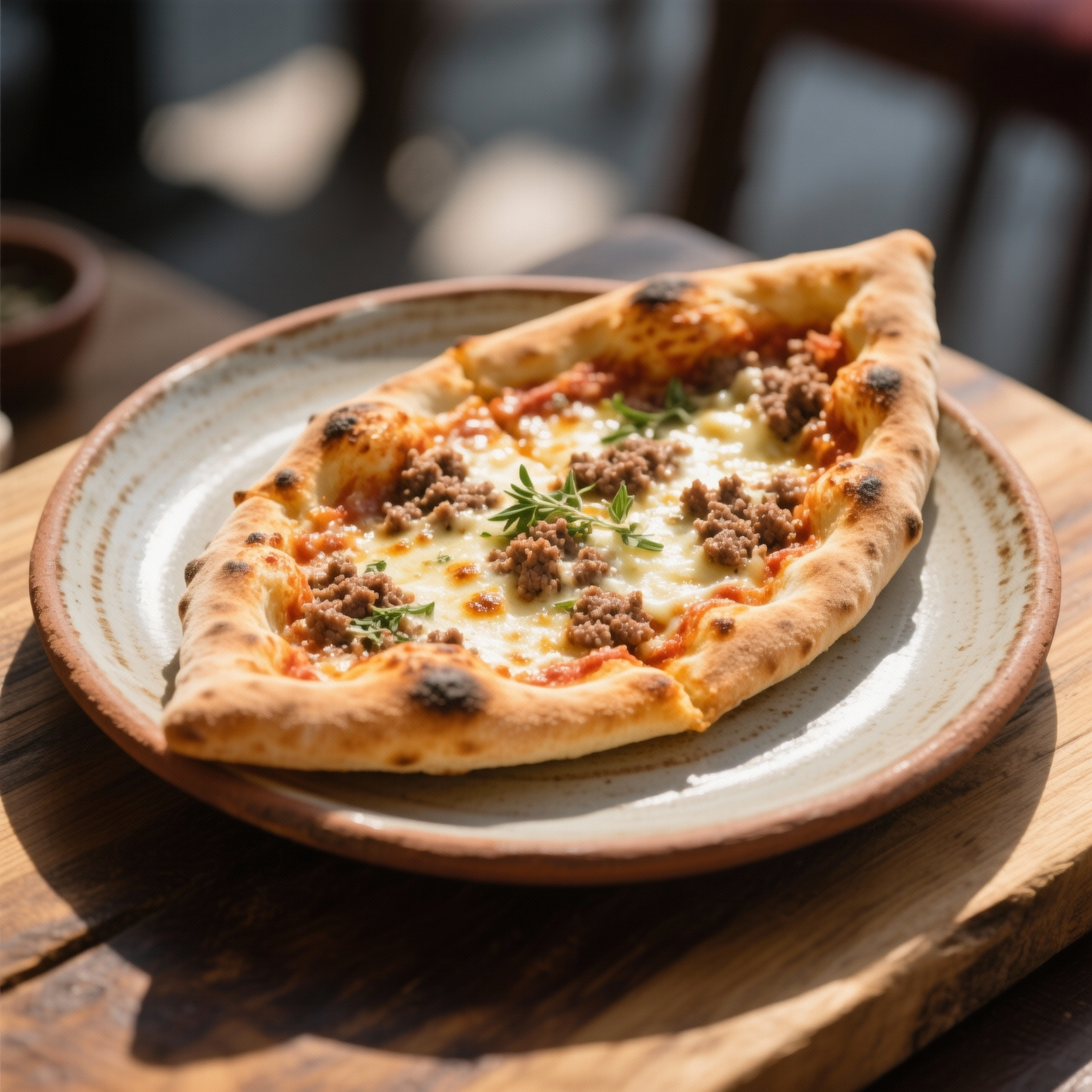
Pide (Turkish boat bread)
Pide, often called Turkish pizza, has anchored my kitchen for years as a quiet rebellion against the heavy, overpriced takeaway boxes that clutter our local high street. Born from the wood-fired bakeries of Anatolia and the Black Sea coast, this boat-shaped flatbread was originally a practical canvas for shepherds and travellers to carry their meals. When you slice into a freshly baked pide, you are tasting a centuries-old rhythm of fermentation and fire, not a factory line. A standard takeaway portion easily runs to ten or twelve pounds, delivering a dough that tastes suspiciously of preservatives, a greasy cheese slick that congeals within minutes, and a topping ratio so skewed that the bread becomes an afterthought. Making it from scratch completely flips that equation. The magic lies entirely in a slow, cold-fermented dough that develops genuine wheat sweetness, paired with a simple, vibrant topping of minced lamb, sweet peppers, and sumac. The most common pitfall I see is rushing the proof; impatient hands stretch the dough too thin before it relaxes, causing it to tear and lose that signature boat shape. Another is overloading the centre, which guarantees a soggy, collapsing middle. Instead, leave the edges bare, brush them generously with egg yolk and butter, and fold the sides inward. The result is a crisp, blistered crust that holds a fragrant, balanced filling. This isn’t about replicating a commercial shortcut; it is about reclaiming the warmth, control, and honest cost of baking your own bread at home.
Nutrition
| Per serving | Calories | Protein | Carbs | Fat | Sat fat | Fibre | Sugar | Sodium |
|---|---|---|---|---|---|---|---|---|
| beginner | 465kcal | 19g | 54g | 17g | 5g | 3g | 5g | 620mg |
| intermediate | 580kcal | 26g | 68g | 22g | 9g | 4g | 5g | 920mg |
| expert | 510kcal | 28g | 52g | 19g | 7g | 3g | 5g | 690mg |
Per serving · Ava-estimated — a guide, not a clinical figure.
- 500 gbread flour— plus extra for dusting
- 300 mlwarm water— approximately 38C
- 7 ginstant yeast— one standard sachet
- 15 gcaster sugar— to activate yeast
- 10 gfine sea salt
- 30 mlolive oil— extra virgin
- 400 gground lamb— 15 percent fat content recommended
- 1 mediumyellow onion— finely diced
- 2 clovegarlic clove— minced
- 30 gtomato paste— concentrated
- 5 gAleppo pepper— or Turkish pul biber
- 20 gfresh parsley— chopped
- 150 gTurkish white cheese(optional)— crumbled, such as beyaz peynir
- 1 pieceegg yolk— lightly beaten for glaze
- 5 gnigella seed— for topping
This beginner-friendly take on Turkish pide focuses on a forgiving, relaxed dough method that delivers the signature boat shape without demanding advanced shaping skills. Unlike takeaway versions that rely on ultra-processed dough conditioners and heavy preservatives to stay shelf-stable, costing upwards of eight pounds per portion with a greasy, cardboard-like texture, this from-scratch approach uses just flour, yeast, salt, oil, and water for a tender, chewy crust that freezes beautifully. You will mix a soft, slightly sticky dough, let it relax on the counter, then simply press and roll the edges to form the classic canoe shape before adding your chosen fillings. Watch for dough that springs back too quickly; if it resists rolling, cover it for five minutes to let the gluten relax rather than forcing it, which prevents shrinking. The filling is kept intentionally loose and lightly seasoned so it bakes evenly without making the base soggy. Bake on a preheated tray for immediate oven spring, then finish with a quick brush of melted butter and sesame seeds for that authentic bakery aroma. This method guarantees consistent results on your first attempt while preserving the genuine, wholesome texture of a traditional street-food staple.
Equipment
- Heavy baking sheet— Thick metal retains heat for a crisp base
- Rolling pin— Wooden or silicone-coated works well
- Large mixing bowl— Provides room for dough expansion
- Kitchen scale(optional)— Ensures even portioning for consistent baking
- Silicone pastry brush(optional)— Easier to clean than natural bristles
Method
- 1
Combine flour, salt, yeast, olive oil, and lukewarm water in a large bowl until a shaggy mass forms.
Water should feel comfortably warm to the touch, not hot.
autolyse~ 2 min - 2
Knead the dough on a lightly floured surface for eight minutes until it becomes smooth and elastic.
Stretch a small piece thin enough to see light through without tearing.
kneading~ 8 min - 3
Place the smooth dough in an oiled bowl, cover tightly, and let it double in size.
A warm, draft-free spot speeds this process reliably.
proofing~ 30 min - 4
Divide the risen dough into four equal portions and roll each into a long oval.
Keep a light dusting of flour underneath to prevent sticking.
shaping~ 4 minTricky bit - 5
Pinch and fold both long edges toward the center to create the signature boat shape.
Seal the seams firmly so the filling stays contained during baking.
crimping~ 3 minTricky bit - 6
Spread a thin layer of seasoned minced meat, peppers, and tomatoes inside the hollowed center.
Leave a quarter-inch gap at the edges to prevent overflow.
layering~ 5 min - 7
Bake on a preheated heavy tray until the crust turns golden and the filling bubbles.
Rotate the tray halfway through for even colour development.
baking~ 20 min - 8
Brush the hot crusts immediately with melted butter and scatter toasted sesame seeds over the top.
The butter soaks into the crust while the heat is still high.
glazing~ 1 min
Cooking from frozen
Thaw overnight in the fridge, then reheat at 190°C for 10–12 minutes until the crust crisps.
Storage times are a guide — always use your judgement and store food safely.