
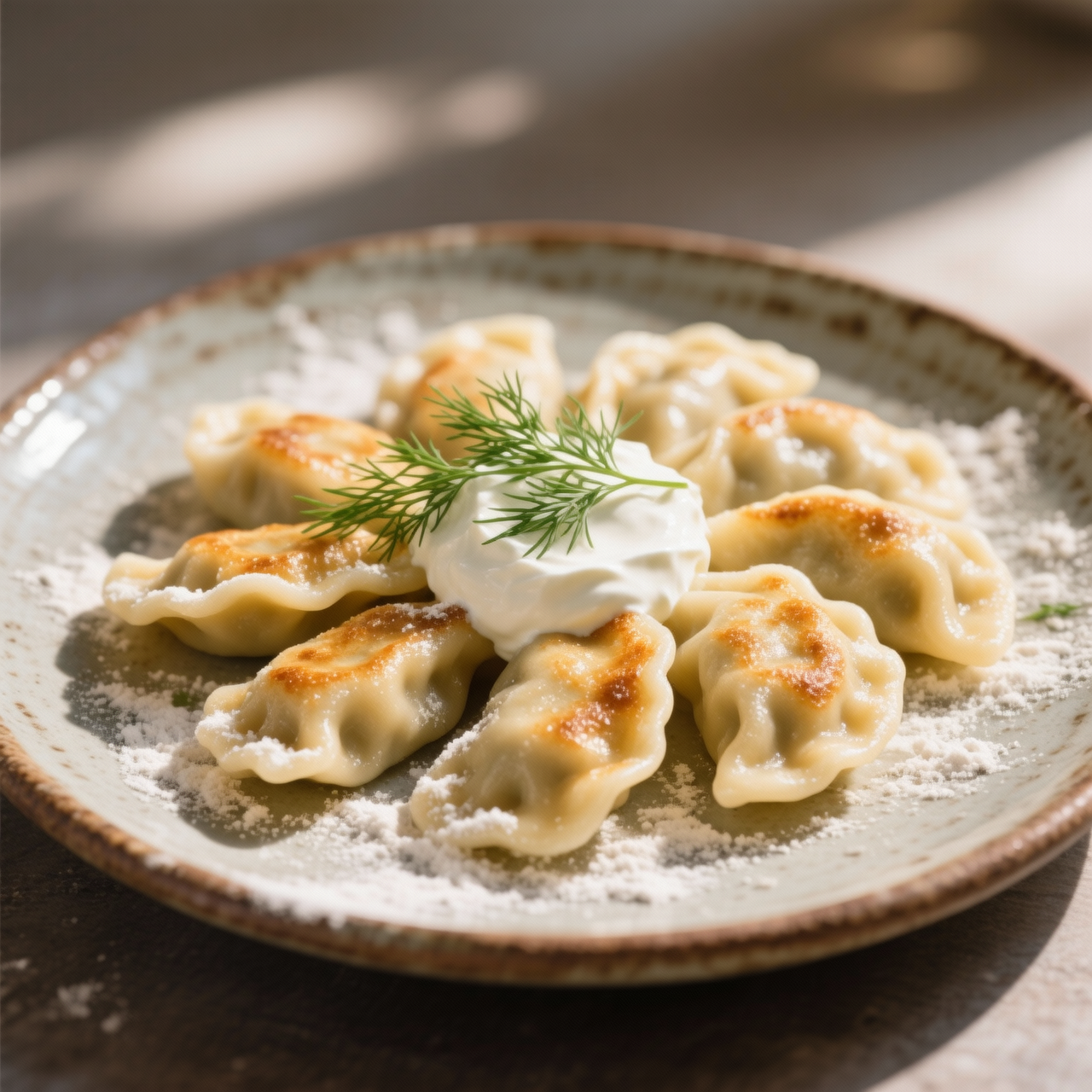
Pierogi
Pierogi are the undisputed soul of Polish cuisine, a humble dumpling that has sustained generations through harsh winters and joyous celebrations alike. Originating in Poland, these little parcels of dough are far more than just food; they are an act of love, traditionally made in large batches by families gathering together. When you buy the frozen, shop-bought versions from the supermarket, you are paying a premium for a sad, thick-skinned imitation that costs nearly as much as making a massive batch from scratch, yet lacks any real depth of flavor or textural integrity. The fillings in those commercial packs are often bland, overly salted, and rely on cheap industrial shortcuts. By making them yourself, you reclaim the magic of a delicate, silky dough enveloping a rich, vibrant filling, like my favorite potato, farmer's cheese, and caramelized onion. The most common pitfall is rushing the dough or overfilling the parcels, which leads to tragic blowouts in the boiling water. You must knead the dough until it is perfectly elastic and let it rest, allowing the gluten to relax so it rolls out paper-thin without shrinking. Another mistake is boiling them too vigorously; a gentle simmer is all they need. This recipe is a true batch hero. I always fill and freeze them raw on floured trays, ensuring I have a spectacular, wholesome main course ready to drop into boiling water straight from the freezer, completely bypassing the need for any processed convenience foods.
Nutrition
| Per serving | Calories | Protein | Carbs | Fat | Sat fat | Fibre | Sugar | Sodium |
|---|---|---|---|---|---|---|---|---|
| beginner | 550kcal | 18g | 75g | 18g | 8g | 6g | 4g | 650mg |
| intermediate | 640kcal | 15g | 80g | 12g | 7g | 6g | 5g | 700mg |
| expert | 800kcal | 28g | 105g | 28g | 16g | 7g | 8g | 900mg |
Per serving · Ava-estimated — a guide, not a clinical figure.
- 500 gall-purpose flour— plus extra for dusting the work surface
- 1 pieceegg— large, lightly beaten
- 200 mlwarm water— approximately 40 degrees Celsius
- 10 gsalt— divided between dough and filling
- 15 mlvegetable oil— neutral flavored
- 500 gstarchy potato— peeled and cut into uniform cubes
- 250 gfarmer cheese— full fat, dry curd twarog or quark
- 2 pieceyellow onion— medium size, finely diced
- 30 gbutter— unsalted, for caramelizing the onions
- 2 gblack pepper— freshly ground
Shop-bought frozen pierogi typically cost around $6 to $8 for a flimsy bag of twelve, but they consistently suffer from thick, doughy wrappers, meager fillings, and excessive sodium. This beginner from-scratch version entirely skips the processed cheats but simplifies the traditional technique: we use a forgiving, no-rest dough and a quick, one-pan potato and farmer's cheese filling. It is highly approachable, uses strictly real ingredients, and yields a tender, authentic dumpling without any commercial fillers or preservatives. Watch your dough thickness carefully—roll it thin enough to be delicate, but not so thin that it tears when boiling. By freezing them raw on trays before bagging, you lock in the fresh texture, giving you a superior, cost-effective staple that beats the freezer aisle every time. The filling is kept simple with just potatoes, cheese, and caramelized onions, ensuring a creamy texture without complex steps.
Equipment
- Large mixing bowl— for combining and kneading the dough
- Heavy-bottomed pan— for caramelizing onions and mashing potatoes
- Rolling pin— a standard wooden one works best
- Baking sheet— lined with parchment paper for freezing
Method
- 1
Combine flour, salt, warm water, and an egg in a large bowl, mixing until a shaggy dough forms, then knead on a lightly floured surface for 5 minutes until smooth.
The dough should be soft but not sticky; add a sprinkle of flour if it sticks to your hands.
kneading~ 5 min - 2
Boil diced potatoes until tender, then drain and mash them in a heavy-bottomed pan with butter, caramelized onions, and farmer's cheese until well combined and seasoned.
Let the filling cool completely before assembling so it doesn't melt the dough.
mashing~ 10 min - 3
Divide the dough in half, rolling one piece out on a floured surface to about 1/8-inch thickness.
Keep the unused dough covered with a damp towel to prevent drying out.
rolling~ 3 minTricky bit - 4
Use a 3-inch round cutter to stamp out circles, placing a small spoonful of the cooled potato mixture in the center of each.
Do not overfill, or the pierogi will burst during boiling.
stamping~ 5 min - 5
Fold the dough over the filling to create a half-moon, pressing the edges firmly to seal and crimping with a fork to prevent bursting.
Ensure there are no air pockets trapped inside before sealing.
crimping~ 7 minTricky bit - 6
Arrange the raw pierogi in a single layer on a parchment-lined tray to freeze solid for 2 hours before bagging, or boil immediately in salted water for 3 to 4 minutes until they float.
Once frozen solid on the tray, transfer them to a freezer bag to store for up to 3 months.
freezing~ 2 min
Cooking from frozen
Drop directly into boiling salted water; cook until they float, then pan-fry in butter.
Storage times are a guide — always use your judgement and store food safely.