
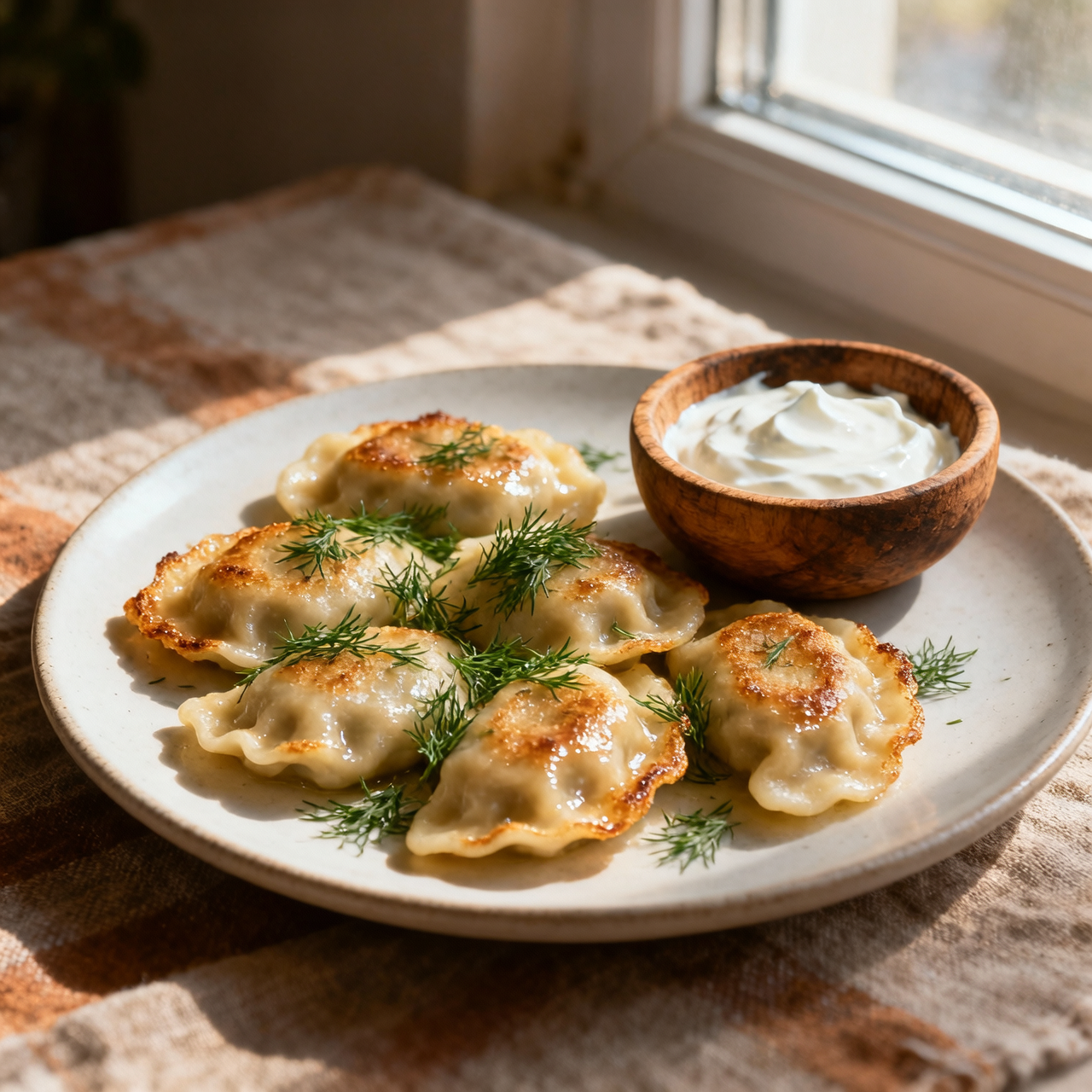
Pierogi Ruskie
When I first learned to fold pierogi ruskie, I quickly understood that they are far more than a simple dumpling. The name itself is a quiet nod to history, pointing not to Russia but to Ruthenia, the historic borderlands of Eastern Poland and Western Ukraine where peasant families first married flour, potatoes, and fresh farmer cheese into something profoundly comforting. To me, this dish matters because it embodies the Polish ethos of making abundance from scarcity. It is a culinary bridge between generations, demanding patience and rewarding it with a taste of home that no shortcut can replicate. I have seen countless cooks rush the dough, treating it like pasta when it actually needs to be soft, supple, and rested until it yields to the touch without tearing. Others boil their dumplings in overcrowded pots, causing them to stick together and split open, spilling their precious filling into the water. And then there is the frying step, often skipped or done with too little butter, robbing the pierogi of that essential crisp, golden crust that contrasts so beautifully with the tender interior. I always remind myself and anyone I teach that pierogi are an exercise in rhythm and respect. Knead slowly, seal tightly, cook gently, and finish with a generous sizzle of butter and caramelized onions. When done right, each bite is a quiet triumph, a testament to the fact that the simplest ingredients, handled with care, can feed both the body and the soul.
Nutrition
| Per serving | Calories | Protein | Carbs | Fat | Sat fat | Fibre | Sugar | Sodium |
|---|---|---|---|---|---|---|---|---|
| beginner | 890kcal | 25g | 127g | 30g | 18g | 8g | 6g | 1200mg |
| intermediate | 890kcal | 25g | 127g | 30g | 18g | 8g | 6g | 1200mg |
| expert | 890kcal | 25g | 127g | 30g | 18g | 8g | 6g | 1200mg |
Per serving · Ava-estimated — a guide, not a clinical figure.
- 500 gall-purpose flour— sifted before measuring
- 250 mlwarm water— approximately 40 degrees Celsius
- 1 wholelarge egg— room temperature
- 10 gfine sea salt— divided for dough and filling
- 600 grusset potatoes— peeled and quartered
- 250 gfarmer cheese— dry-curd style
- 150 gyellow onion— finely diced
- 80 gunsalted butter— divided for filling and finishing
- 5 gblack pepper— freshly cracked
- 120 gsour cream(optional)— for serving
This version prioritizes accessibility and confidence over traditional rigor, allowing you to navigate the process with minimal friction while still honoring the core flavors. You will handle the shared ingredients using straightforward, forgiving methods that eliminate guesswork. The dough is mixed by hand with a simple fork-and-fold technique, and you will use a standard rolling pin rather than specialized thickness guides. When preparing the potatoes, focus on thorough drying after boiling to prevent a watery filling, which is the most common failure point for first-timers. Mix the cheese and onions directly into the warm mash without overworking it. Seal each pocket firmly with the tines of a dinner fork, pressing twice to ensure a secure bond that survives the boil. Drop the pierogi into gently simmering water, never a rolling boil, and watch closely for when they float to the surface. A brief rest on a wire rack prevents sticking before a quick pan-fry. The objective is to produce a structurally sound, deeply comforting plate that proves homemade dumplings are entirely within your reach, even on a busy weeknight.
Equipment
- large mixing bowl— non-reactive material preferred
- wooden rolling pin— standard size works best
- large stockpot— at least eight liters capacity
- non-stick skillet— twelve inch diameter
Method
- 1
Combine flour, salt, egg, and warm water in a large bowl until a shaggy mass forms.
Mix until no dry flour remains.
kneading~ 5 min - 2
Turn dough onto a lightly floured surface and press together for two minutes until smooth.
Wrap in plastic and let rest.
resting~ 15 min - 3
Boil quartered potatoes in heavily salted water until completely fork-tender.
Drain thoroughly to remove excess moisture.
boiling~ 15 min - 4
Mash potatoes until completely smooth, then fold in cheese, diced onion, half the butter, pepper, and remaining salt.
Taste and adjust seasoning before filling.
folding~ 5 min - 5
Roll dough to three millimeters thickness and cut circles with the rim of a standard drinking glass.
Keep unused dough covered to prevent drying.
rolling~ 10 min - 6
Place one tablespoon of filling in each circle, fold over, and crimp edges firmly with a fork.
Press twice along the entire seam.
crimping~ 15 minTricky bit - 7
Drop pierogi into gently simmering water in batches and cook until they float to the surface.
Transfer directly to a buttered skillet to brown.
simmering~ 10 min