
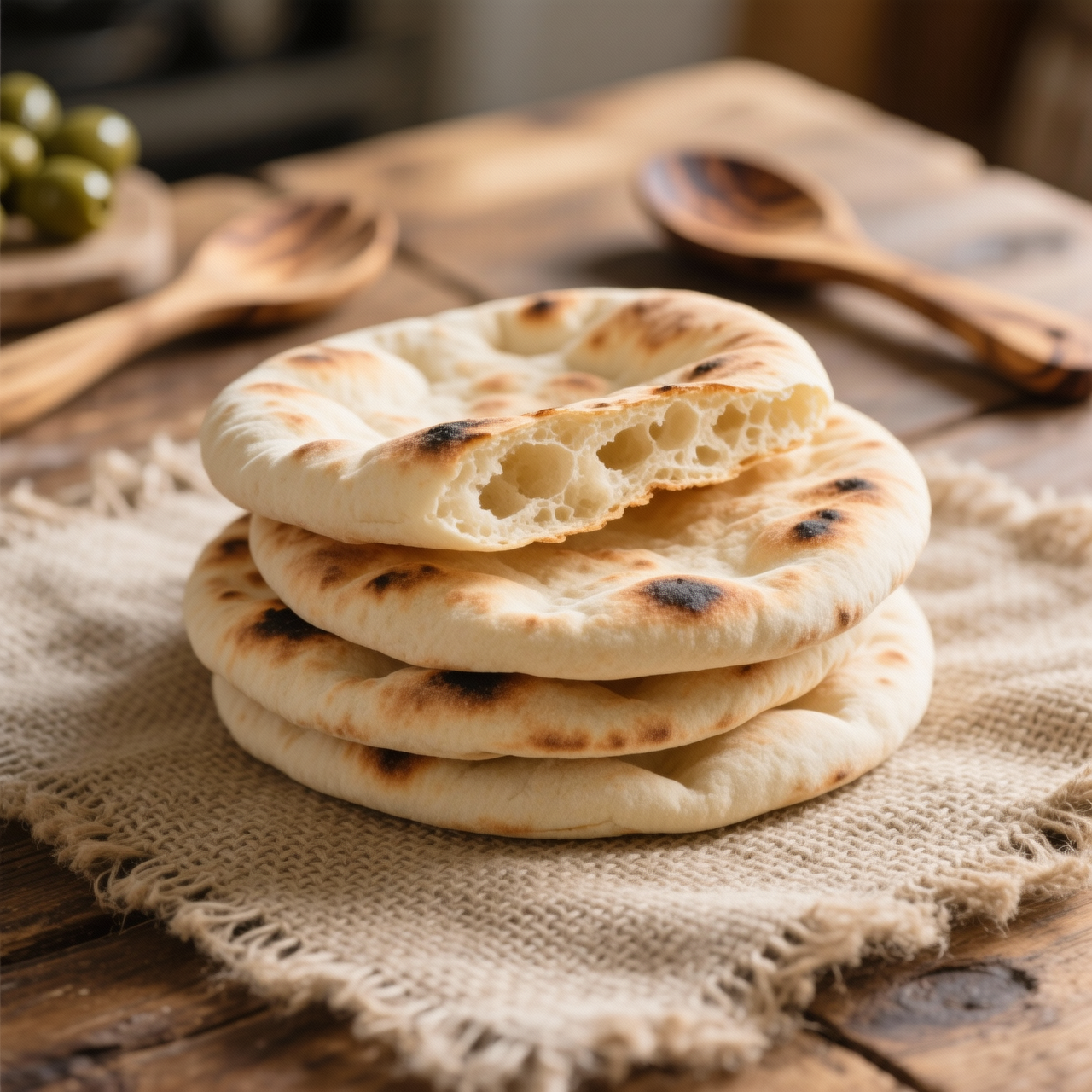
Pita / khubz
I have always believed that bread is the quietest kind of alchemy. Lebanese khubz, or pita, is not merely a vessel for dips and grilled meats; it is a daily ritual, a warm, breathing piece of dough that captures steam to create its signature pocket. Supermarket flatbreads cost nearly four dollars for a plastic-wrapped stack, yet they taste like cardboard and crack under pressure because stabilisers and rushed production strip away the gluten matrix. Making it from scratch takes pennies and rewards you with a pliable, slightly chewy round that puffs proudly in the heat. A great khubz relies on three things: precise hydration, a fiercely hot surface, and patience during the rest. The most common pitfalls are over-flouring the dough, which suffocates the rise, and rolling the rounds too thin or unevenly, which prevents the steam from lifting the top layer. When you master the balance of water, yeast, and heat, you unlock a bread that stretches without tearing, holds its shape in a basket, and tastes faintly sweet and deeply wheat-forward. This recipe honours the Lebanese home kitchen tradition, stripping away commercial shortcuts to give you three paths to the same perfect pocket. Whether you cook on a stovetop skillet, a home oven, or push the limits of fermentation, the foundation remains identical. You will learn to read the dough’s surface tension, control the steam, and produce a flatbread that freezes beautifully and outperforms any packaged alternative.
Nutrition
| Per serving | Calories | Protein | Carbs | Fat | Sat fat | Fibre | Sugar | Sodium |
|---|---|---|---|---|---|---|---|---|
| beginner | 265kcal | 8g | 50g | 6g | 1g | 2g | 3g | 490mg |
| intermediate | 265kcal | 8g | 50g | 6g | 1g | 2g | 3g | 490mg |
| expert | 265kcal | 8g | 50g | 6g | 1g | 2g | 3g | 490mg |
Per serving · Ava-estimated — a guide, not a clinical figure.
- 500 gall-purpose flour— unbleached, bread flour or high-protein preferred
- 325 mlwarm water— approximately 38°C / 100°F
- 7 gactive dry yeast
- 8 gfine sea salt
- 10 ggranulated sugar
- 15 mlextra virgin olive oil
This beginner path strips the process down to its most forgiving essentials, trading oven management for a reliable stovetop skillet. You will hand-mix the dough using a simple fold-and-rest method, which gently develops gluten without requiring vigorous kneading or special equipment. The key here is patience during the initial thirty-minute rest, allowing the yeast to wake up and the flour to fully hydrate before you shape the rounds. Watch the dough surface closely as you roll; it should feel smooth and slightly tacky, never dry or crumbly. If it resists, cover it and wait five minutes before continuing. Cooking on a dry, preheated cast-iron or heavy non-stick pan gives you immediate visual feedback: the pocket forms rapidly when the surface hits the right temperature, usually between ninety and one hundred seconds per side. Keep the cooked bread wrapped in a clean kitchen towel to trap residual steam, which preserves the soft texture and prevents cracking. This method is highly repeatable and eliminates the guesswork of oven hot spots. Once you master the skillet timing, you will have a dependable weeknight flatbread that scales effortlessly for family meals or meal prep.
Equipment
- Mixing bowl— medium size, wide rim for folding
- Rolling pin— standard wooden
- Heavy skillet— cast iron or thick non-stick
- Clean kitchen towel— for wrapping cooked bread
Method
- 1
Whisk the flour, yeast, salt, and sugar together in a large bowl until evenly distributed.
Salt should be evenly dispersed to avoid inhibiting yeast locally.
mixing~ 1 min - 2
Pour in the warm water and olive oil, then stir with a wooden spoon until a shaggy mass forms.
No need to form a perfect ball at this stage.
hydration~ 1 min - 3
Cover the bowl and let the dough rest undisturbed on the counter.
This autolyse relaxes the gluten before shaping.
autolyse~ 30 min - 4
Divide the dough into four equal pieces and roll each into a smooth, round ball.
Tuck the edges underneath to create surface tension.
dividing~ 2 min - 5
Flatten each ball into a disc and roll to a quarter-inch thickness, dusting lightly with flour to prevent sticking.
Maintain an even thickness to ensure uniform puffing.
rolling~ 5 minTricky bit - 6
Cook each round in a preheated dry skillet over medium-high heat until it puffs and forms light brown spots, flipping once halfway.
Press gently with a spatula to encourage pocket formation.
pan-frying~ 2 minTricky bit
Cooking from frozen
Thaw overnight in the refrigerator, then wrap loosely in foil and reheat at 180°C until soft and warm.
Storage times are a guide — always use your judgement and store food safely.