
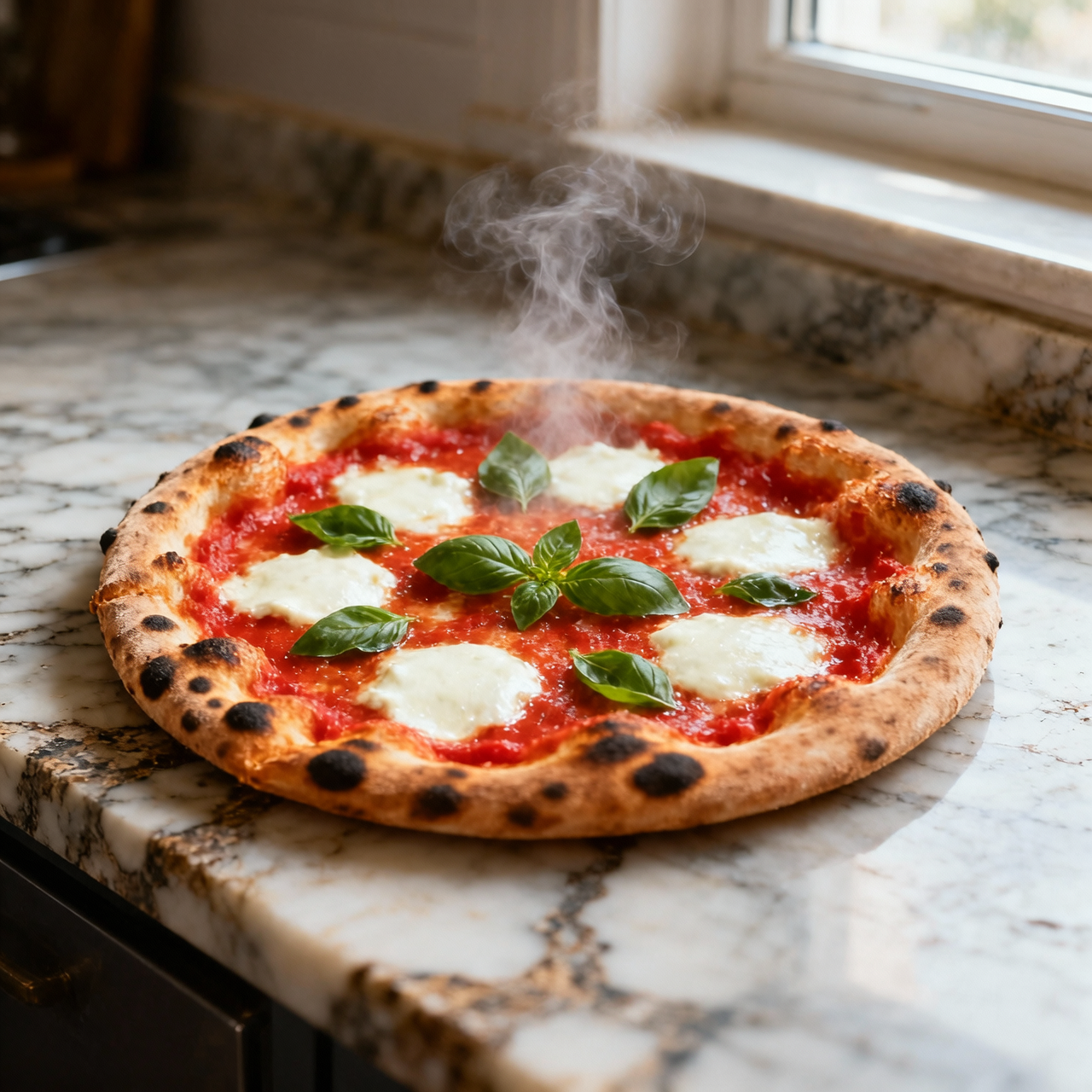
Pizza Margherita
I still remember the first time I watched a true Neapolitan pizzaiolo stretch dough by hand, the way he spoke of flour and water as if they were old friends. That reverence is exactly why Pizza Margherita remains the purest expression of Italian cooking to me. Born in 1889 when Raffaele Esposito crafted it for Queen Margherita of Savoy, it wasn’t just a meal; it was a deliberate tribute to the Italian flag through the colors of San Marzano tomatoes, fresh fior di latte mozzarella, and fragrant basil. What makes this pizza so profoundly important isn’t just its history, but its ruthless simplicity. There’s nowhere to hide when you’re working with only six ingredients. Too often, home cooks try to compensate for a lack of technique by overcomplicating the toppings, drowning the crust in heavy sauces, or using pre-shredded cheese loaded with anti-caking agents that ruin the melt. I’ve seen countless kitchens turn a masterpiece into a soggy, chewy disappointment simply by rushing the fermentation or neglecting the heat. A real Margherita demands patience in the dough, a blisteringly hot oven that mimics the volcanic breath of Mount Vesuvius, and the restraint to let each component breathe on its own. When you finally pull it from the heat, the crust should be leopard-spotted and pillowy, the center soft but structured, and the basil just wilted enough to release its essential oils. It’s a lesson in trust: trust the ingredients, trust the process, and trust that sometimes less really is everything.
Nutrition
| Per serving | Calories | Protein | Carbs | Fat | Sat fat | Fibre | Sugar | Sodium |
|---|---|---|---|---|---|---|---|---|
| beginner | 840kcal | 31g | 120g | 26g | 11g | 6g | 5g | 1670mg |
| intermediate | 840kcal | 31g | 120g | 26g | 11g | 6g | 5g | 1670mg |
| expert | 840kcal | 31g | 120g | 26g | 11g | 6g | 5g | 1670mg |
Per serving · Ava-estimated — a guide, not a clinical figure.
- 600 gTipo 00 flour— high-protein, finely milled
- 390 mlWater— filtered, room temperature
- 14 gFine sea salt
- 3 gActive dry yeast
- 400 gSan Marzano tomato— canned, whole peeled
- 30 mlExtra-virgin olive oil— cold-pressed
- 300 gFresh mozzarella di bufala— drained, torn into pieces
- 12 gFresh basil leaf— vibrant, unwilted
- 40 gSemolina flour— for dusting work surface
This version strips away the intimidation factor of traditional pizza making while honoring the core flavor profile. We prioritize accessibility and a forgiving timeline, allowing you to achieve a satisfying result on your first attempt without specialized gear. The dough utilizes a quick-rise method, skipping lengthy bulk fermentation in favor of a brief, room-temperature rest that still yields a tender, manageable base. You will work on a standard rimmed baking sheet dusted with semolina, which eliminates the anxiety of transferring a stretched dough to a scorching stone. The tomatoes are lightly crushed by hand and seasoned simply before spreading, ensuring even coverage without drowning the crust. Watch carefully during the baking phase; ovens vary wildly, so rotate the pan halfway through to guarantee even browning. If the dough resists stretching, let it rest for five minutes—gluten needs time to relax. Avoid piling on the cheese, as excess moisture will steam the dough instead of baking it crisp. Focus on gentle handling, moderate topping distribution, and trusting your oven’s heat. This approach guarantees a reliable, flavorful foundation that builds your confidence for future, more ambitious bakes.
Equipment
- Large mixing bowl— stainless steel preferred
- Rimmed baking sheet— heavy gauge aluminum
- Rolling pin— wooden, lightly floured
- Digital kitchen scale— gram precision
Method
- 1
Combine flour, salt, yeast, and water in a large bowl until a shaggy dough forms.
Mix until no dry pockets remain.
mixing~ 3 min - 2
Knead the dough on a lightly floured surface for five minutes until it becomes smooth and elastic.
Windowpane test is optional here.
kneading~ 5 min - 3
Cover the dough and let it rest at room temperature for thirty minutes to relax the gluten.
Keep away from drafts.
proofing~ 30 min - 4
Divide the dough into four pieces, roll each into a flat circle, and transfer to a semolina-dusted sheet.
Roll from center outward.
rolling~ 5 min - 5
Top with crushed tomatoes, torn cheese, and bake at maximum temperature until the edges are golden.
Rotate pan halfway through.
baking~ 15 minTricky bit