
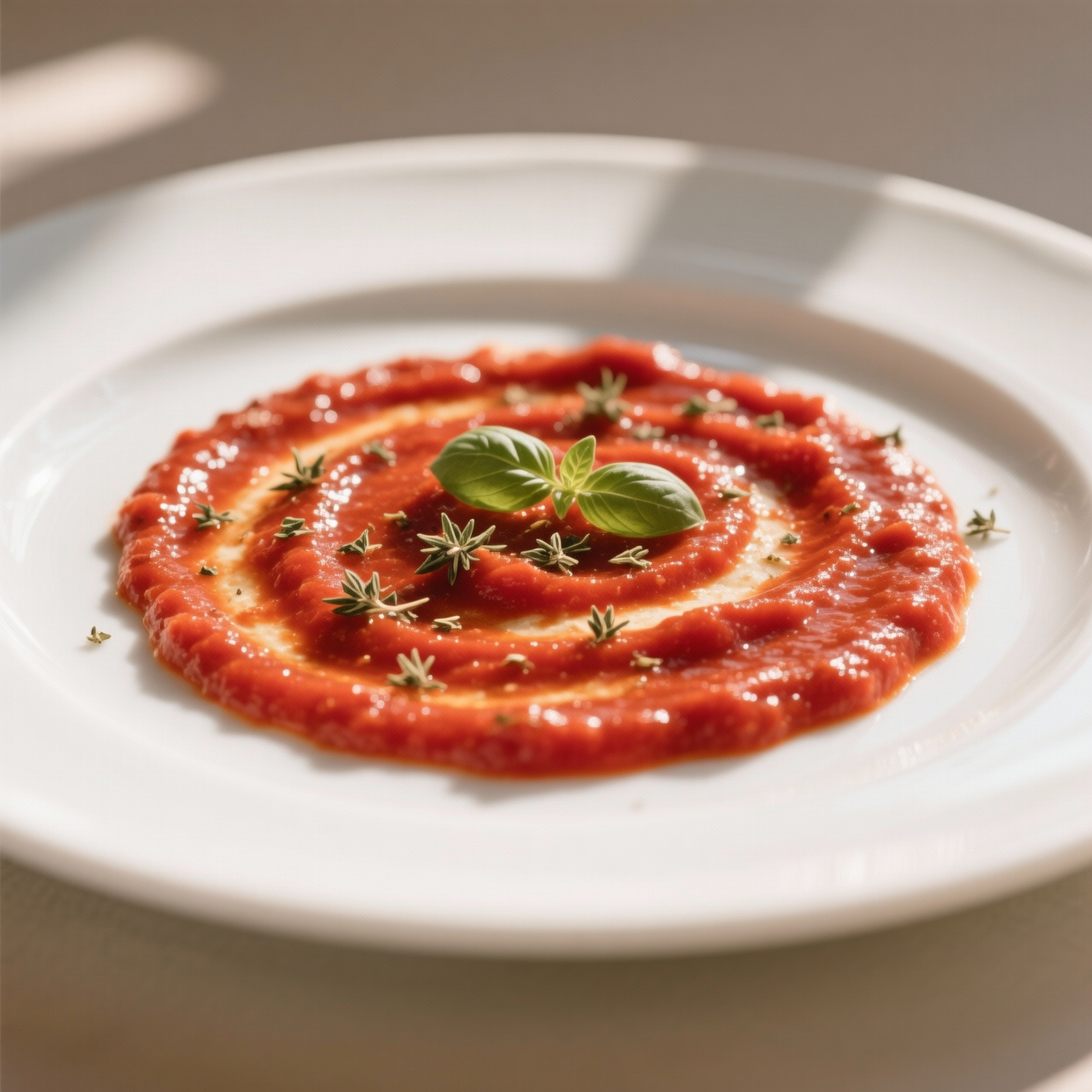
Pizza sauce
I’ve always believed that a great pizza lives or dies long before the oven door closes, and that truth begins in the saucepan. Pizza sauce is the quiet backbone of Neapolitan tradition, a testament to how Italian home cooks transformed humble, sun-ripened tomatoes into something profoundly aromatic without drowning them in unnecessary complexity. When I craft this vegan version, I strip away dairy and meat-based broths to let the tomatoes speak for themselves, relying only on garlic, olive oil, dried oregano, and a slow simmer to coax out their natural sweetness. What matters most here is restraint. Too many recipes rush the process, boiling the mixture aggressively until it turns acidic and flat, or overcomplicating it with sugar and heavy spices that mask the fruit’s delicate balance. Another frequent misstep is starting with watery canned purees instead of crushed San Marzanos, which leaves you with a soggy base that steams the dough rather than complementing it. I prefer a gentle, low-heat reduction, stirring occasionally so the oils emulsify into the pulp, creating a glossy, velvety texture that spreads cleanly and bakes into a rich, cohesive layer. This sauce matters because it bridges the gap between rustic simplicity and culinary precision. It teaches patience, respects the harvest, and proves that vegan cooking doesn’t require substitutes to achieve depth. When you finally stretch your dough and spoon this over the top, you’ll taste why generations of Italian families have guarded these basic ratios so fiercely. It’s not just a topping; it’s the foundation of a shared table, waiting to be baked into something unforgettable.
Nutrition
| Per serving | Calories | Protein | Carbs | Fat | Sat fat | Fibre | Sugar | Sodium |
|---|---|---|---|---|---|---|---|---|
| beginner | 82kcal | 2g | 13g | 4g | 1g | 3g | 8g | 410mg |
| intermediate | 130kcal | 2g | 14g | 6g | 1g | 2g | 6g | 450mg |
| expert | 45kcal | 2g | 7g | 3g | 0g | 2g | 5g | 310mg |
Per serving · Ava-estimated — a guide, not a clinical figure.
- 400 gWhole peeled tomato— Drained of excess liquid
- 30 mlExtra virgin olive oil— High-quality cold pressed
- 10 gGarlic clove— Peeled
- 10 gFresh basil leaf— Rinsed and dried
- 5 gFine sea salt— Adjust to taste
- 2 gDried oregano(optional)— Crushed lightly before adding
This beginner-friendly approach strips away the intimidation factor of traditional Italian sauce-making, relying on reliable pantry staples instead of fresh produce prep. You will use high-quality canned crushed tomatoes and jarred tomato paste as your foundation, which guarantees consistent texture and acidity control every single time. The focus here is on gentle heat management to develop flavor without scorching, and simple seasoning adjustments so you can taste as you go. Keep your flame on medium-low and stir frequently with a wooden spoon; tomato paste loves to stick to the bottom of the pan. If the sauce thickens too quickly, a splash of water is your safety net. There is no need for complex herb infusions or hours of simmering—just a steady, low simmer to meld the dried oregano, garlic powder, and sweet tomatoes into a cohesive, spreadable consistency. By the end, you will have a reliable, freezer-ready sauce that pairs perfectly with your dough, proving that authentic flavor doesn’t require advanced knife skills or specialty equipment.
Equipment
- Heavy-bottomed saucepan— prevents scorching during the simmer
- Wooden spoon— for gentle, even stirring
- Airtight containers(optional)— glass jars work best for freezing
Method
- 1
Warm the olive oil in your saucepan over medium heat.
Test readiness by adding a pinch of dried oregano; it should sizzle gently, not smoke.
tempering~ 1 min - 2
Stir in the dried oregano, garlic powder, and tomato paste until fully dissolved.
Scrape the bottom constantly to prevent the paste from burning and turning bitter.
blooming~ 2 minTricky bit - 3
Pour in the canned crushed tomatoes and season with salt and a pinch of sugar.
The sugar balances the natural tomato acidity; start with half a teaspoon and adjust later.
simmering~ 1 min - 4
Reduce heat to low and cook uncovered, stirring occasionally, until thickened.
Aim for a consistency that coats the back of a spoon without pooling too quickly.
reducing~ 15 min - 5
Remove from heat and let the sauce cool completely before portioning.
Hot sauce in the freezer creates ice crystals and ruins the texture.
cooling~ 30 min
Cooking from frozen
Thaw overnight in the fridge, then gently warm in a saucepan over low heat, stirring until smooth.
Storage times are a guide — always use your judgement and store food safely.