
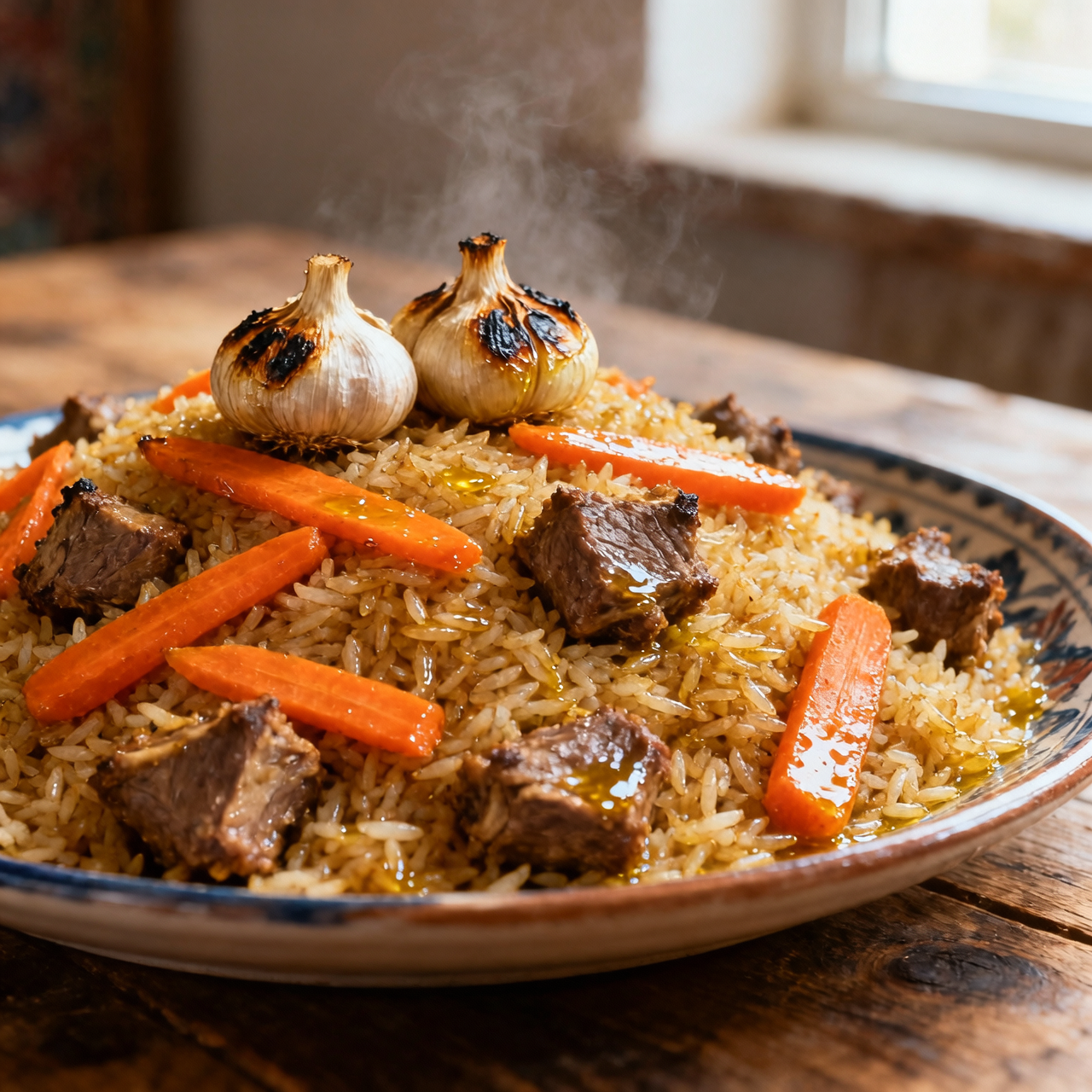
Plov
I first encountered plov not as a recipe, but as a memory woven into the scent of cumin and toasted lamb fat drifting from open courtyards in Tashkent. To the Uzbek people, this dish is more than sustenance; it is a cultural anchor, a ceremonial centerpiece served at weddings, births, and quiet Sunday gatherings. Its origins trace back centuries along the Silk Road, where merchants and farmers adapted local grains, carrots, and meats into a single, harmonious vessel that could feed communities with dignity and grace. What makes plov so profound is its deliberate simplicity. There are no shortcuts that don’t betray the dish’s soul. The rice must be soaked to release excess starch, the onions must be fried until they dissolve into the oil, and the carrots must be sliced into matchsticks so they soften without turning to mush. Yet, time and again, I watch home cooks rush the process. They crowd the pot, skip the careful layering, or stir the rice once it hits the broth, turning a dish meant to be fluffy and distinct into a heavy, gluey mass. The true secret lies in patience: building the zirvak, letting it simmer until the oil separates, then laying the rice like a quiet blanket over the top. You never stir it again. You simply cover the kazan, lower the flame, and trust the steam to work. When done right, every grain stands apart, carrying the deep, caramelized sweetness of the broth. That is the moment I know plov has succeeded.
Nutrition
| Per serving | Calories | Protein | Carbs | Fat | Sat fat | Fibre | Sugar | Sodium |
|---|---|---|---|---|---|---|---|---|
| beginner | 850kcal | 30g | 90g | 38g | 10g | 6g | 8g | 1480mg |
| intermediate | 850kcal | 30g | 90g | 38g | 10g | 6g | 8g | 1480mg |
| expert | 850kcal | 30g | 90g | 38g | 10g | 6g | 8g | 1480mg |
Per serving · Ava-estimated — a guide, not a clinical figure.
- 500 glamb shoulder— trimmed of excess fat, cut into 2-inch cubes
- 300 gyellow carrot— julienned into thick ribbons
- 200 gorange carrot— julienned into thick ribbons
- 200 gyellow onion— thinly sliced into half-moons
- 400 glong-grain rice— rinsed until water runs clear
- 15 gcumin seed— whole, toasted
- 3 piecegarlic head— tops trimmed, outer papery layer removed
- 100 mlsunflower oil— refined, high-heat
- 15 gkosher salt
- 5 gblack peppercorn— whole
- 800 mlwater— hot
This version prioritizes confidence over tradition, making your first plov an approachable, low-stress experience. We lean into reliable shortcuts: pre-rinsed long-grain rice replaces the tedious multi-wash cycle, and a quality jarred spice blend substitutes for toasting and grinding whole seeds. The key here is controlled heat management. Keep the oil hot but never smoking, and let the onions and carrots soften gradually rather than rushing them with high flames. When layering the rice, do not stir. This is the single most important rule at this level. Stirring too early will rupture the starch coating and create a heavy, porridge-like texture. Instead, trust the gentle steam trapped under a tight-fitting lid to finish the cooking. Watch for the telltale hollow sound when tapping the rice surface and the complete absorption of the liquid. Once removed from heat, let it rest undisturbed for a full ten minutes before fluffing with a wide fork. This resting period allows the grains to firm up and separate naturally, guaranteeing a forgiving, restaurant-worthy result even on your very first attempt.
Equipment
- heavy-bottomed pan— non-stick is fine here
- tight-fitting lid— essential for trapping steam
- wide fork— for gentle fluffing
Method
- 1
Pour sunflower oil into a heavy-bottomed pan over medium heat.
Oil should shimmer but not smoke.
warming~ 1 min - 2
Add sliced onions and thick carrot ribbons, cooking until translucent.
Stir occasionally to prevent sticking.
sweating~ 6 min - 3
Add lamb cubes and cook until no longer pink.
Patience yields better browning.
browning~ 5 min - 4
Stir in jarred spice blend and pour in hot water, bringing the mixture to a gentle simmer.
Scrape the bottom to lift fond.
simmering~ 3 min - 5
Evenly layer rinsed rice over the vegetables without stirring, nestle garlic heads into the rice, and cover tightly.
Do not disturb the layers once set.
layering~ 1 minTricky bit - 6
Reduce heat to low and cook undisturbed until all liquid is absorbed.
Listen for a gentle hiss, not a boil.
steaming~ 18 min - 7
Remove from heat, rest for ten minutes, then gently fluff and serve.
Resting is non-negotiable.
resting~ 10 min