
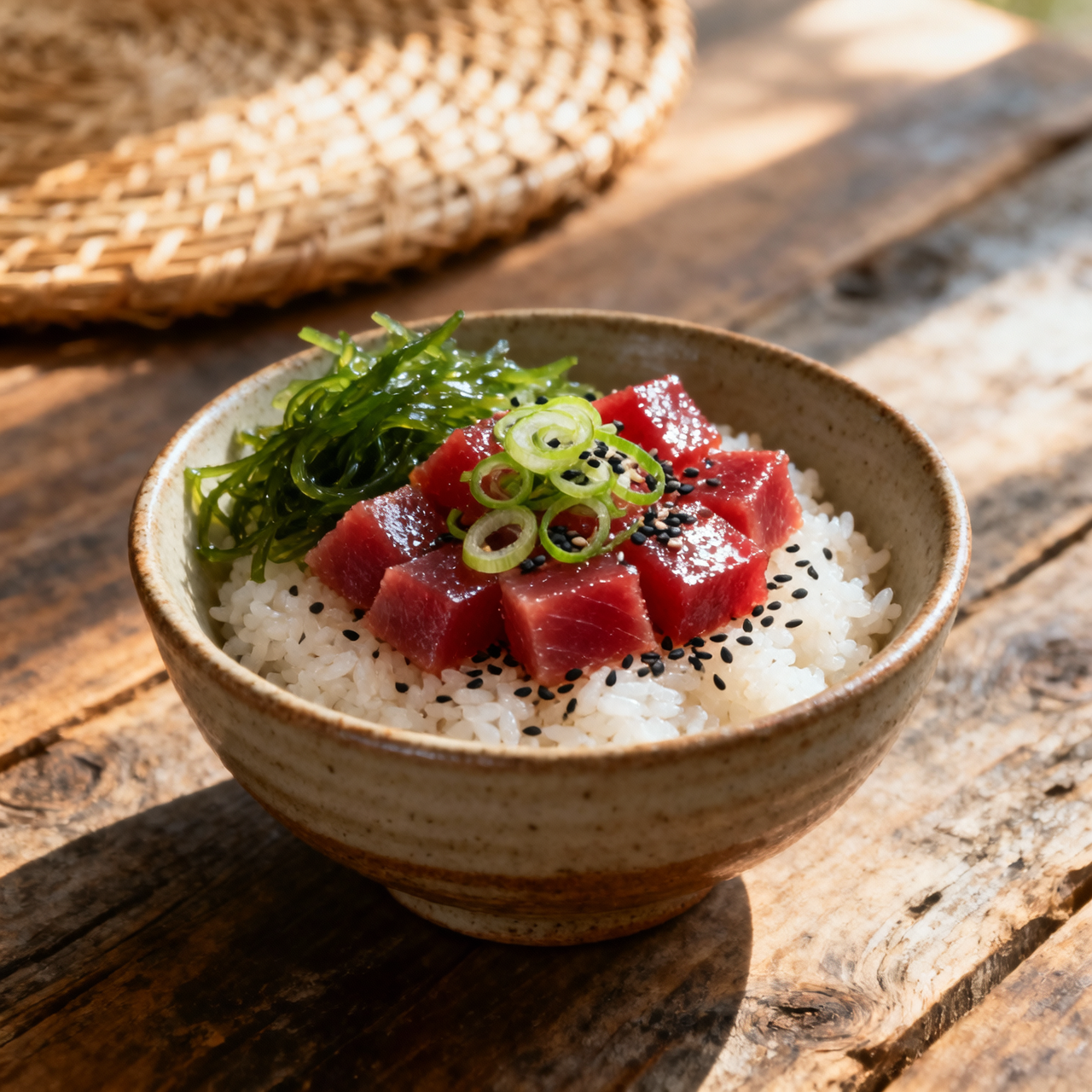
Poke Bowl
When I first learned to make poke in Hawaii, I quickly realized that its beauty lies in restraint rather than complexity. Long before it became a global lunchbox staple, poke was born from the practical ingenuity of Native Hawaiian fishermen who would trim the scraps from their daily catch, season them simply with sea salt and limu, and eat them straight from the shore. That history matters to me because it grounds the dish in respect for the ocean and the hands that harvest it. Today, I still approach every bowl as an exercise in honoring that lineage, even as modern variations pile on everything from spicy mayo to quinoa. The biggest mistake I see cooks make is overcomplicating the balance. People drown the fish in soy sauce until it turns mushy and salty, or they use warm rice that steams the delicate cubes before they’re even plated. Another frequent pitfall is ignoring the temperature of the ingredients; poke should always be assembled cold, with the fish kept firm and the vegetables crisp until the very last moment. I also watch friends skip the resting period. Just fifteen minutes in the refrigerator allows the soy, sesame oil, and aromatics to penetrate the flesh without breaking down its structure. When I make it at home, I treat the fish like a guest of honor, handling it minimally, keeping everything chilled, and trusting the ocean natural sweetness to shine through. That is the secret I always return to: simplicity, patience, and a quiet reverence for what the sea gives us.
Nutrition
| Per serving | Calories | Protein | Carbs | Fat | Sat fat | Fibre | Sugar | Sodium |
|---|---|---|---|---|---|---|---|---|
| beginner | 690kcal | 47g | 87g | 15g | 2g | 5g | 2g | 1350mg |
| intermediate | 690kcal | 47g | 87g | 15g | 2g | 5g | 2g | 1350mg |
| expert | 690kcal | 47g | 87g | 15g | 2g | 5g | 2g | 1350mg |
Per serving · Ava-estimated — a guide, not a clinical figure.
- 600 gahi tuna— sashimi-grade, skinless and pin-boned
- 400 gsushi rice— short-grain
- 45 mlsoy sauce— traditionally brewed
- 30 mlrice vinegar— unseasoned
- 15 mltoasted sesame oil— cold-pressed
- 40 ggreen onion— white and light green parts only
- 10 gdried wakame seaweed— rehydrated and thoroughly drained
- 150 genglish cucumber— seeds scooped and discarded
- 150 gripe avocado— firm but yielding to pressure
- 30 gmacadamia nut— raw, unsalted
- 5 gkosher salt— fine grain
This version removes the intimidation factor by leaning on trusted pantry staples and forgiving techniques. You will use pre-portioned soy sauce and a reliable rice cooker to guarantee consistent results without guesswork. The primary focus is food safety and clean assembly, ensuring your fish stays cold and your rice remains fluffy. I recommend buying pre-cut sashimi-grade tuna from a reputable fishmonger to eliminate knife work entirely. Marinate the cubes for exactly ten minutes; longer will begin to cook the fish and alter its texture. Watch the rice closely when seasoning it with vinegar, using a gentle folding motion rather than aggressive stirring to prevent mushiness. Assembly is straightforward: layer rice, arrange toppings, and drizzle the marinade evenly. The goal here is not perfection, but a confident first attempt that tastes balanced and fresh. Keep your workspace organized, wash your hands frequently, and trust your palate. If the fish smells overly oceanic, it is not suitable for raw preparation. This approach guarantees a reliable weeknight meal that respects the dish’s roots while fitting seamlessly into a modern kitchen routine.
Equipment
- rice cooker— standard household model
- large mixing bowl— glass or stainless steel
- rubber spatula— heat resistant
Method
- 1
Cook the sushi rice according to your appliance instructions until tender and fluffy.
Rinse until water runs clear to remove excess starch.
simmering~ 20 min - 2
Combine the tuna, soy sauce, sesame oil, and salt in a chilled bowl.
Keep fish refrigerated until the moment of mixing.
marinating~ 10 minTricky bit - 3
Fold the rice vinegar into the cooked rice using a gentle cutting motion.
Stop when grains are glossy but intact.
folding~ 3 min - 4
Divide the seasoned rice among bowls and arrange the cucumber, avocado, wakame, and green onion on top.
Create separate zones to preserve individual textures.
plating~ 4 min