
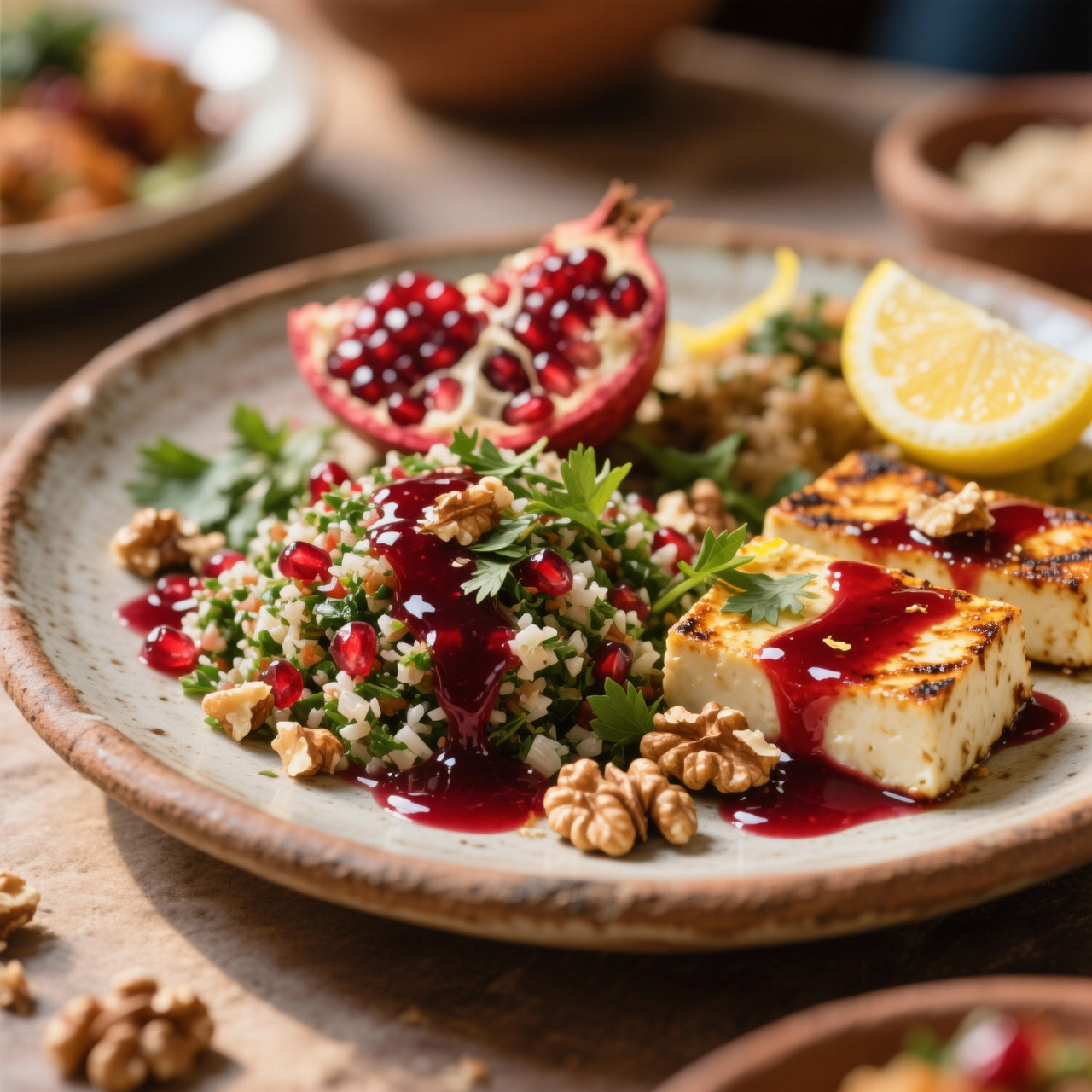
Pomegranate molasses dressing
I’ve always believed that the soul of a Lebanese table isn’t found in the main dishes, but in the quiet, vibrant condiments that tie everything together. This pomegranate molasses dressing is one of those quiet anchors, born from the Levantine tradition of balancing the bright, astringent punch of reduced pomegranate juice with the earthy richness of olive oil. Historically, pomegranate molasses was a way to preserve the harvest’s tartness for the long winter months, and it found its perfect home in fattoush, where it cuts through toasted bread and crisp herbs without overwhelming them. When I make it, I’m careful to remember that this isn’t just a salad topping; it’s a flavor bridge. The real magic happens when the acidity is properly tamed. Too much molasses leaves the palate puckered and heavy, while too much oil dulls the signature tang that makes the dressing sing. The most common pitfall I see is rushing the emulsion or relying on pre-bottled molasses that’s already thickened with sugar or corn syrup. Authentic results demand patience: whisk the molasses slowly into good extra-virgin olive oil, let a little crushed garlic and dried mint rest, and always balance with a touch of sumac or lemon if the molasses is too dense. It’s a simple mixture, but it demands respect for the ratio. Once you get that balance right, you’ll understand why generations of cooks have kept this tangy, ruby-hued liquid in their pantries. It transforms humble vegetables into something celebratory, and it does so with an elegance that only comes from restraint.
Nutrition
| Per serving | Calories | Protein | Carbs | Fat | Sat fat | Fibre | Sugar | Sodium |
|---|---|---|---|---|---|---|---|---|
| beginner | 150kcal | 0g | 9g | 13g | 2g | 1g | 7g | 40mg |
| intermediate | 85kcal | 0g | 11g | 8g | 1g | 0g | 9g | 80mg |
| expert | 68kcal | 0g | 11g | 4g | 1g | 1g | 9g | 185mg |
Per serving · Ava-estimated — a guide, not a clinical figure.
- 60 mlpomegranate molasses— Thick, unsweetened variety recommended
- 30 mlextra virgin olive oil— High-quality cold-pressed oil preferred
- 15 mllemon juice— Freshly squeezed
- 1 clovegarlic— Finely minced or pressed
- 1 gground cumin(optional)— Lightly toasted for deeper aroma
- 3 gfine sea salt— Adjust to taste after mixing
This beginner-friendly version skips the traditional multi-hour reduction of fresh pomegranate juice, opting instead for a reliable jarred pomegranate molasses that delivers the exact sweet-tart backbone Lebanese cooks prize. The focus here is on effortless balancing and quick emulsification, making it perfect for first-time dressings. You will simply whisk the molasses with extra virgin olive oil, a touch of maple syrup, minced garlic, and classic pantry spices like sumac and dried mint. Because store-bought molasses varies wildly in viscosity and acidity, the key technique to watch for is gradual tasting and adjusting. Add the oil in a slow, steady stream while whisking vigorously, or simply seal everything in a mason jar and shake until glossy. If the dressing separates after sitting, a quick thirty-second whisk restores it instantly. Taste for balance after every addition; if it leans too sharp, a half-teaspoon of sweetener rounds it out, while a splash of lemon juice brightens heavy sweetness. This approach guarantees a consistently vibrant, restaurant-style result in under ten minutes, with zero guesswork and full control over your fattoush’s final tang.
Equipment
- Medium mixing bowl— Glass or stainless steel works best for easy whisking
- Wire whisk— A tight-lidded mason jar can substitute for vigorous shaking
- Measuring spoons— Precision matters for acid-to-sweet balance
Method
- 1
Combine the jarred pomegranate molasses, minced garlic, dried mint, sumac, and a pinch of salt in a medium mixing bowl.
Taste the molasses first; sweeter commercial brands require less added sweetener.
mise en place~ 1 min - 2
Whisk in the maple syrup or granulated sugar until fully dissolved into the thick paste.
Warm the bowl slightly if the paste is too stubborn to blend smoothly.
dissolving~ 1 min - 3
Drizzle the extra virgin olive oil into the mixture in a thin, steady stream while whisking continuously.
Adding oil slowly prevents splitting and builds a stable emulsion.
emulsification~ 2 minTricky bit - 4
Adjust the seasoning by tasting, adding fresh lemon juice for brightness or more sweetener if needed.
The dressing should coat the back of a spoon but still pour easily.
balancing~ 1 min - 5
Transfer the mixture to a sealed container and refrigerate until ready to use, shaking briefly before tossing with salad.
Natural separation is normal; just re-shake or stir vigorously before serving.
resting
Cooking from frozen
Thaw overnight in the refrigerator and whisk vigorously to restore the emulsion before serving.
Storage times are a guide — always use your judgement and store food safely.