
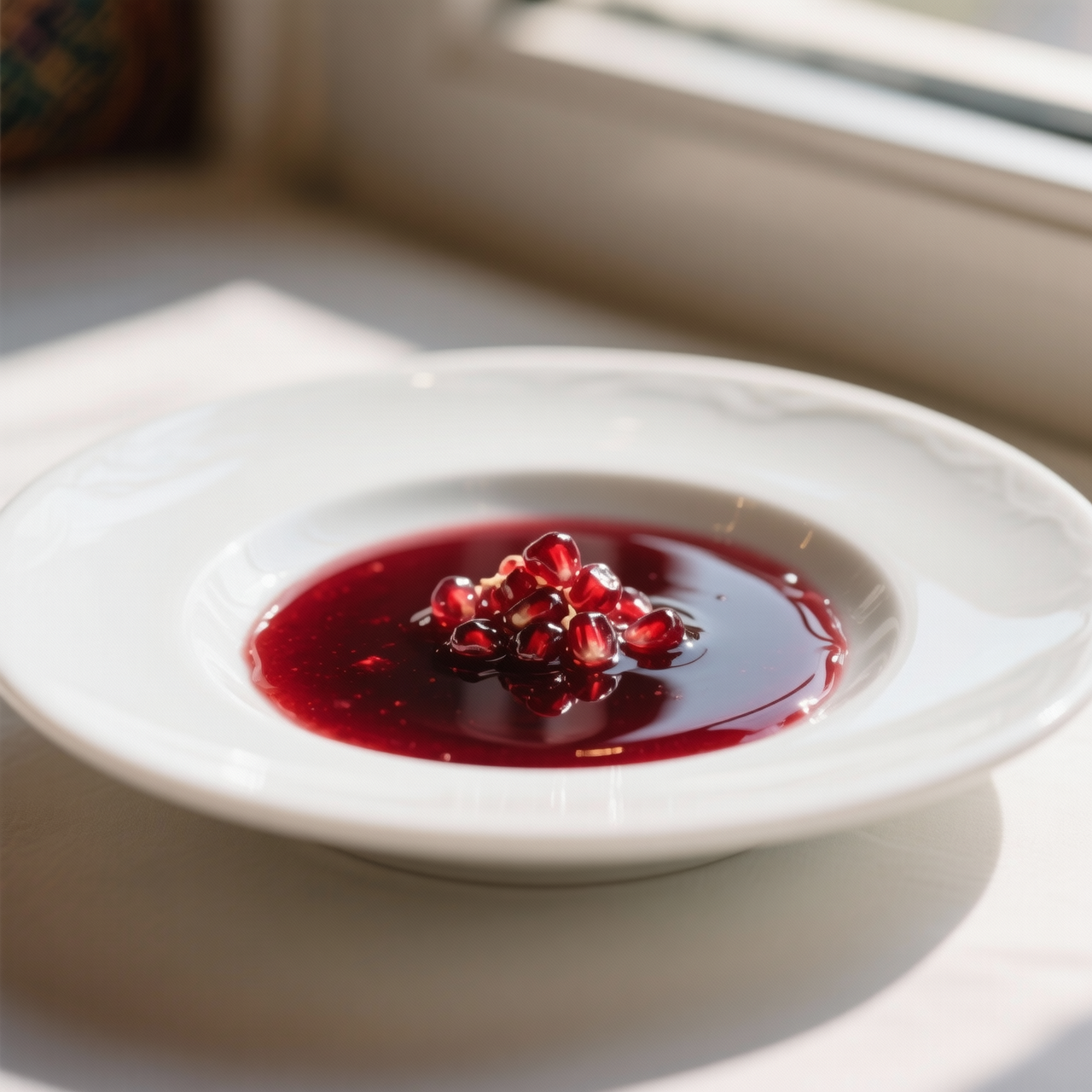
Pomegranate molasses (rob-e anar)
When I first learned to make rob-e anar in a cramped Tehran kitchen, I didn’t realize how much patience a single fruit demands. Pomegranate molasses is essentially the soul of Persian cooking, distilled into a dark, viscous syrup that has anchored our pantries for centuries. Historically, it emerged from the necessity to preserve the fleeting autumn harvest before refrigeration existed, transforming tart, ruby arils into a pantry staple that could survive long winters. Today, it matters because it’s the invisible backbone of khoresh-e fesenjan, the bright counterpoint to slow-braised lamb, and the quiet magic that elevates roasted vegetables. But the process is brutally unforgiving if you rush it. The most common pitfall is applying high heat, which scorches the natural sugars and leaves behind a bitter, acrid residue that ruins an entire stew. You must simmer gently, almost lazily, letting the juice reduce over hours while occasionally skimming the pale foam that rises to the surface. Another mistake is over-reducing it to a hard candy stage instead of stopping at a thick, pourable consistency that ribbons off a spoon. I’ve ruined batches by turning my back for twenty minutes, only to return to a glassy, unworkable brick. True rob-e anar requires presence. It’s a meditative practice as much as a cooking technique, rewarding those who listen to the changing viscosity and trust their instincts. When done right, it balances sweet and sour with a depth that bottled alternatives simply cannot mimic, proving that the oldest methods often yield the most profound flavors.
Nutrition
| Per serving | Calories | Protein | Carbs | Fat | Sat fat | Fibre | Sugar | Sodium |
|---|---|---|---|---|---|---|---|---|
| beginner | 140kcal | 1g | 32g | 0g | 0g | 0g | 28g | 10mg |
| intermediate | 45kcal | 0g | 11g | 0g | 0g | 0g | 10g | 2mg |
| expert | 180kcal | 1g | 46g | 0g | 0g | 1g | 42g | 5mg |
Per serving · Ava-estimated — a guide, not a clinical figure.
- 1000 gPomegranate juice— Freshly pressed and finely strained to remove seeds and pulp
This beginner-friendly approach skips the labor-intensive process of pressing fresh arils by starting with high-quality, unsweetened one hundred percent pomegranate juice from the grocery aisle. The entire technique hinges on patience and gentle heat control rather than complex skills. You will pour the juice into a wide, heavy-bottomed pan and slowly simmer it until it thickens into a glossy, pourable syrup. The most important thing to watch for is the edge of the liquid; as water evaporates, the concentrated sugars will darken quickly and can scorch if the heat creeps up. Stirring every few minutes with a wooden spoon ensures even evaporation and prevents a bitter, burnt taste. Remember that the molasses will look slightly thinner than you expect when hot, but it naturally thickens into a rich, sticky glaze as it cools to room temperature. Do not rush the reduction by cranking the burner, or you will lose the bright, tart flavor that defines authentic rob-e anar. Once cooled, transfer it to a clean glass jar and store it in the fridge, where it will keep for months and elevate your everyday stews and marinades with zero guesswork.
Equipment
- Wide heavy-bottomed pan— Stainless steel or enameled cast iron prevents metallic reactions with acidic juice
- Wooden spoon— For gentle, consistent stirring without scratching the pan surface
- Heatproof glass jar— Clean and completely dry to prevent spoilage during storage
Method
- 1
Pour four cups of unsweetened 100% pomegranate juice into a wide, heavy-bottomed pan.
A wide surface area accelerates evaporation while keeping temperatures manageable.
measuring~ 1 min - 2
Place the pan over medium-high heat and bring the liquid to a gentle simmer.
Look for steady, small bubbles breaking across the entire surface.
simmering~ 5 min - 3
Reduce the heat to low and simmer uncovered, stirring gently every three to four minutes.
Watch the edges closely for darkening; lower the heat immediately if bubbles turn vigorous.
reducing~ 45 minTricky bit - 4
Dip a wooden spoon into the syrup and remove from heat when it lightly coats the back.
The mixture will look thinner than expected; it thickens significantly as it cools.
coating~ 1 min - 5
Transfer the hot syrup to a clean glass jar and let it cool completely before sealing.
Stir occasionally during cooling to maintain a uniform, glossy texture.
cooling~ 3 min
Cooking from frozen
Thaw overnight in the refrigerator and whisk vigorously to restore a smooth, pourable consistency.
Storage times are a guide — always use your judgement and store food safely.