
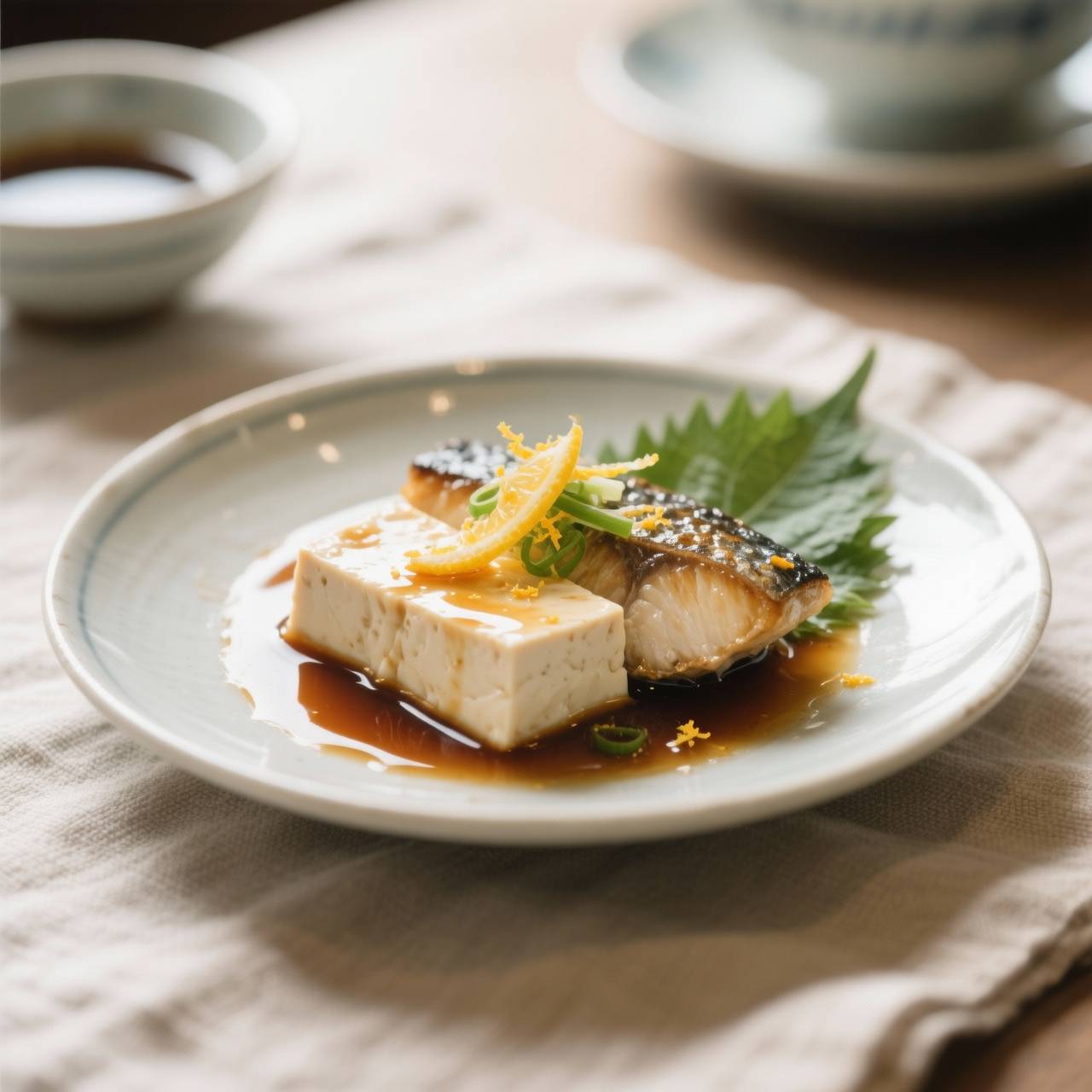
Ponzu
I’ve always believed that the true magic of Japanese cuisine lies in its balance of contrasts, and nowhere is that more evident than in ponzu. This bright, savory elixir traces its roots to the Edo period, when Dutch traders introduced citrus and soy to Nagasaki, and Japanese cooks began weaving them together with kelp and bonito flakes to create a dipping sauce that could elevate everything from simmered hot pots to delicate sashimi. To me, ponzu isn’t just a condiment; it’s a masterclass in umami and acidity dancing on equal footing. Getting it right requires patience and restraint. The most common pitfall I see is rushing the infusion. Many home cooks simply whisk soy sauce and citrus juice together and call it a day, but that yields a flat, one-dimensional liquid. Real ponzu demands time for the kombu and katsuobushi to steep, allowing their deep, oceanic notes to marry with the sharp brightness of yuzu, sudachi, or lemon. Another frequent mistake is using pasteurized, bottled citrus instead of fresh juice. The volatile aromatics in fresh peel and pulp are irreplaceable; they’re the very soul of the sauce. I always strain the mixture gently, avoiding any harsh pressing that could pull out bitter pith or cloudy sediment. When balanced correctly, ponzu should taste alive—crisp, salty, subtly sweet, and profoundly savory all at once. It’s a sauce that teaches you how to listen to ingredients, how to step back and let time do the heavy lifting. Once you taste a properly rested batch, you’ll understand why it has anchored Japanese tables for centuries. It’s not just a dip; it’s a bridge between land, sea, and season.
Nutrition
| Per serving | Calories | Protein | Carbs | Fat | Sat fat | Fibre | Sugar | Sodium |
|---|---|---|---|---|---|---|---|---|
| beginner | 30kcal | 1g | 5g | 0g | 0g | 0g | 4g | 740mg |
| intermediate | 38kcal | 2g | 7g | 0g | 0g | 0g | 5g | 920mg |
| expert | 24kcal | 1g | 3g | 0g | 0g | 0g | 2g | 840mg |
Per serving · Ava-estimated — a guide, not a clinical figure.
- 240 mlSoy sauce— Japanese shoyu recommended for authentic flavor
- 60 mlYuzu juice— Freshly squeezed or high-quality bottled
- 60 mlRice vinegar— Unseasoned variety preferred
- 30 mlMirin— Use hon-mirin, not sweet cooking wine
- 400 mlWater— Filtered water for dashi base
- 15 gKatsuobushi— Thinly shaved bonito flakes
- 5 gKombu— Wipe clean with dry cloth, do not rinse
- 10 gGranulated sugar(optional)— Adjust to balance citrus acidity
This beginner-friendly approach to ponzu skips the traditional long simmering and delicate dashi brewing by leveraging high-quality jarred shortcuts. You will use store-bought dashi stock, bottled citrus juice, and a reliable soy sauce as your foundation, allowing you to achieve a balanced, authentic flavor profile in minutes without the guesswork. The key to success at this level is precise measurement and gentle integration. Begin by combining your liquid bases in a small saucepan and warming them just until the mirin or sweetener fully dissolves; avoid boiling, as high heat will flatten the delicate citrus notes and make the soy sauce taste harsh. Once cooled slightly, whisk in the fresh citrus juice and a touch of mirin or sugar to brighten the profile. Taste as you go, adjusting the ratio of salty to tart until it sings on the palate. Finally, strain through a fine-mesh sieve to catch any undissolved bits, then let the sauce rest in the refrigerator for at least thirty minutes. This resting period is non-negotiable for beginners, as it allows the sharp edges to mellow and the umami to fully integrate, guaranteeing a restaurant-quality dipping sauce on your very first try.
Equipment
- Small saucepan— non-reactive stainless steel is ideal
- Fine-mesh strainer— essential for removing undissolved solids
- Whisk— stainless steel works best
- Glass storage jar— with airtight lid for resting
Method
- 1
Combine soy sauce, instant dashi, and mirin in a small saucepan over medium-low heat.
Keep the flame low to preserve delicate umami compounds.
warming~ 1 min - 2
Stir constantly until the sweetener fully dissolves, then immediately remove from heat.
Do not let the mixture simmer, as boiling will mute the citrus notes.
dissolving~ 1 minTricky bit - 3
Whisk in bottled yuzu or lemon juice and a small pinch of sugar until completely smooth.
Taste and adjust the sweet-to-tart ratio before moving on.
whisking~ 1 min - 4
Strain the cooled liquid through a fine-mesh sieve into a sterilized glass container.
Discard any solids to ensure a silky, restaurant-smooth finish.
straining~ 0 min - 5
Seal the container tightly and refrigerate for at least thirty minutes before use.
Resting allows the sharp acidity to mellow and the flavors to fully marry.
resting~ 30 min
Cooking from frozen
Thaw overnight in the refrigerator, whisk thoroughly to recombine, and serve chilled without reheating.
Storage times are a guide — always use your judgement and store food safely.