
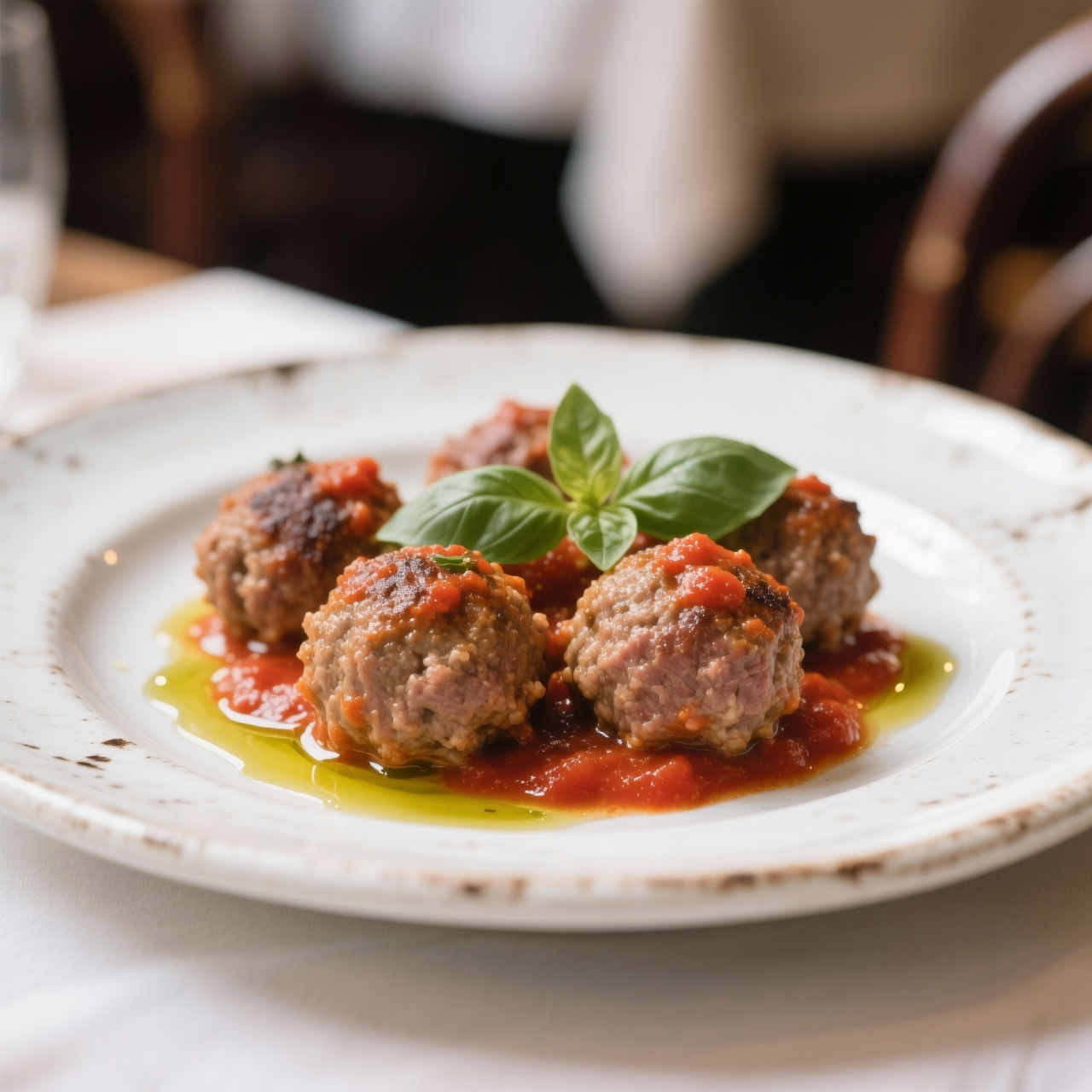
Pork & beef meatballs (polpette)
I first learned to shape polpette in a sunlit Nonna’s kitchen in Emilia-Romagna, watching her hands coax moisture from humble cuts rather than relying on binders or shortcuts. Traditional Italian meatballs are not the dense, rubbery spheres you find vacuum-packed in supermarket aisles, where a single plastic tray of pre-rolled versions will cost you nearly five euros while delivering nothing but salt, stabilisers, and a hollow, cardboard-like chew. Making them properly from scratch matters because the texture relies entirely on how you treat the meat. The most frequent mistake I see is treating the mixture like dough; kneading it until it turns tough and compact, which squeezes out the precious fat and leaves you with dry pellets. Instead, you want a light, almost reluctant touch, folding the pork and beef together with a panade of stale bread and whole milk, then letting it rest so the proteins relax and absorb the liquid. Many cooks also skip the seasoning depth, assuming salt alone will carry the flavour, but a proper polpette needs the quiet warmth of nutmeg, a touch of grated pecorino, and fresh parsley to bridge the gap between richness and brightness. When you commit to building them by hand, you gain complete control over the fat ratio and the browning process, which develops a crust that holds onto any sauce you later simmer them in. It takes a little more time than cracking open a tub, but the result is a deeply savoury, tender bite that actually tastes of meat and care, proving that the old ways exist precisely because they work.
Nutrition
| Per serving | Calories | Protein | Carbs | Fat | Sat fat | Fibre | Sugar | Sodium |
|---|---|---|---|---|---|---|---|---|
| beginner | 545kcal | 36g | 22g | 30g | 10g | 3g | 7g | 680mg |
| intermediate | 485kcal | 32g | 26g | 28g | 9g | 4g | 9g | 640mg |
| expert | 490kcal | 33g | 26g | 25g | 8g | 4g | 8g | 620mg |
Per serving · Ava-estimated — a guide, not a clinical figure.
- 300 gground pork— preferably a mix of lean and fatty cuts
- 300 gground beef— 80/20 lean-to-fat ratio works best
- 60 gstale bread— crusts removed, torn into small pieces
- 120 mlwhole milk— room temperature for soaking bread
- 1 piecelarge egg— lightly beaten before incorporating
- 60 gParmigiano-Reggiano— finely grated from a block
- 2 piecegarlic clove— peeled and finely minced
- 15 gfresh flat-leaf parsley— tender leaves only, finely chopped
- 8 gfine sea salt— adjust to taste based on cheese saltiness
- 2 gblack pepper— freshly ground
- 1 gnutmeg(optional)— freshly grated, traditional but optional
- 30 mlextra-virgin olive oil— for pan-frying or brushing baking sheets
This beginner-friendly approach strips away the intimidation of traditional Italian meatball making while keeping every ingredient strictly from scratch. Forget the expensive supermarket tubs loaded with fillers, stabilisers, and excessive sodium that leave you with a rubbery texture and a hollow aftertaste. By using a simple blend of ground pork and beef, you control the fat ratio for a genuinely juicy bite. We skip tedious breading and instead use a straightforward panade of fresh milk, torn crustless bread, and a single egg to bind the mixture gently. The key technique here is the gentle mix: overworking the meat develops tough proteins, so combine ingredients just until uniform. Watch for even heat distribution when browning; a steady medium flame ensures a golden crust without burning the exterior before the centre sets. Once seared, they finish cooking directly in a quick, bright tomato reduction made from whole plum tomatoes and fresh aromatics, which tenderises the meatballs and builds a rich, cohesive sauce. This method is forgiving, scales effortlessly for batch freezing, and guarantees a restaurant-quality result without hidden shortcuts.
Equipment
- Heavy-bottomed skillet— 12-inch diameter ensures even browning without crowding
- Large mixing bowl— wide rim prevents spillage during mixing
- Silicone spatula(optional)— gentle enough to fold without overworking the meat
Method
- 1
Crush whole plum tomatoes by hand into a bowl and stir in finely minced garlic, chopped fresh basil, a pinch of salt, and a tablespoon of olive oil.
Hand-crushing preserves natural texture and prevents the sauce from becoming watery.
hand_crushing~ 2 min - 2
Tear two thick slices of fresh white bread into a shallow dish, pour over a quarter cup of whole milk, and let them soak until completely soft.
This creates a panade that locks in moisture during cooking.
soaking~ 5 min - 3
Add the ground pork and beef, one lightly beaten egg, two tablespoons of grated Parmesan, and the soaked bread to a large mixing bowl.
Ensure dairy and eggs are at room temperature for even blending.
combining~ 1 min - 4
Gently fold the ingredients together with your fingertips until just incorporated, avoiding vigorous stirring or squeezing.
Stop immediately when the mixture looks uniform; overworking develops tough myosin proteins.
folding~ 2 minTricky bit - 5
Roll the mixture into twelve equal portions using lightly oiled hands and place them on a clean tray.
Keep them uniform so they cook evenly in the same timeframe.
portioning~ 3 min - 6
Sear the meatballs in a hot, oiled heavy-bottomed pan until golden on all sides, pour the crushed tomato mixture around them, cover, and simmer until cooked through.
Maintain a gentle bubble; boiling will toughen the protein and split the emulsion.
braising~ 20 minTricky bit
Cooking from frozen
Thaw overnight in the fridge before simmering gently in sauce, or bake directly from frozen at 180°C until piping hot.
Storage times are a guide — always use your judgement and store food safely.