
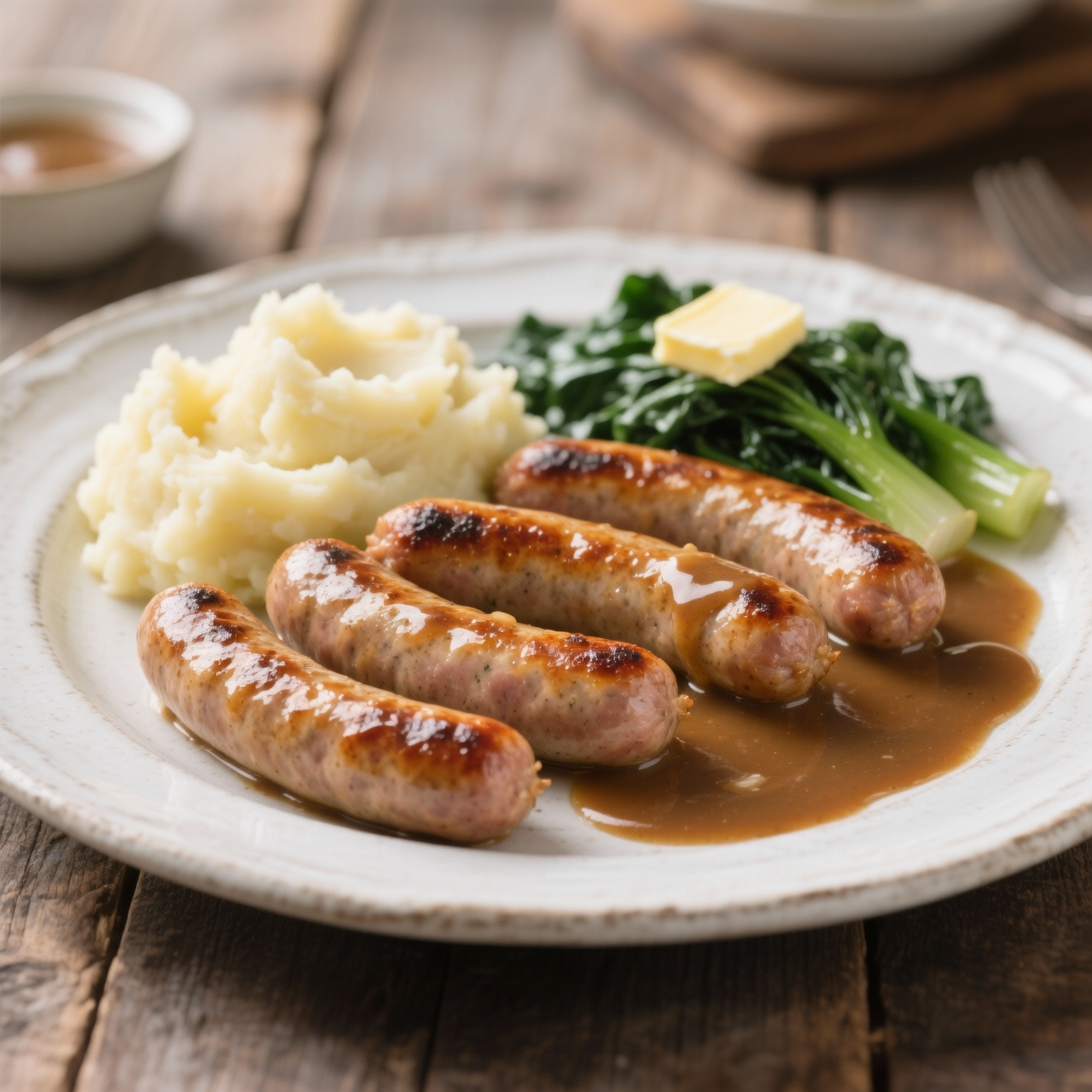
Pork sausages
There is something profoundly comforting about the humble British banger, yet the supermarket packs we have grown accustomed to are a triste shadow of their former glory. When you look at the price of premium pork sausages climbing past a fiver for a meager pack of six, and then read the label to find rusk, water, and a labyrinth of preservatives masquerading as meat, the frustration is palpable. Making your own pork sausages at home is a revelation that completely eclipses the shop-bought alternative. You control the quality of the pork shoulder and belly, ensuring a perfect, juicy fat ratio without relying on cheap fillers. The origins of the British sausage lie in the nose-to-tail ethos of our traditional butchers, utilizing every scrap beautifully. The most common pitfall I see is using lean meat; you absolutely need that twenty to thirty percent fat content to keep them succulent, and overworking the mixture will make them rubbery. Another mistake is skimping on the seasoning or rushing the resting time, which prevents the flavors from marrying. By mixing your own, you avoid the hidden sodium and packet mixes of commercial brands, achieving a deeply savory, herbaceous bite that snaps perfectly in the pan. It is a brilliant batch-cooking hero project. You can mix a massive bowlful, form them into links or simple patties, and freeze them. Whenever the urge for bangers and mash strikes, you have a superior, wholesome staple ready to go, entirely free from the compromises of the supermarket shelf.
Nutrition
| Per serving | Calories | Protein | Carbs | Fat | Sat fat | Fibre | Sugar | Sodium |
|---|---|---|---|---|---|---|---|---|
| beginner | 520kcal | 38g | 4g | 38g | 14g | 1g | 1g | 750mg |
| intermediate | 520kcal | 32g | 4g | 42g | 15g | 0g | 1g | 650mg |
| expert | 385kcal | 24g | 1g | 32g | 11g | 0g | 0g | 850mg |
Per serving · Ava-estimated — a guide, not a clinical figure.
- 800 gpork shoulder— trimmed of any hard sinew, cut into 2cm cubes
- 200 gpork back fat— cut into 2cm cubes
- 100 grusk— can be substituted with fresh white breadcrumbs
- 100 mlcold water— kept very cold to prevent the fat from smearing during mixing
- 15 gsea salt— fine sea salt is preferred for even distribution
- 5 gblack pepper— freshly ground
- 2 gground mace— traditional British sausage spice
- 10 gfresh sage— leaves only, finely chopped
- 5 gfresh thyme— leaves picked and finely chopped
- 2 mhog casing(optional)— soaked in warm water if using for links, omit if making patties
Supermarket sausages cost around £4 for a pack of eight, yet they often contain barely 40% actual pork, padded out with cheap rusk, water, and preservatives to keep costs down. This beginner-friendly from-scratch version ditches the fillers and nitrates, delivering a pure, meaty bite without the fuss of traditional casings. Instead of wrestling with natural hog casings and a mincer, we use a forgiving skinless link method that relies on keeping the meat ice-cold to maintain a perfect emulsion. You will blitz fresh bread for a tender texture and mix it directly with high-quality pork shoulder. The technique is simplified: no stuffing tubes, no pricking, and no splitting in the pan. Just mix, shape, and chill. The key to watch for is temperature; if the fat smears or melts during mixing, the texture will be crumbly. Keep your bowl and hands as cold as possible, and you will achieve a snappy, juicy result that easily beats the shop-bought packs, freezing beautifully for future meals.
Equipment
- Food processor— A blender can work if you pulse carefully to avoid pureeing.
- Heavy-bottomed pan— Cast iron or a sturdy non-stick skillet works best for an even crust.
- Baking sheet— Lined with parchment paper for freezing the batch.
Method
- 1
Place the food processor bowl and blade in the freezer for 15 minutes to ensure they are ice-cold before mixing.
Keeping equipment cold prevents the pork fat from smearing during processing.
chilling~ 15 min - 2
Tear the fresh bread into rough chunks and blitz in the chilled food processor until it forms fine, even crumbs.
Do not use shop-bought dried breadcrumbs; fresh crumbs provide the correct tender bite.
processing~ 1 min - 3
Trim any tough silverskin from the pork shoulder, cut the meat into 2cm cubes, and freeze for 20 minutes until firm but not solid.
Partially freezing the meat ensures it cuts cleanly rather than mashing.
trimming~ 20 min - 4
Add the chilled pork cubes, fresh breadcrumbs, salt, pepper, sage, and nutmeg to the food processor.
Ensure the meat is still very cold to the touch before adding the seasonings.
combining~ 1 min - 5
Pulse the mixture until it is coarsely ground and sticky, being careful not to over-blend into a smooth paste.
Stop as soon as it resembles a coarse mince; over-processing will make the sausages rubbery.
grinding~ 1 minTricky bit - 6
Transfer the mixture to a cold bowl, add the ice water, and mix vigorously with your hands until it becomes a cohesive, sticky paste.
The water helps emulsify the fat and keeps the cooked sausage juicy.
emulsifying~ 2 min - 7
Divide the mixture into 16 equal portions and roll them into firm, cigar-shaped links between your damp hands.
Wet your hands slightly to prevent the sticky meat from clinging to your skin.
portioning~ 5 min - 8
Heat a splash of oil in a heavy-bottomed pan over medium-low heat and fry the sausages for 12 to 15 minutes, turning regularly, until deeply browned and cooked through.
Cooking them gently prevents the skins from splitting and the fat from burning.
pan-frying~ 15 min
Cooking from frozen
Thaw in the fridge overnight before cooking, or pan-fry gently from frozen in a covered pan with a splash of water.
Storage times are a guide — always use your judgement and store food safely.