
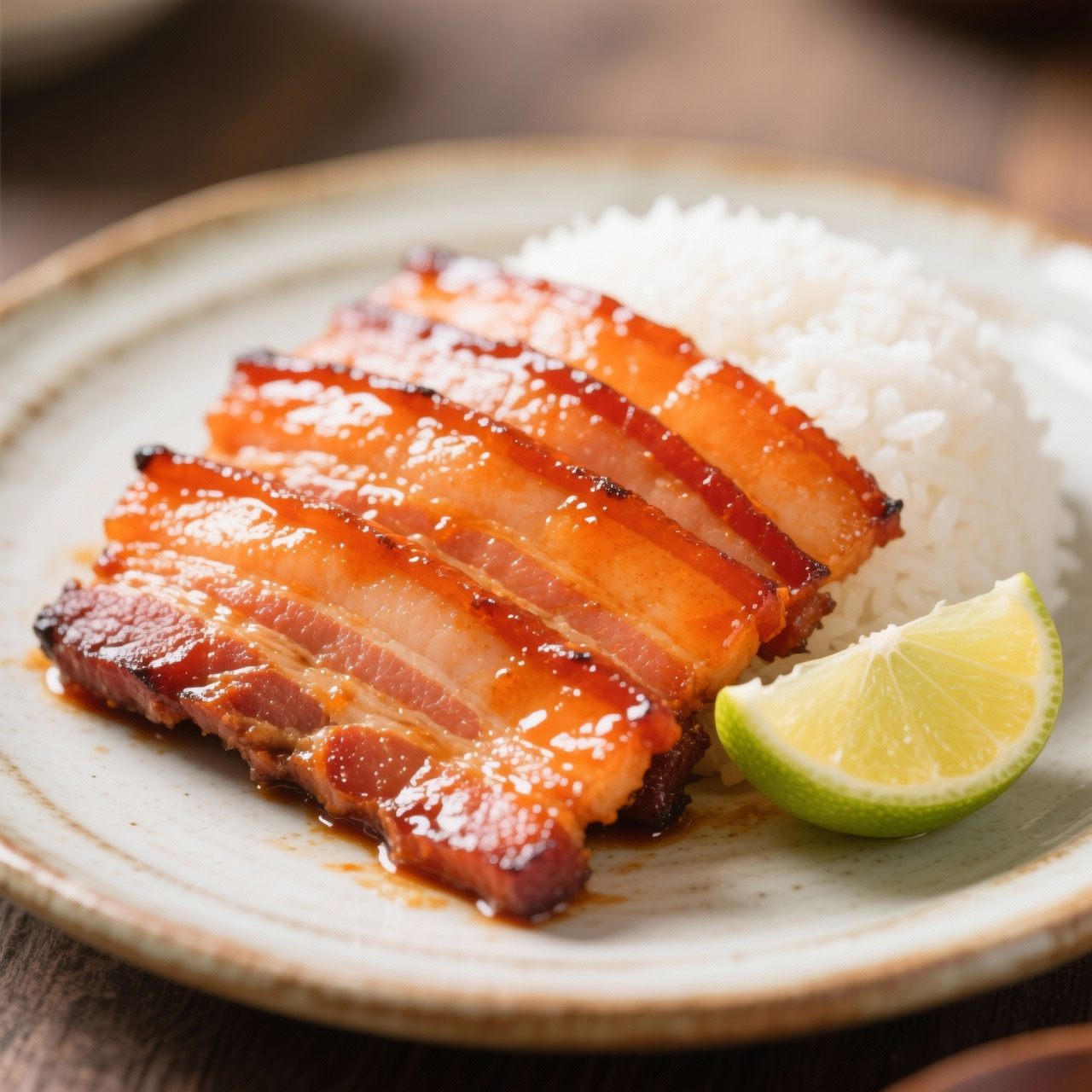
Pork Tocino
I still remember my first encounter with proper pork tocino, long before I understood how deeply it was woven into Filipino mornings. Traditionally born from Spanish influences and adapted by Kapampangan cooks, it is a delicate balance of sweet, salty, and umami that transforms humble pork into something almost celebratory. Today, it is everywhere, but that ubiquity has a dark side: most supermarket packs cost barely three dollars, yet they are loaded with synthetic pink dyes, liquid smoke, and preservative-laden brines that leave you with a cloying, one-dimensional bite and a metallic aftertaste. When I make it from scratch, I am reclaiming that lost balance. I cure the meat myself with real garlic, cane vinegar, and just enough brown sugar to caramelize properly without scorching. The biggest pitfall I see is rushing the cook. Sugar burns fast, and if you crank the heat too high, you will end up with bitter charcoal instead of glossy, tender slices. Another mistake is over-salting during the cure; the meat shrinks as it draws moisture, concentrating the brine, so restraint is everything. This is why I treat it as a batch hero. Once you have massaged the cure into the pork and let it rest, you can portion and freeze it raw for months, pulling it out whenever you need a proper breakfast that does not compromise on integrity. Making it yourself is not just cheaper in the long run, it is the only way to guarantee clean, recognizable ingredients and that signature melt-in-your-mouth sweetness that actually tastes like food, not chemistry.
Nutrition
| Per serving | Calories | Protein | Carbs | Fat | Sat fat | Fibre | Sugar | Sodium |
|---|---|---|---|---|---|---|---|---|
| beginner | 360kcal | 21g | 15g | 20g | 6g | 0g | 13g | 650mg |
| intermediate | 540kcal | 28g | 22g | 26g | 9g | 1g | 18g | 720mg |
| expert | 540kcal | 28g | 34g | 30g | 9g | 1g | 26g | 420mg |
Per serving · Ava-estimated — a guide, not a clinical figure.
- 1000 gpork shoulder— Thinly sliced against the grain
- 120 gbrown sugar— Lightly packed
- 45 mlsoy sauce— Regular or light
- 30 ggarlic— Finely minced
- 60 mlpineapple juice— Unsweetened, for tenderizing
- 5 gannatto seed(optional)— Steeped in 30 ml warm water and strained
- 3 gground black pepper— Freshly cracked
- 5 gsalt— Fine sea salt
Store-bought tocino often relies on heavy nitrates, artificial red dyes, and excessive refined sugars, costing upwards of eight dollars per pound while delivering a synthetic, one-note sweetness. This beginner-friendly version strips away the processing, using whole ingredients you already have to build a gentle, balanced cure that highlights the pork’s natural flavour. Unlike traditional methods that require overnight curing or precise temperature control, this approach uses a quick, room-temperature marinade that penetrates thinly sliced pork shoulder in just a few hours. Watch the heat carefully during cooking; the natural sugars caramelize quickly and can scorch if left unattended. We keep the technique forgiving by using a simple hand-whisked blend of brown sugar, crushed garlic, rice vinegar, and a touch of annatto oil for authentic colour. The goal is a reliable first attempt that teaches you how sugar and acid work together to tenderize meat, with zero reliance on packet mixes or pre-made pastes. Once cured, the batches freeze beautifully, giving you quick, wholesome breakfast portions that taste far superior to anything from a plastic wrapper.
Equipment
- Mixing bowl— glass or stainless steel works best
- Non-stick skillet— essential for sugar-heavy marinades
- Resealable freezer bags— label with date before freezing
Method
- 1
Combine brown sugar, finely grated garlic, rice vinegar, and a pinch of salt in a medium bowl.
Ensure the sugar is fully dissolved to prevent gritty pockets on the meat.
dissolving~ 1 min - 2
Add the thinly sliced pork shoulder to the mixture and gently massage the marinade into every strip.
Use clean hands for even distribution, then pack tightly into a resealable bag.
massaging~ 2 min - 3
Let the bag rest on the counter to allow the cure to penetrate the meat.
Thirty minutes is sufficient for thin slices; longer is fine but not required here.
curing~ 30 min - 4
Heat a non-stick skillet over medium heat and add a splash of water before adding the pork.
Starting with water prevents the sugar from burning while the meat cooks through.
steaming~ 5 minTricky bit - 5
Cook until the water evaporates and the pork caramelizes in its own rendered fat.
Lower the heat immediately once the liquid is gone and flip frequently to avoid scorching.
caramelizing~ 5 minTricky bit
Cooking from frozen
Thaw overnight in the fridge and pan-fry gently with a splash of water until the liquid evaporates and the edges caramelize, or reheat directly from frozen in a covered skillet with a little broth.
Storage times are a guide — always use your judgement and store food safely.