
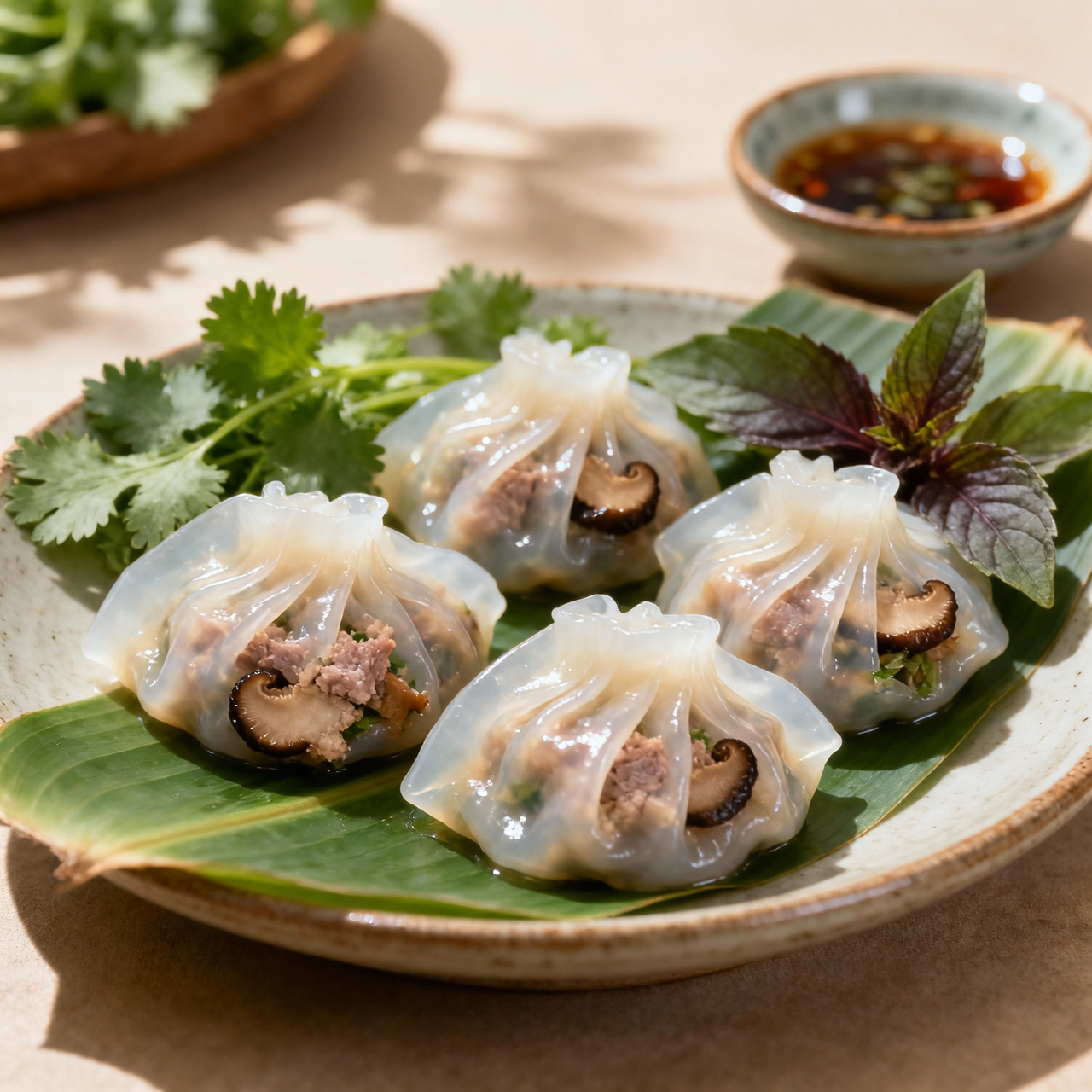
Pork & Wood-Ear Dumplings (Banh Bot Loc)
When I first encountered bánh bột lọc at a bustling street stall in Huế, the translucent tapioca skins gleamed like polished glass, giving way to a savory pork and wood-ear filling that snapped with every bite. Making these dumplings from scratch isn’t just about replicating a recipe; it’s about reclaiming a texture and flavor that mass production completely strips away. You’ll find frozen packs of these in Asian supermarkets for around ten dollars, but they’re a pale imitation—loaded with starch fillers, artificial pork flavorings, and wood-ear that’s been rehydrated into a rubbery mush. The real magic happens when you cook fresh, finely minced pork shoulder with properly soaked wood-ear mushrooms, shallots, and a whisper of fish sauce, then wrap it in a dough made purely from high-quality tapioca starch and hot water. The dough is famously temperamental. Most beginners overhydrate it, ending up with a gummy paste that refuses to seal, or they skip the vigorous initial kneading, which causes the wrappers to crack during boiling. The secret lies in treating the hot water infusion like a delicate emulsion, adding it gradually while the starch is still dry, and folding the dumplings quickly before the dough stiffens. This dish matters because it bridges the gap between humble street food and meticulous craft. When you master the balance, the skin becomes a resilient, chewy shell that perfectly encapsulates the rich, earthy filling. I’ve spent years refining this ratio so the dumplings hold their shape whether you’re steaming them fresh or wrapping them raw for later. It’s a project that demands patience, but the result—a glossy, translucent pocket of pure Vietnamese comfort—is worth every careful fold.
Nutrition
| Per serving | Calories | Protein | Carbs | Fat | Sat fat | Fibre | Sugar | Sodium |
|---|---|---|---|---|---|---|---|---|
| beginner | 410kcal | 17g | 50g | 14g | 4g | 2g | 3g | 710mg |
| intermediate | 285kcal | 15g | 42g | 7g | 3g | 2g | 5g | 520mg |
| expert | 420kcal | 18g | 48g | 16g | 6g | 3g | 4g | 580mg |
Per serving · Ava-estimated — a guide, not a clinical figure.
- 200 gTapioca starch— Fine grain preferred for translucent wrapper
- 150 gPork shoulder— Cut into small 1 cm cubes
- 10 gDried wood ear mushroom— Rehydrate in warm water until soft, then finely chop
- 25 gShallot— Finely minced
- 20 mlFish sauce— High-quality Vietnamese brand recommended
- 10 gGranulated sugar
- 15 mlNeutral oil— For frying filling and greasing hands during wrapping
- 150 mlHot water— Approximately 80 C, adjust as needed for dough consistency
- 6 pieceBanana leaf(optional)— Cut into 10 cm squares, briefly wilt over flame or blanch to make pliable
- 2 gGround black pepper
Store-bought banh bot loc are notoriously rubbery, heavily preserved, and cost upwards of eight dollars for a tiny pack of six. This beginner-friendly, entirely from-scratch version delivers the authentic chewy, translucent wrapper and savory pork-mushroom center without relying on industrial stabilizers or artificial flavor enhancers. The key difference here is the simplified hot-water dough method. By pouring boiling water directly into pure tapioca starch and stirring rapidly, the starch gelatinizes instantly, creating a naturally pliable, forgiving dough that requires zero resting time and eliminates the common beginner frustration of cracking skins. You will skip intricate pleating in favor of a straightforward half-moon crimp, which seals reliably every time. Keep the dough covered with a damp towel between wrappers to retain moisture, as tapioca dries out quickly. The filling comes together in one bowl with finely minced pork, rehydrated wood-ear mushrooms, and basic pantry seasonings. Steaming is the only heat application, transforming the opaque dough into glossy, tender dumplings in under fifteen minutes. This streamlined approach guarantees a confident first attempt while preserving the traditional texture and clean, savory flavor profile that frozen versions completely lack.
Equipment
- Bamboo or metal steamer— line with parchment to prevent sticking
- Heavy-bottomed mixing bowl— retains heat for dough hydration
- Rolling pin— a smooth glass bottle works well
Method
- 1
Pour boiling water over dried wood-ear mushrooms and let them soften for twenty minutes before squeezing dry and mincing finely.
Drain thoroughly to avoid a soggy filling.
rehydration~ 20 min - 2
Combine minced pork, chopped mushrooms, fish sauce, ground black pepper, and finely diced shallots in a bowl.
Mix until the ingredients are evenly distributed and slightly sticky.
binding~ 3 min - 3
Pour boiling water directly into tapioca starch and stir vigorously with a wooden spoon until a cohesive, translucent mass forms.
Work quickly before the starch cools and hardens.
gelatinization~ 2 minTricky bit - 4
Knead the warm dough on a lightly oiled surface for two minutes until completely smooth, then immediately cover with a damp towel.
The towel prevents the tapioca surface from drying and cracking.
resting~ 2 min - 5
Divide dough into twenty-four equal portions, flatten each into a thin disc, add a teaspoon of filling, and fold into half-moons, pressing edges firmly to seal.
Keep unused dough covered while you work.
crimping~ 10 minTricky bit - 6
Arrange sealed dumplings in a single layer on a parchment-lined steamer and steam over simmering water for twelve minutes.
Skins will turn glossy and translucent when fully cooked.
steaming~ 12 min
Cooking from frozen
Steam directly from frozen for 10 to 12 minutes until the wrapper turns fully translucent.
Storage times are a guide — always use your judgement and store food safely.