
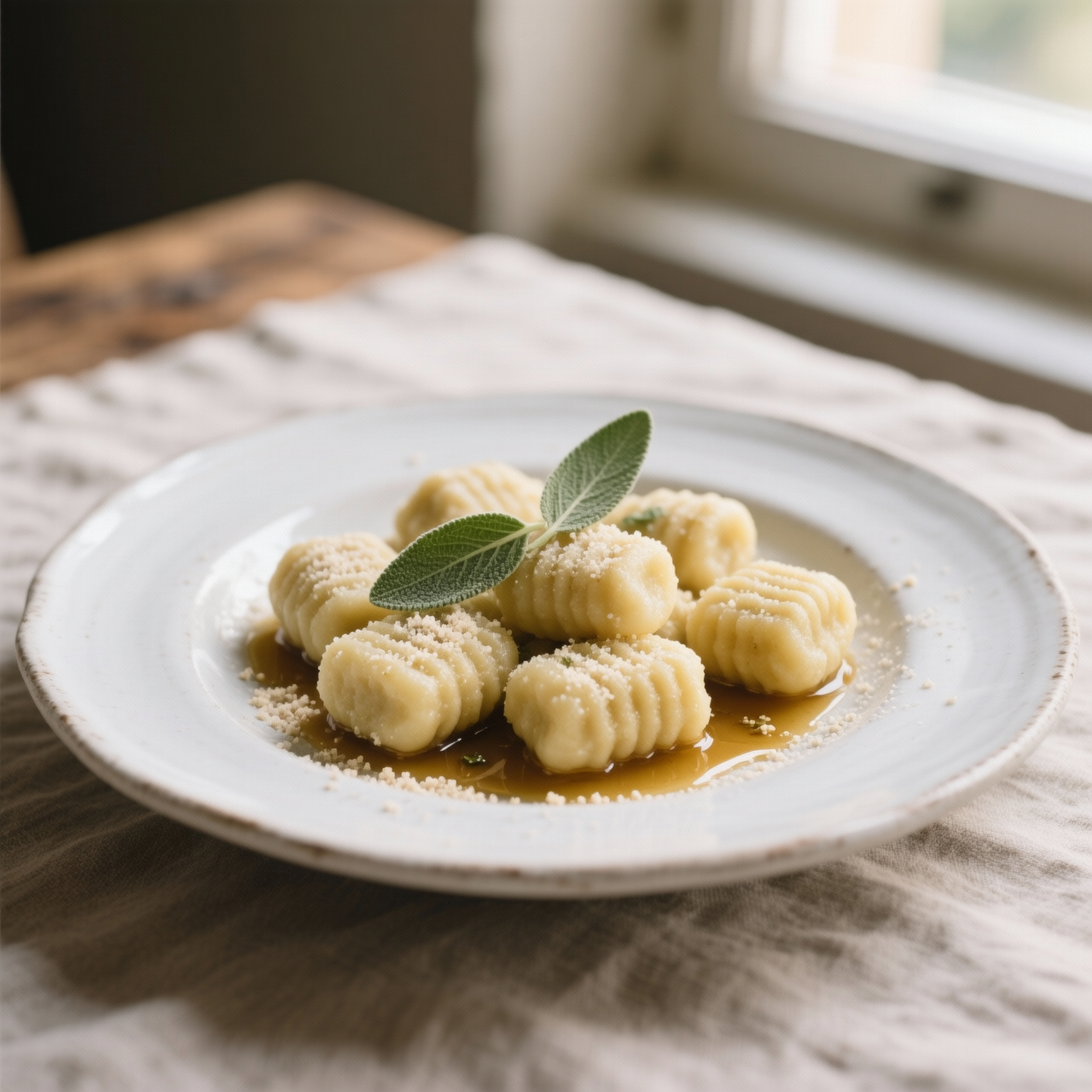
Potato gnocchi
I still remember the first time I tried making potato gnocchi from scratch, watching my grandmother coax those humble tubers into pillowy clouds that melted on the tongue. Born in the northern Italian foothills, gnocchi started as a practical way to stretch expensive wheat flour during lean seasons, relying instead on the earthy abundance of local potatoes. Today, that history matters because we have lost the tactile wisdom of reading dough by feel, trading it for supermarket trays. Those shop-bought packets cost around three pounds and promise convenience, but they are often loaded with stabilizers, stale potato flakes, and a dense, gummy texture that turns into rubbery disappointment the moment it hits boiling water. Making it yourself is about reclaiming control over what actually ends up on your plate. The biggest pitfall most beginners face is overworking the dough, which develops gluten and ruins that signature lightness. You must bake your potatoes whole rather than boiling them to keep moisture at bay, then pass them through a ricer while still warm and fold in flour with a gentle, almost reverent hand. If the mixture feels tacky, add a dusting more flour; if it cracks, it is too dry. Rest the shaped dumplings briefly before dropping them into salted water, and they will rise to the surface in mere minutes, ready to be tossed with brown butter or a simple herb sauce. When you finally taste a properly executed batch, you will understand why generations of Italian cooks refused to let this technique die out. It is quiet alchemy, really, turning the simplest ingredients into something profoundly comforting.
Nutrition
| Per serving | Calories | Protein | Carbs | Fat | Sat fat | Fibre | Sugar | Sodium |
|---|---|---|---|---|---|---|---|---|
| beginner | 390kcal | 11g | 56g | 12g | 5g | 4g | 2g | 580mg |
| intermediate | 410kcal | 9g | 68g | 10g | 5g | 5g | 2g | 480mg |
| expert | 380kcal | 7g | 72g | 2g | 0g | 4g | 2g | 550mg |
Per serving · Ava-estimated — a guide, not a clinical figure.
- 1000 gfloury potato— Russet or Yukon Gold, baked or boiled until fork-tender, then peeled and riced while hot
- 250 gall-purpose flour— Sifted, plus extra for dusting trays and preventing sticking during freezing
- 1 largeegg yolk— Room temperature, adds structure for freezing without making dough tough
- 8 gfine sea salt— Adjust slightly based on potato variety
- 0.5 gground nutmeg(optional)— Freshly grated
Store-bought gnocchi typically costs four to six dollars per box, but it often relies on potato flakes, stabilizers, and excess water to extend shelf life. The result is a dense, gummy dumpling that falls apart or turns mushy when cooked. This beginner-friendly approach strips away the intimidation factor while keeping the recipe entirely from scratch. Instead of precise weighing or specialized ricers, you will use standard kitchen tools: a fork, a rolling pin, and a sharp knife. The key difference here is forgiving dough hydration. By starting with slightly less flour and adding it gradually, you avoid the common mistake of creating tough, leaden dumplings. Keep your workspace lightly dusted, handle the dough gently, and resist the urge to knead it like bread—overworking develops gluten and ruins the pillowy texture. Watch for the dough to just come together into a soft, pliable mass that holds its shape when cut. Once formed, you can freeze them raw on a baking sheet for future quick meals, cooking straight from the freezer without thawing. This method guarantees restaurant-quality lightness with zero shortcuts, proving that simple ingredients and relaxed technique are all you really need.
Equipment
- Large pot— at least six quarts for ample boiling room
- Rimmed baking sheet(optional)— lined with parchment for freezing batches
- Fork— creates traditional ridges for sauce adhesion
- Heavy-bottomed skillet— non-stick works well for final tossing
Method
- 1
Boil whole unpeeled potatoes until fork-tender, then peel and press through a fine sieve while still warm.
Steam escapes during pressing to prevent a gummy texture.
ricing~ 10 min - 2
Form a well in the potato mound, crack in an egg, and fold in all-purpose flour a quarter cup at a time until the dough just holds together.
Stop adding flour the moment it stops sticking to your fingers.
folding~ 3 min - 3
Divide the dough into four sections, roll each into a half-inch rope, cut into one-inch pieces, and drag a fork tine across each piece to create ridges.
Light ridges help the sauce cling without requiring a specialized board.
scoring~ 5 min - 4
Bring a large pot of generously salted water to a rolling boil, then drop the dumplings in and remove them immediately once they rise to the surface.
They cook in under two minutes, so keep a close watch.
poaching~ 2 minTricky bit - 5
Transfer the drained dumplings directly to a heated skillet with melted butter and toss gently for thirty seconds to create a light coating.
Tossing in the pan prevents sticking and evenly distributes fat.
emulsifying~ 1 min
Cooking from frozen
Pan-fry gently from frozen in butter with a splash of water, covering until heated through to restore tenderness without drying out.
Storage times are a guide — always use your judgement and store food safely.