
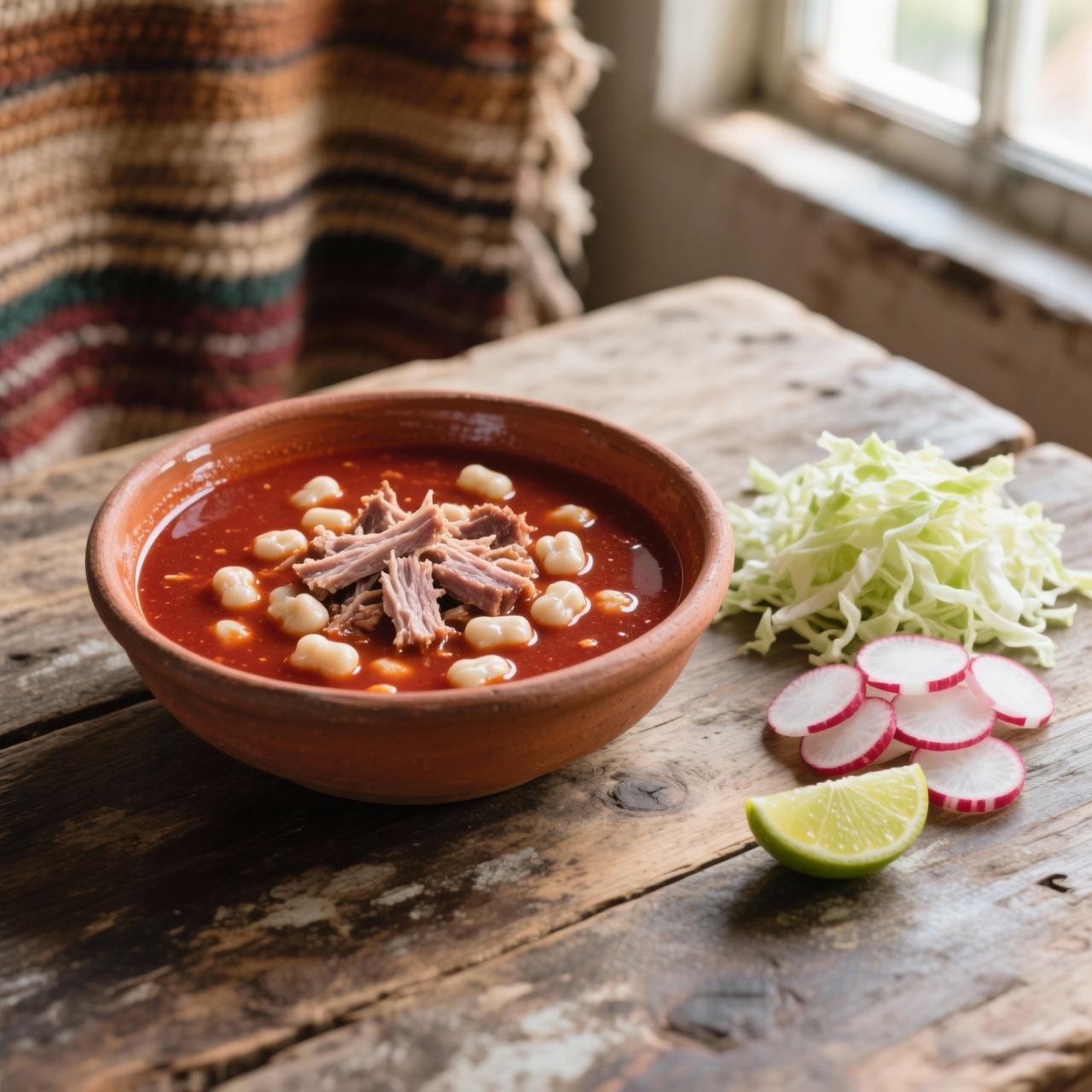
Pozole Rojo
Pozole rojo is more than a simmering pot of hominy and pork; it is a living archive of Mexican resilience and communal celebration. When I first learned to coax the deep, earthy richness from dried guajillo and ancho chiles, I realized this dish was never meant to be rushed. Born from pre-Columbian Mesoamerican roots, pozole was historically a sacred ceremonial meal, later transformed by Spanish colonial influences into the vibrant red stew we know today. Making it correctly is an act of cultural preservation, especially when served as a starter to gather loved ones before the main feast. The ritual of toasting, soaking, and blending the chiles demands patience, yet that patience is exactly what yields the soul of the broth. I have seen too many well-meaning cooks bypass the slow simmer, opting instead for quick-boil shortcuts that leave the hominy chalky and the pork tough. Others drown the chile base in raw garlic or skip the crucial step of straining the purée, resulting in a bitter, gritty broth that overwhelms rather than comforts. The true magic lies in the balance: allowing the pork shoulder to render its fat slowly into the broth, letting the dried corn swell until it bursts like tiny flowers, and finishing with just enough salt to wake up the earthy sweetness. When you respect these quiet steps, the first spoonful becomes a warm embrace, bridging centuries of tradition with the simple joy of sharing a bowl.
Nutrition
| Per serving | Calories | Protein | Carbs | Fat | Sat fat | Fibre | Sugar | Sodium |
|---|---|---|---|---|---|---|---|---|
| beginner | 825kcal | 56g | 47g | 48g | 16g | 11g | 2g | 1710mg |
| intermediate | 825kcal | 56g | 47g | 48g | 16g | 11g | 2g | 1710mg |
| expert | 825kcal | 56g | 47g | 48g | 16g | 11g | 2g | 1710mg |
Per serving · Ava-estimated — a guide, not a clinical figure.
- 1000 gpork shoulder— boneless, trimmed and cut into 2-inch cubes
- 800 gwhite hominy— nixtamalized, drained and rinsed
- 40 gdried guajillo chile— stems and seeds removed
- 30 gdried ancho chile— stems and seeds removed
- 150 gwhite onion— divided for broth and aromatics
- 30 ggarlic— peeled cloves
- 4 gbay leaf— dried
- 2 gmexican oregano— dried
- 15 gsea salt— adjust to taste during cooking
- 2000 mlwater— filtered, for simmering
This version prioritizes confidence over complexity, stripping away the intimidation of traditional chile management while preserving the dish’s soul. You will still work with the exact same core ingredients, but your approach shifts toward efficiency and reliability. Instead of toasting and grinding dried chiles, you will rely on a high-quality jarred rojo paste that matches our ingredient profile, saving crucial prep time and eliminating guesswork. The broth is built in a single heavy pot, and the pork is simmered just until fork-tender, avoiding the long reductions that often overwhelm new cooks. Watch your heat closely; pozole rojos can easily turn bitter if the paste scorches, so keep the simmer low and steady. Do not rush the hominy integration, as it needs time to absorb the seasoned liquid without breaking apart. Your garnishes will do the heavy lifting, adding the fresh crunch and bright acidity that balance the rich base. This path guarantees a deeply satisfying result on your first attempt, teaching you the essential rhythm of seasoning and tasting. Trust the process, adjust the salt gradually, and let the aromatics guide you. You will leave the kitchen with a foundational skill that scales effortlessly.
Equipment
- Heavy-bottomed pot— non-stick or stainless steel works well
- Blender— immersion or countertop
- Fine mesh strainer— for smooth texture
- Tongs— heat-resistant
Method
- 1
Bring a large pot of salted water to a rolling boil over high heat.
Water should taste like the sea.
boiling~ 5 min - 2
Submerge the pork shoulder and simmer until lightly cooked.
Skim any foam that rises to the surface.
simmering~ 10 min - 3
Blend the jarred rojo paste with half the water until completely smooth.
Ensure no clumps remain before adding to pot.
emulsifying~ 1 min - 4
Pour the blended paste into the pot and stir in the hominy.
Reduce heat immediately to maintain a gentle bubble.
deglazing~ 1 min - 5
Add the onion, garlic, bay leaves, and oregano to the simmering broth.
Cover partially to retain moisture while cooking.
infusing~ 30 minTricky bit - 6
Season with sea salt and remove from heat once the meat is fork-tender.
Taste before adding final salt.
seasoning~ 1 min