
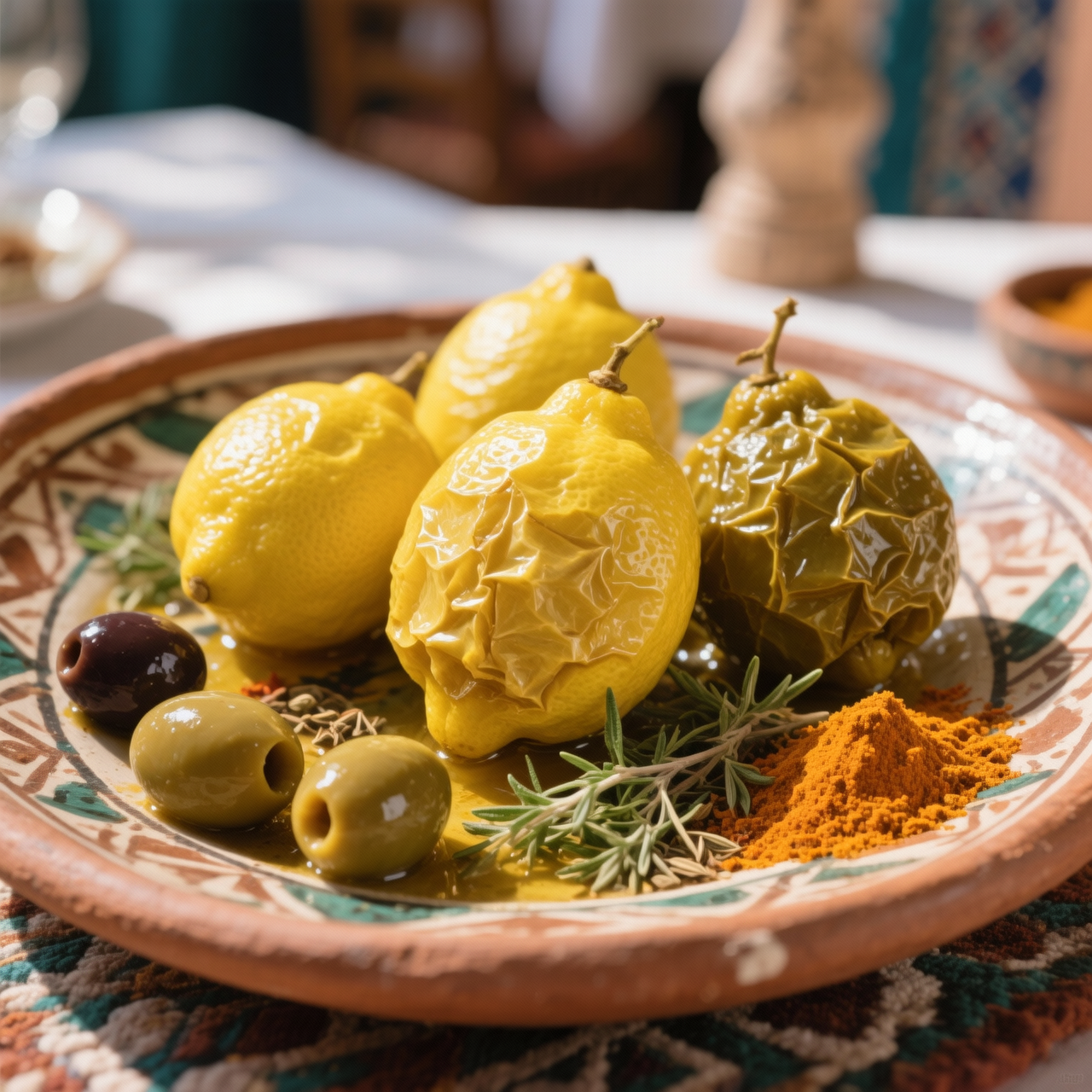
Preserved lemons
There is a quiet alchemy to preserved lemons that always draws me back to the sun-baked courtyards of Morocco, where this humble condiment was born out of necessity and perfected through patience. Long before modern refrigeration, Moroccan cooks discovered that layering whole lemons with coarse sea salt and leaving them to rest in their own juices transformed a sharp, fleeting citrus into a deeply complex, fragrant treasure. To me, this isn’t just a pantry staple; it is the essential heartbeat of any proper tagine. The rind softens into a velvet-like intensity, carrying floral, saline notes that brighten slow-braised meats, grain bowls, and roasted vegetables in a way fresh lemon simply cannot replicate. I have made countless batches over the years, and the most common pitfall I see is impatience. People rush the curing process, using iodized table salt instead of pure sea salt, or failing to sterilize their jars, which invites unwanted mold. Others pack the fruit too tightly without pressing out the air pockets, leaving the top rinds dry and leathery. True preservation demands a gentle hand and a willingness to wait at least three to four weeks, occasionally inverting the jars to ensure every segment drinks deeply from the brine. When done right, the result is a vibrant, umami-rich accent that elevates everyday meals into something deeply rooted in North African tradition. It reminds me that the best flavors in cooking aren’t manufactured in a hurry, but coaxed out of time, salt, and sunshine.
Nutrition
| Per serving | Calories | Protein | Carbs | Fat | Sat fat | Fibre | Sugar | Sodium |
|---|---|---|---|---|---|---|---|---|
| beginner | 15kcal | 1g | 5g | 0g | 0g | 2g | 3g | 520mg |
| intermediate | 28kcal | 1g | 9g | 0g | 0g | 2g | 2g | 950mg |
| expert | 22kcal | 0g | 4g | 0g | 0g | 1g | 2g | 850mg |
Per serving · Ava-estimated — a guide, not a clinical figure.
- 6 wholelemon— Unwaxed, thoroughly scrubbed and completely dried
- 150 gcoarse sea salt— Non-iodized to prevent cloudiness and discoloration
- 2 wholebay leaf— Dried
- 12 wholeblack peppercorn— Whole
- 1 wholecinnamon stick— Lightly cracked to release essential tagine aroma
This beginner-friendly approach strips away the traditional guesswork, replacing it with measured shortcuts and clear checkpoints so your first batch cures perfectly. Instead of hand-weighing rock salt and sourcing obscure spices, we use a simple, pre-measured coarse salt blend and rely on fresh, store-bought lemon juice to quickly submerge the fruit and kickstart the brine. The key difference here is technique: you will score the lemons into quarters but leave them attached at the base, making them easier to pack without tearing. Watch closely for proper sterilization, as wiping the jar with hot water and letting it dry completely prevents unwanted mold. Pack the lemons firmly, pressing down with a clean spoon until the released juices cover the fruit entirely. If the lemons do not yield enough liquid on their own, simply top up with extra bottled lemon juice for a safe shortcut that guarantees a successful ferment. Seal the jar, store it in a cool dark spot, and resist the urge to open it for at least three weeks. The rind will transform from sharp and bitter to mellow, silky, and intensely aromatic, ready to elevate tagines, dressings, and grain bowls with zero guesswork.
Equipment
- 1-quart glass mason jar with tight lid— ensure glass is heat-safe and free of chips
- Measuring spoons— for precise salt-to-lemon ratio
- Clean wooden spoon— for pressing lemons into the jar
Method
- 1
Sterilize a clean one-quart glass jar and its lid by washing thoroughly in hot soapy water then rinsing and air drying completely.
Any residual moisture can encourage mold during curing.
sanitizing~ 5 min - 2
Wash four medium lemons pat them completely dry and slice each into quarters from stem to tip while leaving the base intact so they stay connected.
Use a sharp knife for clean cuts that will not tear the peel.
scoring~ 3 min - 3
Generously rub two tablespoons of coarse sea salt over the cut surfaces of each lemon quarter then pack them tightly into the jar while pressing firmly to release their natural juices.
Press until the lemons sit snugly and liquid pools around them.
packing~ 4 min - 4
Top the jar with fresh or bottled lemon juice until the fruit is fully submerged then seal the lid tightly and place it in a cool dark cupboard for at least twenty-one days.
The lemons must stay completely underwater to cure safely.
submerging~ 2 minTricky bit
Cooking from frozen
Thaw overnight in the fridge; the softened rind works beautifully when simmered into tagines or dressings.
Storage times are a guide — always use your judgement and store food safely.