
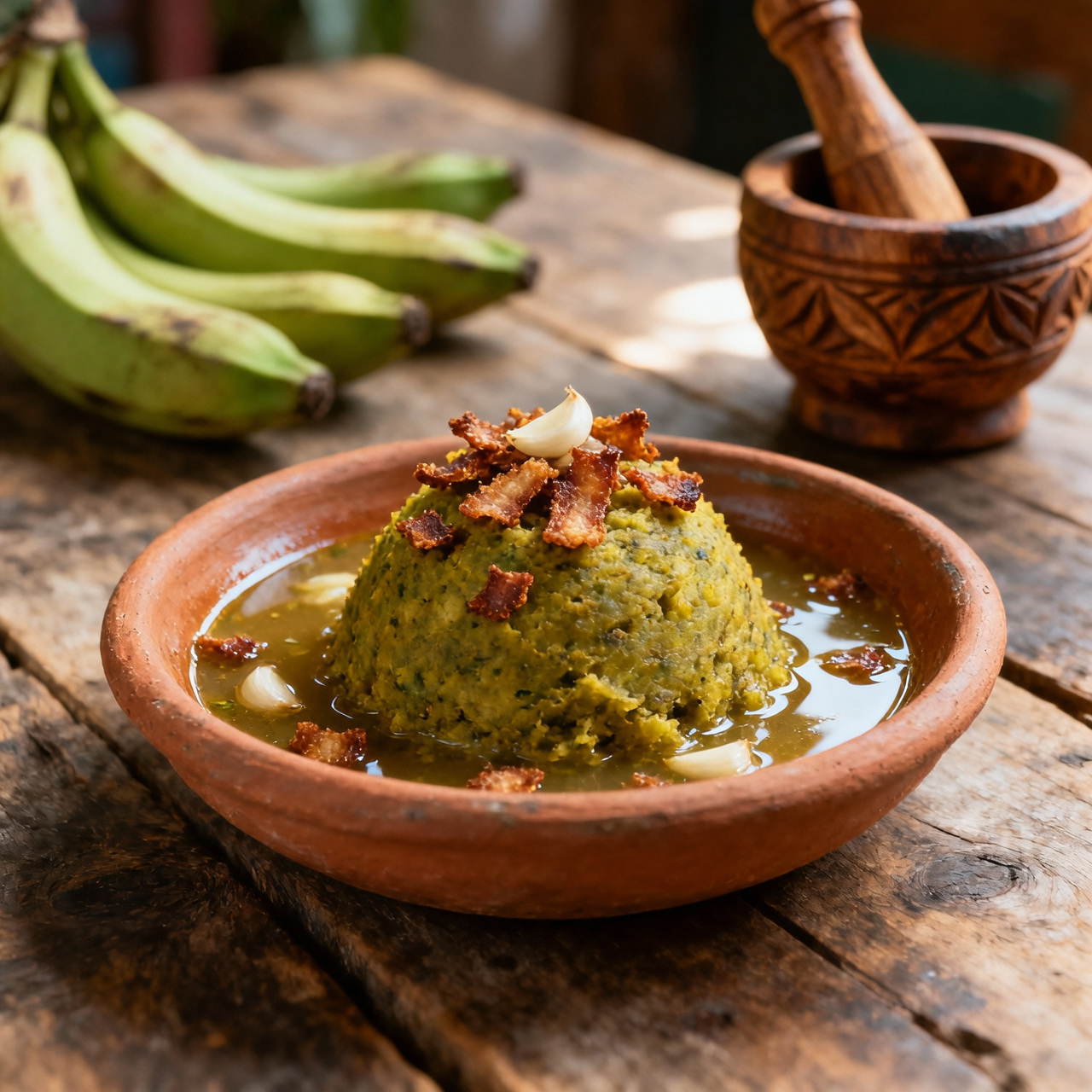
Puerto Rican Mofongo
I first encountered mofongo not in a cookbook, but in the steamy kitchen of my abuela’s San Juan home, where the rhythmic thud of a wooden pilón against a mortar was the heartbeat of the island. Born from the collision of West African fufu and indigenous Taíno techniques, then refined by Spanish colonial influences, this dish is more than just mashed plantains—it is a living archive of Puerto Rican resilience. When I make it today, I’m not just cooking a main course; I’m honoring generations who turned humble green plantains into something profound, often stretching them with chicharrones, garlic, and olive oil to feed families through lean times. That’s why this dish matters to me: it refuses to be forgotten, and it demands respect. Yet so many home cooks stumble at the very steps that define its soul. The most common pitfall? Overworking the plantains until they turn gummy instead of yielding to a rustic, slightly coarse mash. Others forget to fry the plantains twice—once to cook, once to crisp—or drown them in oil before draining properly, leaving a heavy, greasy result. Garlic should be toasted until fragrant, not burned bitter, and the pork cracklings must be folded in while the plantains are still warm so they soften just enough to distribute their savory crunch. Mofongo isn’t meant to be perfectly smooth or served cold; it’s a dish that thrives on immediacy, texture, and bold, unapologetic flavor. When you approach it with patience and listen to the mortar’s rhythm, you don’t just serve dinner—you carry forward a legacy.
Nutrition
| Per serving | Calories | Protein | Carbs | Fat | Sat fat | Fibre | Sugar | Sodium |
|---|---|---|---|---|---|---|---|---|
| beginner | 660kcal | 19g | 74g | 37g | 7g | 6g | 23g | 745mg |
| intermediate | 660kcal | 19g | 74g | 37g | 7g | 6g | 23g | 745mg |
| expert | 660kcal | 19g | 74g | 37g | 7g | 6g | 23g | 745mg |
Per serving · Ava-estimated — a guide, not a clinical figure.
- 900 ggreen plantain— unripe, firm, dark green skin
- 120 mlolive oil— high smoke point preferred for frying
- 6 wholegarlic clove— fresh, not pre-minced
- 100 gpork rind— crispy chicharrón, unsalted if possible
- 120 mlchicken broth— low-sodium, kept warm
- 5 gfine sea salt— for seasoning mash and frying oil
- 2 gblack pepper(optional)— freshly cracked
This version embraces accessible shortcuts without sacrificing the dish’s essential character. You will rely on a high-quality jarred garlic-pork seasoning paste instead of pounding raw aromatics, and you may use pre-peeled, frozen green plantains to skip the tedious skinning process. The goal here is confidence: learning how the starch binds with liquid and fat without getting bogged down in traditional tooling. Watch your oil temperature closely when pan-frying; if the plantains brown too fast, the center will remain raw and chalky. The jarred paste already contains salt and stabilizers, so hold back on extra seasoning until you taste the final mash. Keep your broth warm before folding it in, and use a sturdy potato masher instead of a heavy mortar to avoid overworking the mixture into a gluey paste. Stop as soon as the pieces hold together but still show visible texture. This approach guarantees a reliable first attempt that honors the flavor profile while respecting your time and kitchen setup.
Equipment
- Heavy-bottomed skillet— non-stick is fine here
- Potato masher— stainless steel preferred
- Mixing bowl— large, microwave-safe
Method
- 1
Peel and slice the green plantains into one-inch thick rounds.
score the skin first to make peeling easier
peeling~ 3 minTricky bit - 2
Heat olive oil in the skillet over medium heat until shimmering.
oil should coat the bottom evenly
heating_oil~ 2 min - 3
Fry plantain rounds until golden and fork-tender on both sides.
flip only once to preserve crust
shallow_frying~ 6 minTricky bit - 4
Warm chicken broth in a separate bowl and stir in jarred garlic-pork paste until smooth.
paste should fully dissolve before adding
tempering~ 1 min - 5
Mash fried plantains in the bowl while gradually folding in the broth mixture until cohesive.
stop when texture resembles coarse dough
mashing~ 3 minTricky bit