
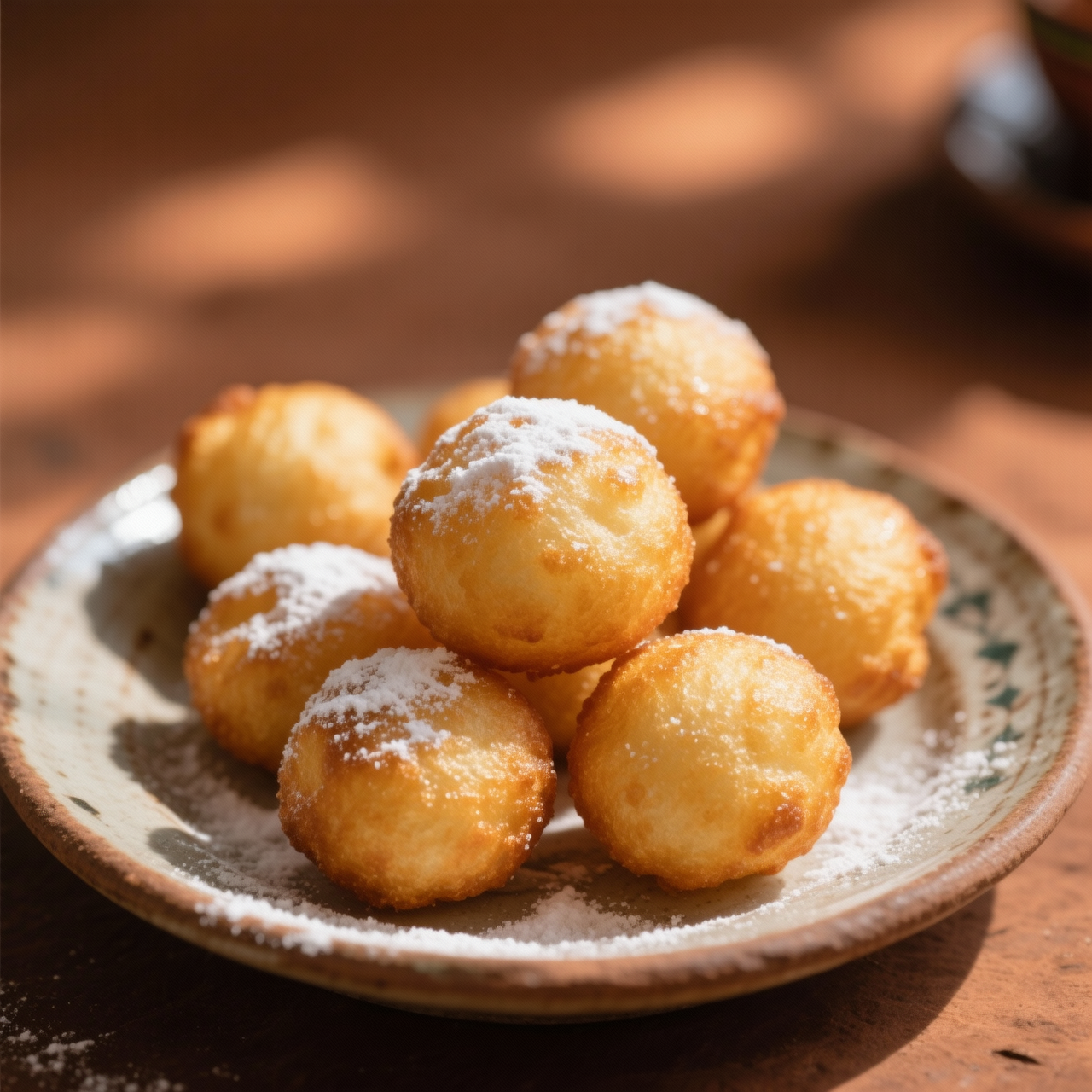
Puff puff (fried dough)
When I first learned to make puff puff, it wasn’t in a pristine kitchen but over a charcoal brazier in Lagos, watching my auntie drop spoonfuls of sweet, yeasted batter into shimmering oil. This humble fried dough has been the heartbeat of West African street corners for generations, a democratic snack shared by schoolchildren, market traders, and late-night revelers alike. Today, it quietly replaces those overpriced, mass-produced doughnuts you find at chain bakeries. A box of four commercial doughnuts will easily set you back five dollars or more, yet they arrive stale, cloyingly sweet, and laced with artificial preservatives that mask a complete lack of craft. Making puff puff from scratch reclaims that lost joy. You only need flour, yeast, a touch of sugar, water, and salt. The real magic lies in patience and temperature control. The most common pitfall I see is rushing the fermentation; if the dough hasn’t puffed up and smells faintly sour-sweet, your interior will be dense and heavy. Another frequent mistake is overcrowding the oil or letting it run too cool, which turns these golden spheres into greasy sponges instead of light, airy pillows. Keep your oil hovering around 350°F, drop the batter with a wet spoon or your fingers, and let them float and self-turn. When done right, the crust gives way to a tender, slightly chewy center that tastes of toasted grain and warmth. This isn’t just a substitute for a bakery treat; it’s a living tradition that proves how five honest ingredients, handled with care, will always outshine anything wrapped in plastic.
Nutrition
| Per serving | Calories | Protein | Carbs | Fat | Sat fat | Fibre | Sugar | Sodium |
|---|---|---|---|---|---|---|---|---|
| beginner | 245kcal | 5g | 35g | 10g | 3g | 1g | 12g | 150mg |
| intermediate | 385kcal | 7g | 54g | 15g | 2g | 2g | 16g | 110mg |
| expert | 460kcal | 8g | 78g | 12g | 2g | 2g | 24g | 380mg |
Per serving · Ava-estimated — a guide, not a clinical figure.
- 250 gall-purpose flour— sifted for a lighter texture
- 200 mlwater— warm, around 38°C (100°F)
- 50 ggranulated sugar— white or light brown
- 7 gactive dry yeast— active dry or instant
- 3 gsalt— fine table salt
- 2 gground nutmeg(optional)— freshly grated preferred
- 500 mlvegetable oil— neutral oil with high smoke point, for deep frying
Skip the $5 bakery box of stale, preservative-heavy doughnut holes and make fresh West African puff puff from scratch. This beginner version skips intimidating kneading entirely, using a thick, pancake-like batter that proves in one bowl and fries up light and airy. You will need only pantry staples: flour, yeast, sugar, water, and a pinch of nutmeg. The key difference here is the forgiving consistency; instead of wrestling stiff dough, you will simply whisk until smooth and let it rest. Watch closely for the oil to reach a steady shimmer around 350°F, as too hot will scorch the outside while raw inside, and too cool will make the balls greasy. Use two spoons or a damp ice-cream scoop for uniform portions, and never crowd the pan. The batter will naturally puff and self-baste as it hits the oil, turning golden with a crisp exterior and soft, custardy center. Drain on paper towels immediately and dust with powdered sugar if desired. This straightforward method guarantees reliable results for your first attempt without any hidden packet mixes or artificial shortcuts.
Equipment
- Heavy-bottomed pan— at least 2 inches deep for safe frying
- Large mixing bowl— glass or stainless steel
- Slotted spoon— for safe turning and draining
- Instant-read thermometer(optional)— highly recommended for oil control
Method
- 1
Whisk warm water and sugar together until fully dissolved.
Water should feel like a warm bath, roughly 105°F.
dissolving~ 1 min - 2
Sprinkle the yeast evenly over the liquid and let it sit undisturbed.
A creamy foam should appear within ten minutes.
blooming~ 10 min - 3
Stir in flour, salt, and ground nutmeg until a thick, smooth batter forms.
Consistency should resemble a heavy pancake batter.
mixing~ 2 min - 4
Cover the bowl with a clean cloth and let it rest in a draft-free area.
Wait until the batter visibly expands and bubbles on the surface.
proofing~ 45 min - 5
Heat oil in a heavy-bottomed pan until it reaches 350°F.
Test with a tiny batter drop; it should sizzle and float immediately.
temperature_testing~ 5 minTricky bit - 6
Scoop heaping tablespoon portions carefully into the hot oil and fry until golden.
Turn gently once halfway through for even browning.
deep_frying~ 3 minTricky bit - 7
Lift the fried balls out with a slotted spoon and place them on paper towels.
Serve warm for the best texture.
draining~ 1 min
Cooking from frozen
Thaw at room temperature, then warm in a 300°F oven for five minutes to restore a soft, pillowy texture.
Storage times are a guide — always use your judgement and store food safely.