
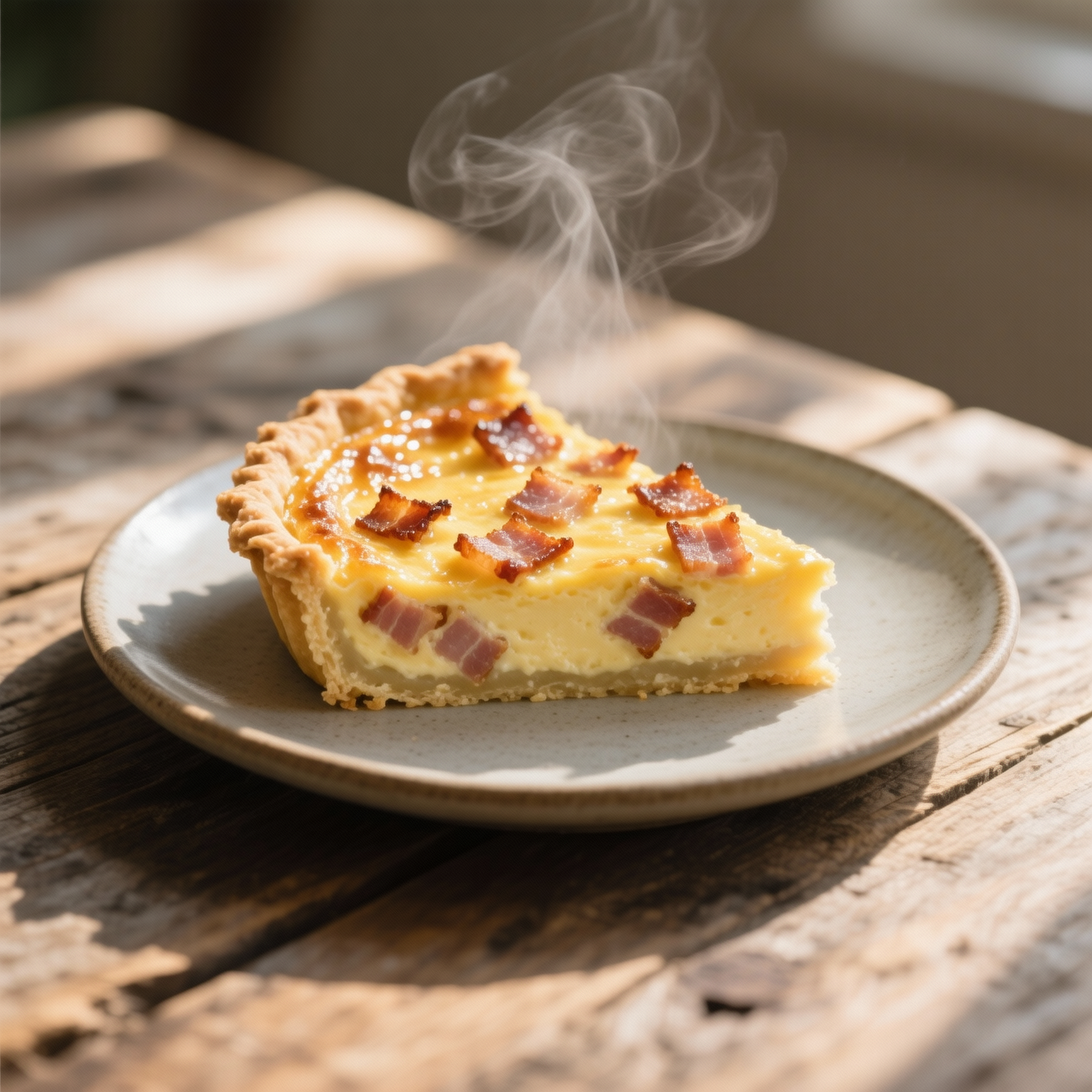
Quiche Lorraine
I’ve spent countless mornings in dimly lit kitchens tracing the lineage of this dish, and every time I return to the quiche Lorraine, I’m reminded that simplicity is often the hardest thing to perfect. Born in the medieval duchy of Lorraine, this tart began as a humble bread dough base layered with smoked pork lard and eggs, a testament to the resourceful peasants who turned scarcity into sustenance. Over centuries, the French refined it, swapping the heavy bread crust for delicate pâte brisée and enriching the custard with cream, yet the soul of the dish remains fiercely rooted in its rustic origins. To me, it matters because it represents the quiet elegance of French provincial cooking—a dish that doesn’t shout but whispers comfort, demanding respect rather than innovation. The pitfalls are where so many stumble: overworking the pastry until it shrinks in the oven, drowning the custard in too much cream so it weeps, or worse, adding cheese when the purists would scoff. True quiche Lorraine relies on the balance of salty lardons or smoked bacon, a whisper of nutmeg, and a custard that sets just enough to hold its shape while melting on the tongue. I’ve learned that patience is the real secret ingredient, from chilling the dough to blind baking until the crust turns pale gold. When done right, it’s not just breakfast or brunch; it’s a quiet homage to a region that understood how to make the most of what the land and the hearth could offer.
Nutrition
| Per serving | Calories | Protein | Carbs | Fat | Sat fat | Fibre | Sugar | Sodium |
|---|---|---|---|---|---|---|---|---|
| beginner | 965kcal | 28g | 51g | 71g | 39g | 2g | 4g | 1000mg |
| intermediate | 965kcal | 28g | 51g | 71g | 39g | 2g | 4g | 1000mg |
| expert | 965kcal | 28g | 51g | 71g | 39g | 2g | 4g | 1000mg |
Per serving · Ava-estimated — a guide, not a clinical figure.
- 250 gall-purpose flour— high protein content preferred
- 115 gunsalted butter— cold, cubed
- 5 gfine sea salt
- 60 mlice water
- 150 gthick-cut bacon— rind removed
- 4 countlarge egg— room temperature
- 250 mlheavy cream— 35 percent fat minimum
- 100 mlwhole milk
- 100 gGruyère cheese— freshly grated
- 1 gfreshly grated nutmeg
- 1 gblack pepper— freshly cracked
This version prioritizes confidence and clarity over technical perfection. You will use a pre-made refrigerated pie crust and pre-diced bacon to remove the most intimidating steps, allowing you to focus entirely on mastering the custard. The goal is a reliable, sliceable quiche that bakes evenly without burning or cracking. Watch your oven temperature closely; beginner bakers often open the door too early, causing the delicate egg mixture to collapse. I have simplified the mixing process to a single bowl and a gentle fold, eliminating the need for precise temperature tempering. If your crust edges brown too quickly, simply shield them with a foil collar halfway through baking. Do not rush the cooling period, as the custard continues to set outside the oven. This approach guarantees a satisfying, restaurant-presentable result on your first attempt, building the foundational habits you will carry into more ambitious bakes.
Equipment
- 9-inch tart pan with removable bottom— metal conducts heat better
- Rolling pin— standard wooden
- Large mixing bowl— glass or ceramic
- Whisk— wire balloon style
- Aluminum foil— for edge shielding
Method
- 1
Unroll the refrigerated dough and press it firmly into the tart pan.
Avoid stretching the edges.
lining~ 2 min - 2
Crumble the pre-cooked bacon evenly across the unbaked crust.
Distribute to the edges.
layering~ 1 min - 3
Whisk the eggs, cream, milk, nutmeg, and pepper until completely smooth.
Do not overbeat to avoid air pockets.
emulsifying~ 2 min - 4
Pour the custard over the bacon and bake at 180°C until the center jiggles slightly.
Rotate halfway through.
baking~ 40 minTricky bit