
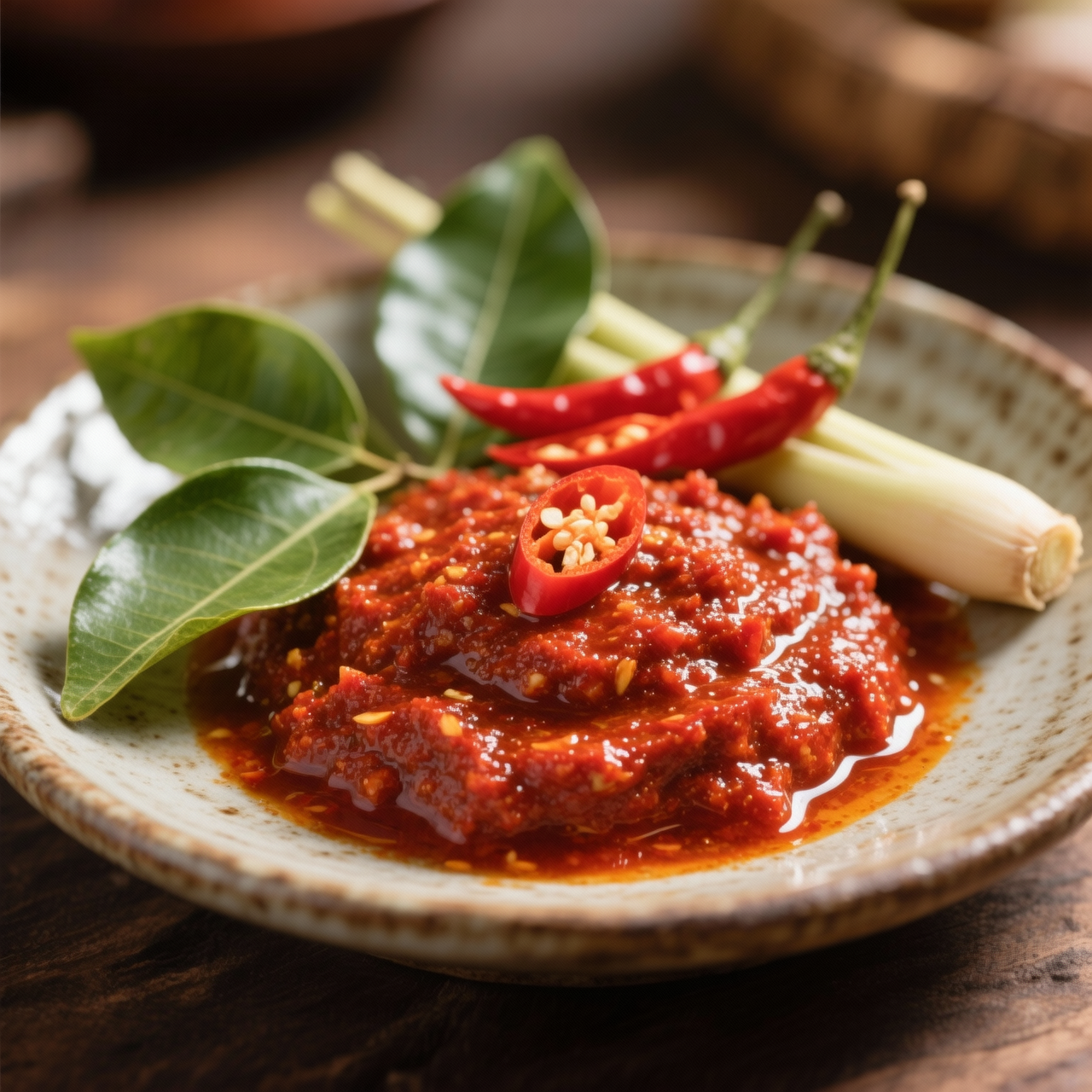
Red Curry Paste
I have spent countless mornings at my stone mortar, learning that true red curry paste is not merely a blend of ingredients but a living archive of balance and patience. Originating in the central plains of Thailand, where chilies and galangal thrive in humid soil, this paste was born from the practical need to preserve the vibrant heat of fresh harvests. It matters because it forms the aromatic backbone of an entire culinary tradition, transforming simple coconut milk and proteins into complex, layered dishes that speak of generations of careful technique. When I first started making it, I fell into the classic trap of rushing the process. Many home cooks rely on electric blenders, which generate too much friction heat and bruise the delicate fibers of the lemongrass and fermented seafood pastes, yielding a flat, oxidized flavor instead of a bright, pungent punch. Another frequent misstep is neglecting to properly toast the dried chilies before soaking; without that gentle dry heat, you lose the smoky depth that defines the character. You must pound rhythmically, letting the granite do the heavy lifting, coaxing out essential oils rather than pulverizing them into a dull slurry. I treat each batch as a meditative practice, adding ingredients in stages to build texture and flavor intensity. The oil that eventually weeps from the mixture is not just a sign of readiness; it is proof that the aromatics have been coaxed to their absolute peak. When you finally taste the result, you will understand why shortcuts never truly satisfy. This is not merely a sauce base. It is the distilled essence of Thai cooking, demanding respect, time, and a willingness to embrace the slow, steady rhythm of the stone.
Nutrition
| Per serving | Calories | Protein | Carbs | Fat | Sat fat | Fibre | Sugar | Sodium |
|---|---|---|---|---|---|---|---|---|
| beginner | 65kcal | 1g | 4g | 5g | 1g | 1g | 2g | 420mg |
| intermediate | 48kcal | 2g | 9g | 2g | 0g | 3g | 3g | 310mg |
| expert | 45kcal | 1g | 6g | 2g | 1g | 2g | 1g | 520mg |
Per serving · Ava-estimated — a guide, not a clinical figure.
- 15 gdried red chili— soaked in warm water until pliable, stems removed
- 100 gshallot— peeled and roughly chopped
- 50 ggarlic clove— peeled
- 30 gfresh galangal— peeled and thinly sliced
- 40 glemongrass stalk— tough outer layers removed, tender inner portion thinly sliced
- 10 gkaffir lime leaf— tough central vein removed, finely chopped
- 15 gcoriander root— thoroughly washed to remove soil
- 5 gcumin seed— dry-toasted until fragrant
- 8 gcoriander seed— dry-toasted until fragrant
- 3 gwhite peppercorn— whole
- 10 gshrimp paste(optional)— briefly toasted in a dry pan before use
- 8 gkosher salt
This beginner-friendly approach skips the traditional mortar and pestle, opting instead for a quick food processor method that delivers vibrant, restaurant-quality flavor with minimal effort. By starting with a high-quality store-bought base and doctoring it with fresh aromatics, you bypass the most labor-intensive steps while still achieving a deeply aromatic paste. Watch closely when dry-toasting the whole spices; they can go from fragrant to bitter in seconds, so keep the heat at medium and stir constantly. When blending, add the oil gradually to help the motor handle the dense chilies and ginger without stalling. The goal is a smooth but slightly textured emulsion that clings to a spoon. Taste the final mixture before storing—it should punch with heat, carry a bright citrusy lift, and finish with a savory depth. If it leans too sharp, a tiny pinch of sugar will round it out. Once satisfied, immediately portion the paste into an ice cube tray. Freezing it in uniform cubes locks in freshness and guarantees perfectly measured doses for future weeknight curries, making batch cooking completely effortless.
Equipment
- Food processor— essential for this shortcut method
- Small skillet— dry-toast spices before blending
Method
- 1
Toast whole coriander and cumin seeds in a dry skillet over medium heat until fragrant.
Keep the pan moving constantly to prevent scorching.
toasting~ 1 minTricky bit - 2
Transfer the warm spices to a food processor and add the chopped shallots, garlic, lemongrass, galangal, chilies, and shrimp paste.
Cut aromatics into rough chunks for easier blending.
pulsing~ 0 min - 3
Blend on high, drizzling in neutral oil slowly until a uniform, slightly coarse paste forms.
Stop and scrape down the bowl halfway through to ensure even mixing.
emulsifying~ 3 minTricky bit - 4
Taste the raw paste and adjust the balance with a pinch of sugar or extra salt if needed.
Raw paste is intensely spicy, so use a clean spoon and wait for the heat to register.
seasoning~ 1 min - 5
Spoon the finished paste into an ice cube tray and freeze until completely solid.
Each cube equals roughly two tablespoons for easy future use.
batch-freezing~ 10 min
Cooking from frozen
Pop frozen cubes directly into a hot wok and let them sizzle until thawed and fragrant before adding coconut milk.
Storage times are a guide — always use your judgement and store food safely.