
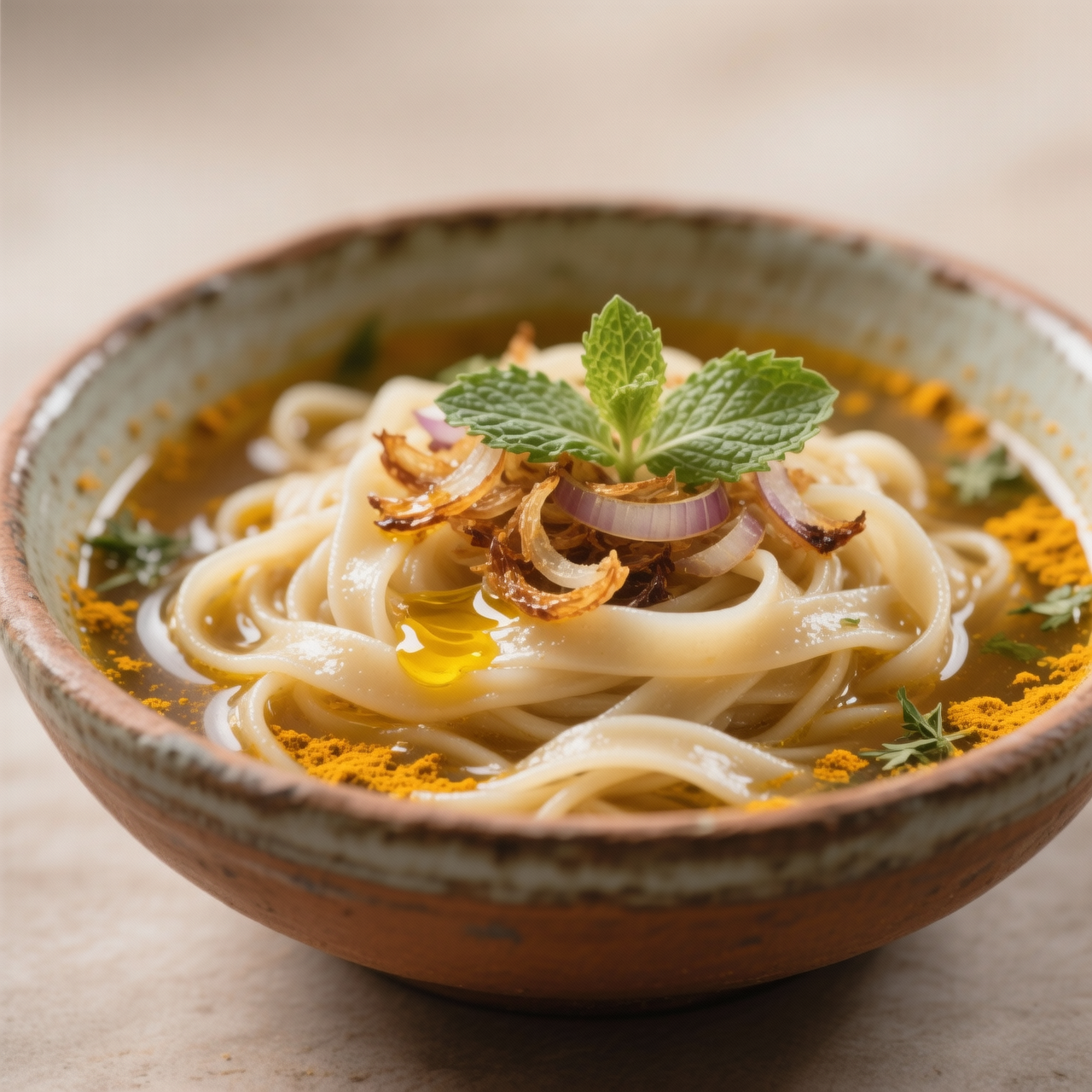
Reshteh (Persian noodles)
When I first rolled out reshteh in my grandmother’s Tehran kitchen, I quickly learned that these slender wheat ribbons are far more than a pantry filler; they are the structural backbone of Persian comfort food. Traditionally woven by hand long before industrial pasta mills arrived, authentic reshteh carries a distinct, nutty wheat flavor and a chew that holds up beautifully in hearty ash soups or layered reshteh polo. Today, you can easily grab a glossy packet of imported dried noodles for a few pounds, but those mass-produced versions are often stripped of their germ, bleached for shelf stability, and tossed with anti-caking agents that leave them slick and flavorless. They simply refuse to absorb the fragrant broths and herbaceous oils that define our cuisine. Making them at home is a quiet rebellion against that convenience culture, and it costs pennies for flour and water while delivering a depth that commercial brands just cannot replicate. The process is deceptively simple but demands respect for your dough’s hydration. The most common pitfall is rushing the kneading or skipping the resting period, which leaves the gluten underdeveloped and causes the strands to snap or turn mushy in the pot. Another frequent mistake is cutting them too thick; reshteh must be paper-thin to cook evenly and weave seamlessly with lentils, beans, and fresh herbs. Once you master the rhythm of rolling, drying, and storing these noodles in large batches, you unlock a truly pantry-ready staple that elevates every pot it touches.
Nutrition
| Per serving | Calories | Protein | Carbs | Fat | Sat fat | Fibre | Sugar | Sodium |
|---|---|---|---|---|---|---|---|---|
| beginner | 210kcal | 7g | 43g | 3g | 1g | 3g | 1g | 290mg |
| intermediate | 175kcal | 5g | 36g | 1g | 0g | 2g | 0g | 310mg |
| expert | 235kcal | 9g | 46g | 2g | 0g | 3g | 1g | 280mg |
Per serving · Ava-estimated — a guide, not a clinical figure.
- 500 gAll-purpose flour— Sifted before measuring for accuracy
- 220 mlWater— Lukewarm for optimal dough hydration
- 8 gFine sea salt— Dissolved in the water before mixing
- 3 gGround turmeric(optional)— Provides the traditional golden color
- 15 mlNeutral vegetable oil(optional)— Prevents sticking during resting and drying
Store-bought Persian reshteh often arrives as brittle, overly dried pasta that cooks unevenly and lacks the subtle toasted wheat aroma essential for traditional ash and polo. At £2–£4 per pack, these commercial noodles frequently rely on stabilisers and excessive salt to extend shelf life, sacrificing texture and flavour. This beginner-friendly from-scratch approach strips the process down to its most forgiving essentials without compromising authenticity. Instead of complex dough resting or precise rolling, we use a straightforward hand-mixed dough rested briefly, then cut with simple kitchen tools into uniform ribbons. The key is keeping the dough just hydrated enough to be pliable but dry enough not to stick, and boiling the noodles in generously salted water until they float. Watch the dough’s texture closely: if it cracks while rolling, add water a teaspoon at a time; if it feels tacky, dust lightly with flour. Because we skip commercial shortcuts, you control the thickness and salt level, ensuring the noodles absorb broths beautifully in ash or hold their shape in layered rice dishes. Once dried, they freeze exceptionally well, making a single batch a reliable pantry staple for weeks.
Equipment
- Large mixing bowl— stainless steel or glass
- Rolling pin— smooth wooden or silicone
- Chef’s knife— sharp blade for clean ribbon cuts
- Large stockpot— minimum 5-litre capacity
Method
- 1
Combine durum flour, warm water, and a pinch of fine sea salt in a large bowl until a shaggy mass forms.
Water temperature helps gluten develop without overworking.
mixing~ 2 min - 2
Turn the dough onto a clean surface and knead firmly for three minutes until smooth and elastic.
Press with your knuckles to test for spring-back.
kneading~ 3 min - 3
Cover the dough tightly and let it rest at room temperature for fifteen minutes.
Relaxing the gluten makes rolling significantly easier.
resting~ 15 min - 4
Roll the dough into a thin, even sheet, dusting lightly with flour only if it begins to stick.
Aim for roughly two millimetres thick.
rolling~ 5 minTricky bit - 5
Fold the sheet loosely and slice it into quarter-inch ribbons using a sharp knife.
Unfold immediately and toss with extra flour to prevent clumping.
cutting~ 3 min - 6
Boil the fresh noodles in heavily salted water for two to three minutes until they float and turn translucent.
Fresh pasta cooks rapidly, so taste one to avoid mushiness.
boiling~ 3 minTricky bit - 7
Drain the noodles thoroughly and toss with a tablespoon of neutral oil to stop the cooking process.
Use immediately or air-dry completely before storing.
tossing~ 1 min
Cooking from frozen
Thaw overnight in the fridge before gently reheating in a splash of broth or water.
Storage times are a guide — always use your judgement and store food safely.