
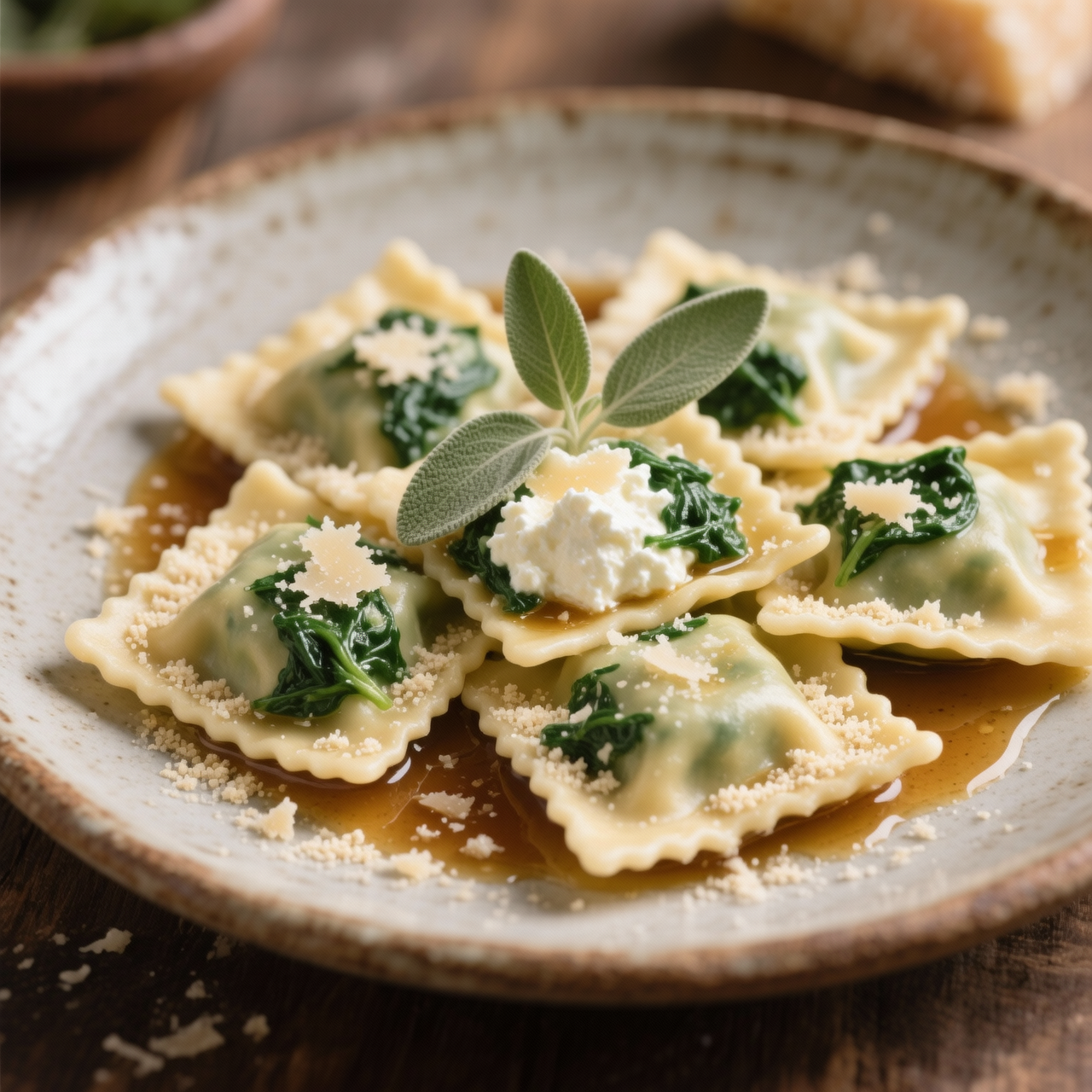
Ricotta & spinach ravioli
I still remember the first time I cracked open a supermarket tub of ricotta and spinach ravioli, expecting comfort but tasting something flat and vaguely metallic. That mass-produced version usually costs around six pounds for a plastic tray, yet it’s padded with cheap fillers, stabilisers, and a dough so thin it splits the moment it hits boiling water. Making this pasta at home isn’t about chasing perfection; it’s about reclaiming the quiet rhythm of rolling dough, folding in cool, freshly wilted spinach, and packing it with real ricotta that actually tastes like milk and grass. In northern Italy, where this dish quietly thrives in family kitchens, it’s less a restaurant showpiece and more a weekly anchor, a practical way to turn simple garden greens and dairy into something deeply nourishing. The biggest mistake I see beginners make is overworking the dough, which makes it tough, or skipping the resting period, which guarantees tearing when you try to stretch it. Another common trap is squeezing too little moisture from the spinach, leaving you with soggy filling that bursts during cooking. I always lay the filled squares on a floured tray and freeze them solid before bagging them, which means you can pull out exactly what you need on a busy Tuesday and drop them straight into salted boiling water. There’s no rushing good pasta, but there is a profound satisfaction in knowing exactly what goes inside those little parcels. When you cook it yourself, you trade the hollow convenience of a processed aisle for the honest, buttery richness that actually justifies the effort.
Nutrition
| Per serving | Calories | Protein | Carbs | Fat | Sat fat | Fibre | Sugar | Sodium |
|---|---|---|---|---|---|---|---|---|
| beginner | 440kcal | 22g | 52g | 17g | 7g | 4g | 4g | 480mg |
| intermediate | 530kcal | 24g | 64g | 18g | 8g | 5g | 3g | 580mg |
| expert | 465kcal | 22g | 53g | 17g | 8g | 4g | 3g | 450mg |
Per serving · Ava-estimated — a guide, not a clinical figure.
- 300 gtipo 00 flour— Sifted, for pasta dough
- 3 piecelarge egg— Room temperature
- 5 gfine sea salt— Divided between dough and filling
- 300 gfresh spinach— Thoroughly squeezed dry after wilting
- 250 gwhole milk ricotta— Drained in a sieve for 1 hour to remove excess whey
- 60 gparmigiano-reggiano— Freshly grated
- 0.5 gground nutmeg
- 1 gfreshly ground black pepper
- 1 pieceegg yolk— Reserved for binding the filling
- 60 gunsalted butter— For finishing sauce
- 12 piecefresh sage leaf
This beginner-friendly version strips away the intimidation of fresh pasta while keeping every step strictly from-scratch. Skip the $9 supermarket tubs loaded with stabilisers, tough dough, and flavourless fillings; here, you’ll mix a forgiving egg-and-flour dough by hand that rests just long enough to relax. The spinach is gently wilted and thoroughly squeezed to prevent soggy pockets, then folded into whole-milk ricotta with just a touch of Parmesan and freshly grated nutmeg. What makes this approach beginner-safe is the simplified rolling method: you’ll work with two manageable sheets instead of a single massive one, and seal the edges with a damp fingertip rather than a fancy stamp. Watch your dough moisture carefully—add water a teaspoon at a time if it cracks, or a light dusting of flour if it sticks. When sealing, press firmly around the filling to trap air out; trapped steam will split your pasta in boiling water. A gentle simmer is key, never a rolling boil, to keep the delicate squares intact. The result is a tender, flavourful meal that actually costs less than a box of frozen imposters, and it freezes flawlessly for quick future dinners.
Equipment
- Large mixing bowl— wide rim prevents flour spillage
- Rolling pin— smooth wood or marble works best
- Heavy-bottomed pan— essential for maintaining a gentle simmer
- Baking sheet— line with parchment for easy transfer to freezer
Method
- 1
Combine flour and salt in a large bowl, make a well in the centre, then crack the eggs and drizzle in olive oil.
Keep the flour walls high to contain the liquid initially.
well method~ 1 min - 2
Gradually draw the flour into the liquid with a fork, then knead by hand until the dough is smooth and elastic.
Add water one teaspoon at a time only if the mixture feels too dry.
kneading~ 5 minTricky bit - 3
Wrap the dough tightly in plastic and let it rest at room temperature before rolling.
Resting relaxes the gluten so the dough won't spring back.
resting~ 20 min - 4
Blanch fresh spinach in boiling water for one minute, drain, and wring thoroughly in a clean towel.
Squeeze until bone-dry to prevent soggy, splitting filling.
moisture extraction~ 3 minTricky bit - 5
Mash the dried spinach into ricotta, grated Parmesan, one egg yolk, salt, and nutmeg until uniform.
A cohesive paste ensures the filling pipes cleanly without leaking.
binding~ 2 min - 6
Roll the dough into two thin sheets, spoon filling mounds onto one half, dampen the dough, and fold the other half over.
Press firmly around each mound to push out trapped air.
sealing~ 10 minTricky bit - 7
Cut along the seams with a sharp knife to separate the squares, then dust with semolina.
Light flouring prevents sticking during the brief freeze step.
portioning~ 3 min - 8
Gently lower the ravioli into a pot of barely simmering salted water and cook until they float.
Maintain a low simmer; vigorous boiling will tear the delicate wrappers.
simmering~ 4 minTricky bit
Storage times are a guide — always use your judgement and store food safely.