
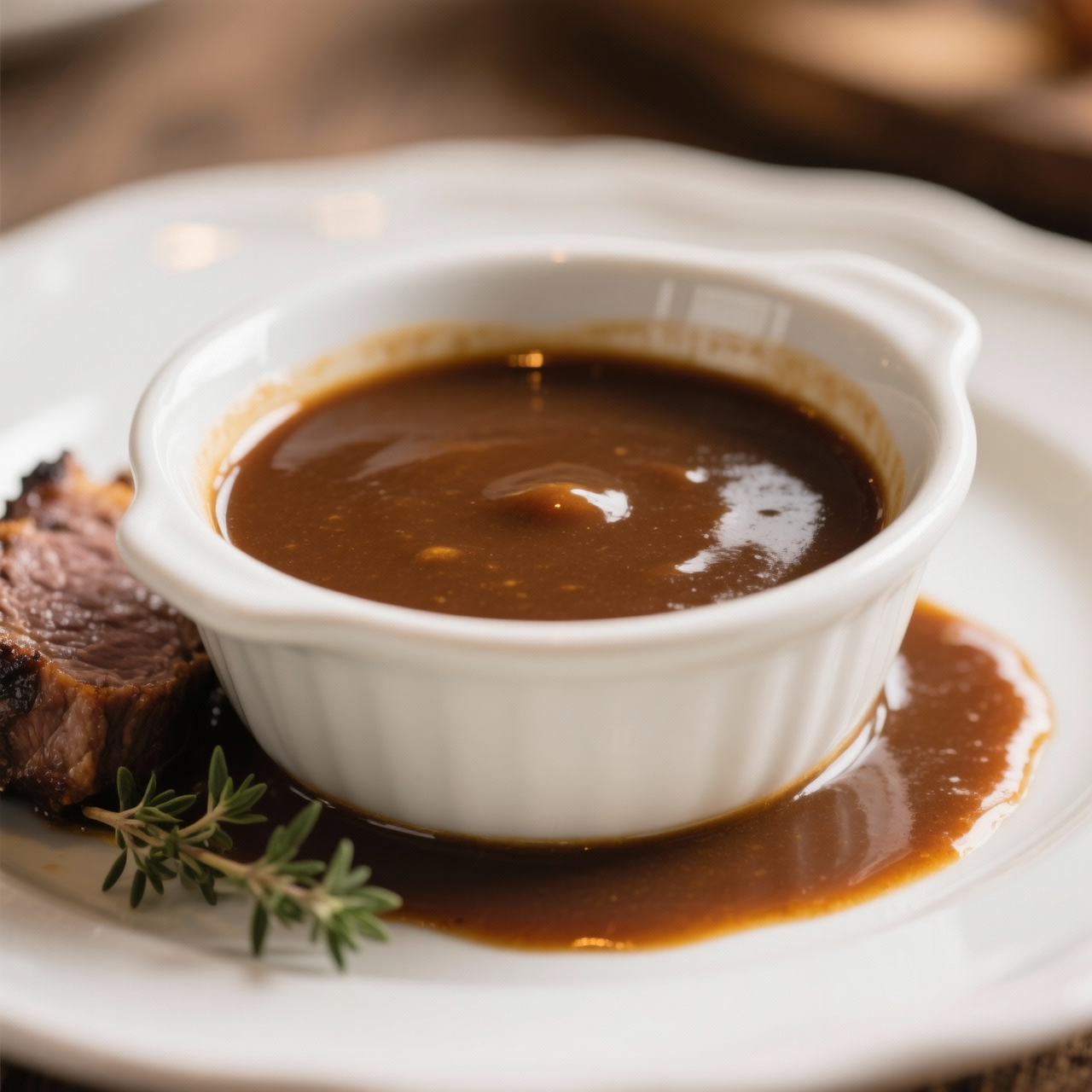
Roast gravy
There is something profoundly alchemical about turning the caramelized remnants of a Sunday roast into a rich, velvety gravy. In British culinary tradition, roast gravy isn’t merely an accompaniment; it is the soul of the meal, a liquid testament to the beef, lamb, or chicken that preceded it. The origins of this pan-drippings gravy trace back to the hearths of rural Britain, where nothing was wasted, and the fond—the sticky, savory bits clinging to the roasting tin—was considered liquid gold. To me, making a proper batch gravy is an act of love and foresight. When I roast a large joint, I always make a double batch of gravy, skimming the excess fat and reducing the stock until it coats the back of a spoon. This is my ultimate batch hero. It freezes beautifully in sturdy tubs, ready to be thawed for midweek pies, bangers and mash, or a quick shepherd's pie. However, I see so many people fall into common pitfalls. The most frequent mistake is rushing the deglazing process. If you don't properly scrape up the fond, your gravy will lack that deep, roasted complexity. Another trap is adding cold stock to a hot pan, which seizes the cooking process and prevents a smooth emulsion. Then there’s the flour: failing to cook out the raw taste of the roux before adding liquids leaves a chalky finish. And please, never drown your gravy in artificial thickeners; a proper British gravy relies on the natural gelatin from the bones and the careful reduction of good, homemade stock. When you master this, you aren't just making a sauce; you are preserving the very essence of the roast.
Nutrition
| Per serving | Calories | Protein | Carbs | Fat | Sat fat | Fibre | Sugar | Sodium |
|---|---|---|---|---|---|---|---|---|
| beginner | 65kcal | 2g | 4g | 4g | 2g | 0g | 1g | 750mg |
| intermediate | 160kcal | 3g | 8g | 12g | 6g | 0g | 1g | 480mg |
| expert | 180kcal | 3g | 5g | 16g | 9g | 0g | 1g | 600mg |
Per serving · Ava-estimated — a guide, not a clinical figure.
- 120 gpan dripping— reserved from the roasted meat
- 60 gplain flour
- 1000 mlbeef stock— hot
This beginner-friendly roast gravy relies on the magic of jarred gravy paste or bouillon to guarantee a rich, deeply savoury result without the stress of making a traditional roux. The secret to a great shortcut gravy is still utilizing the caramelised meat juices left in your roasting tin, which provides an authentic roasted flavour that water alone cannot achieve. Watch out for the salt content; commercial pastes and granules are heavily seasoned, so you must taste the gravy before adding any extra salt or stock cubes. Keep the heat moderate when deglazing the tin to prevent the paste from burning or sticking. Whisk continuously as you add the liquid to ensure a perfectly smooth texture, and let it bubble gently to activate the thickening agents. This method is incredibly forgiving, making it the perfect confident first attempt for a classic British Sunday roast. Once cooled, it freezes brilliantly in silicone tubs for future midweek meals.
Equipment
- Hob-safe roasting tin— If yours is not hob-safe, use a heavy-bottomed saucepan instead.
- Balloon whisk— Essential for a lump-free finish.
- Measuring jug— For accurate liquid ratios.
Method
- 1
Remove the cooked meat from the roasting tin and pour off excess fat, leaving only the sticky brown juices and sediment.
Tilt the tin and use a spoon or fat separator to leave the fond behind.
fond~ 2 min - 2
Place the roasting tin directly on the stovetop over medium heat and stir in the jarred gravy paste until it melts and bubbles.
Keep the heat moderate to prevent the concentrated paste from burning.
deglazing~ 1 minTricky bit - 3
Gradually pour in the hot stock while whisking vigorously to incorporate the paste and lift any remaining browned bits.
Add the liquid in three stages to prevent lumps from forming.
whisking~ 2 min - 4
Bring the liquid to a gentle simmer and cook for three to five minutes, stirring occasionally, until the gravy thickens slightly.
Taste carefully before adding salt, as the jarred paste is already highly seasoned.
simmering~ 4 min
Cooking from frozen
Thaw overnight in the fridge and reheat gently in a saucepan, whisking to re-emulsify.
Storage times are a guide — always use your judgement and store food safely.