
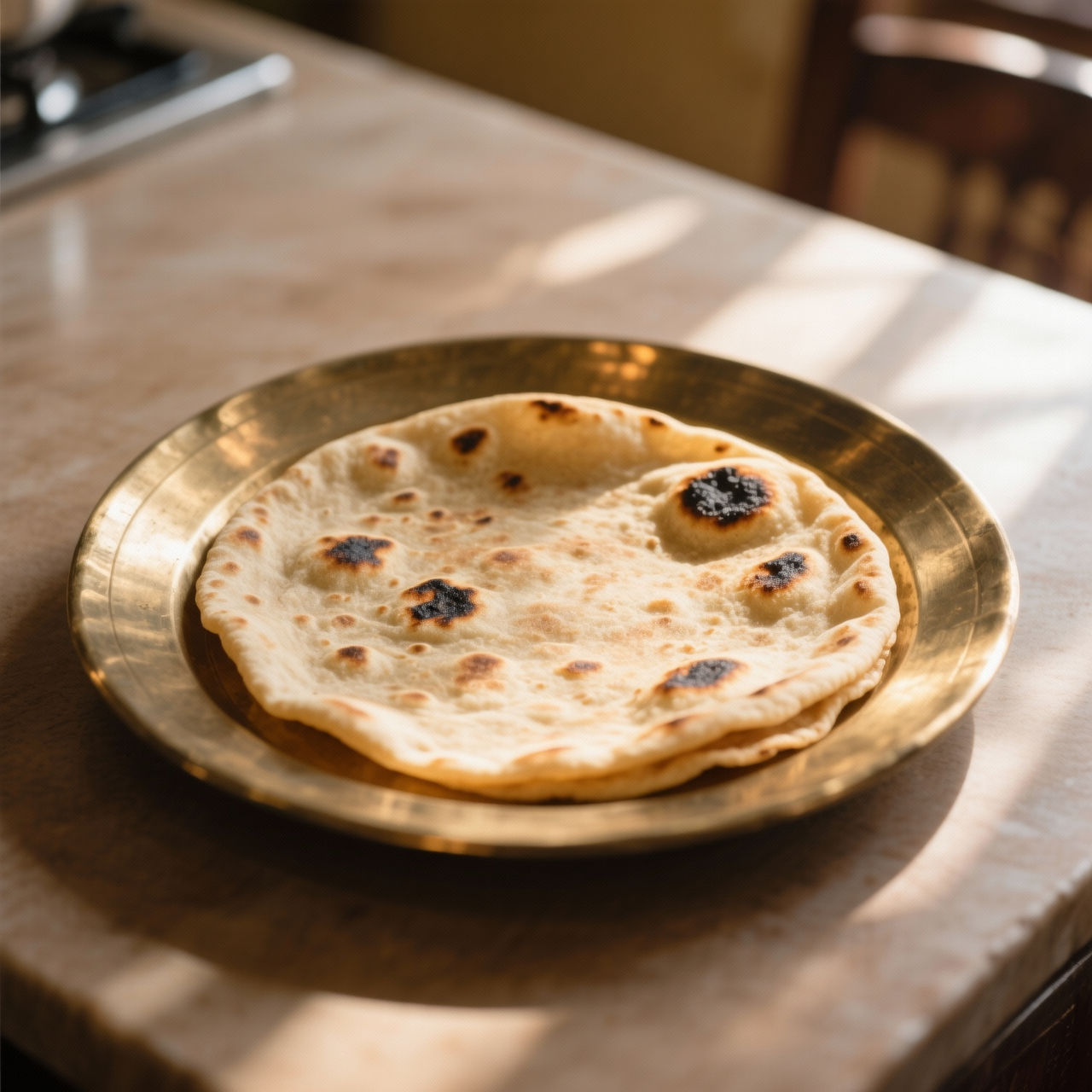
Roti / Chapati
I’ve always believed that a proper roti should whisper of toasted wheat and home kitchens, not hum with the sterile machinery of factory production. Born in the ancient hearths of the Indian subcontinent, this unassuming flatbread is the quiet backbone of countless meals, a humble canvas for dals and curries that has sustained generations. Yet today, you’ll find shrink-wrapped stacks of commercial chapatis crowding supermarket shelves, typically priced around three to four pounds for eight. They promise convenience, but deliver rubbery, shelf-stable discs loaded with emulsifiers, dough conditioners, and enough sodium to mask their stale, cardboard-like texture. That’s why I insist on making them from scratch, even when the dough feels intimidating at first. The truth is, it’s just whole wheat flour, water, and salt, but the magic lives in the resting period and the heat management. The most common pitfall I see is rolling the dough too thin without letting it relax, which causes it to shrink back or tear, or cooking it on a pan that’s either too cool or blazing hot, resulting in tough, pale discs instead of soft, charred rounds with those signature puffed pockets. When you commit to the real thing, you’re trading a processed shortcut for a living dough that breathes and stretches. The tactile rhythm of kneading, resting, and rolling becomes a grounding ritual, and the reward is a pliable, fragrant bread that tears cleanly and actually tastes like wheat again.
Nutrition
| Per serving | Calories | Protein | Carbs | Fat | Sat fat | Fibre | Sugar | Sodium |
|---|---|---|---|---|---|---|---|---|
| beginner | 135kcal | 4g | 21g | 4g | 1g | 3g | 0g | 110mg |
| intermediate | 210kcal | 7g | 40g | 2g | 0g | 5g | 1g | 280mg |
| expert | 135kcal | 5g | 23g | 3g | 0g | 3g | 0g | 190mg |
Per serving · Ava-estimated — a guide, not a clinical figure.
- 200 gwhole wheat flour— finely milled atta preferred
- 140 mlwater— lukewarm for optimal dough elasticity
- 3 gfine salt— to season the dough
- 10 mlneutral vegetable oil(optional)— for kneading and resting
This beginner-friendly roti recipe strips away the intimidation factor of traditional flatbread making while staying 100% from scratch. Store-bought rotis cost around $4 for a pack of six, but they rely on chemical softeners, preservatives, and high-sodium stabilizers that turn them into leathery, flavorless discs once microwaved. Here, you’ll use just three real ingredients—whole wheat flour, water, and a touch of oil—mixed with a forgiving, low-knead approach that guarantees soft, pliable results. The key difference at this level is extended resting: letting the dough hydrate fully for 20 minutes eliminates the need for expert stretching skills. Watch for the dough’s texture rather than exact measurements; it should feel like a soft earlobe, not sticky or stiff. When rolling, keep a light touch and don’t worry about perfect circles. A hot, dry skillet and a brief flip-and-press technique will create the signature puffs without needing a direct flame. Once you master this relaxed rhythm, you’ll never reach for the packaged version again.
Equipment
- Heavy-bottomed skillet— cast iron or non-stick works best for even heat distribution
- Rolling pin— straight wooden pin provides better control than tapered designs
- Large mixing bowl— wide enough to comfortably knead without spilling
- Damp kitchen towel— essential to prevent dough surface from drying out
Method
- 1
Whisk whole wheat flour and salt in a large bowl, then gradually pour in warm water and oil while stirring with a fork.
Start with less water; you can always add more to reach the right texture.
hydration~ 2 min - 2
Turn the shaggy mixture onto a clean surface and knead gently for three minutes until smooth.
Minimal gluten development keeps the final flatbread tender and easy to roll.
kneading~ 3 min - 3
Cover the dough tightly and let it rest at room temperature for twenty minutes.
This rest relaxes the gluten and makes the dough incredibly pliable.
dough resting~ 20 min - 4
Divide the rested dough into four equal portions and roll each into a smooth ball.
Keep unused balls covered to prevent surface cracking.
portioning~ 1 min - 5
Flatten each ball with your palm and roll into a thin six-inch circle using light, even strokes.
Rotate the dough a quarter turn after each pass to maintain uniform thickness.
rolling~ 2 minTricky bit - 6
Heat a heavy skillet over medium-high heat until a few drops of water sizzle instantly, then cook each roti for one minute per side.
Press gently with a spatula to encourage steam puffing; avoid adding oil to the pan.
dry-roasting~ 2 min
Cooking from frozen
Separate stacked layers with parchment before freezing; thaw at room temperature and warm in a dry skillet until pliable.
Storage times are a guide — always use your judgement and store food safely.