
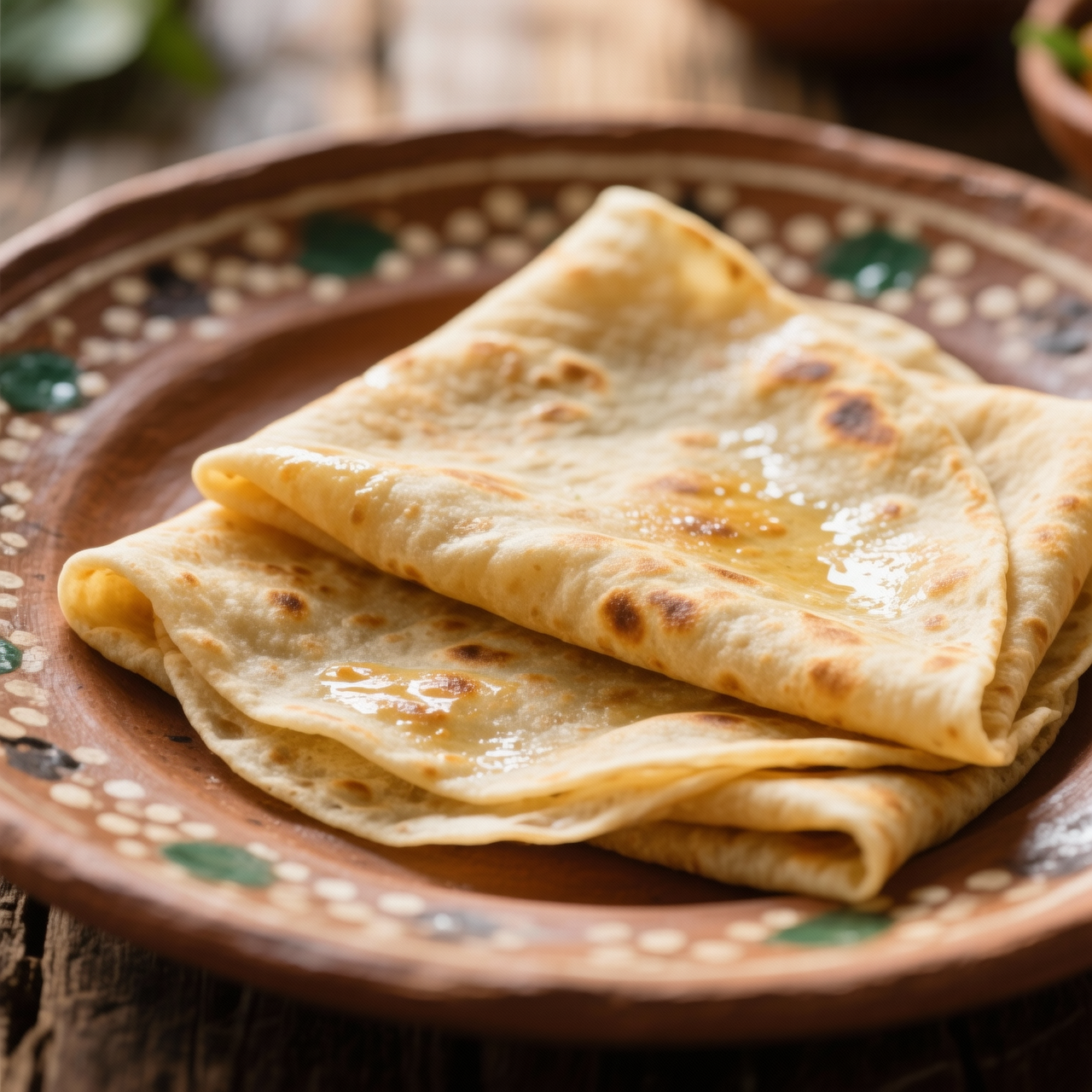
Roti skins
When I think of Caribbean comfort food, the roti skin is the unsung hero holding everything together. Originating from the Indo-Caribbean communities in Trinidad and Tobago, these soft, pliable flatbreads are the ultimate vessel for rich curries. You might be tempted to grab a pack of shop-bought roti skins from the freezer aisle at your local Caribbean grocer, which usually costs around four or five dollars for just four stiff discs. The problem with those commercial versions is that they are often rubbery, lack flavor, and turn into brittle crackers the moment you try to reheat them. Making them from scratch using just all-purpose flour, water, a touch of oil, and salt is a revelation. The from-scratch win is undeniable: you get a tender, slightly flaky, and deeply satisfying bread that actually tastes like home. The most common pitfalls I see home cooks fall into are overworking the dough, which develops too much gluten and makes the skins tough, and skipping the crucial resting period, which causes the dough to shrink and tear when you try to roll it out. Another mistake is using a pan that isn't hot enough; you need a screaming hot griddle or skillet to get those beautiful, soft blisters without drying out the bread. Once you master this simple, unprocessed dough, you will never go back to the frozen aisle. Plus, as a batch hero, they stack and freeze beautifully, meaning you always have fresh, authentic wraps ready to go.
Nutrition
| Per serving | Calories | Protein | Carbs | Fat | Sat fat | Fibre | Sugar | Sodium |
|---|---|---|---|---|---|---|---|---|
| beginner | 420kcal | 9g | 65g | 12g | 1g | 2g | 1g | 280mg |
| intermediate | 540kcal | 9g | 68g | 25g | 2g | 3g | 1g | 290mg |
| expert | 280kcal | 6g | 38g | 11g | 1g | 1g | 1g | 290mg |
Per serving · Ava-estimated — a guide, not a clinical figure.
- 500 gall-purpose flour— sifted
- 250 mlwater— warm
- 60 mlvegetable oil— plus extra for brushing
- 5 gsalt— fine
- 5 gbaking powder— aluminum-free
Shop-bought Caribbean roti skins cost around $6 for a small pack of frozen flatbreads, but they are often loaded with preservatives, cheap palm oil, and turn rubbery or tough when reheated. This beginner version skips the complex traditional layering techniques of restaurant-grade paratha, focusing instead on a simple, forgiving dough that yields soft, pliable flatbreads perfect for wrapping curries. Because we are making this from scratch without packet mixes or pre-made dough, you control the ingredients and get a superior, fresh texture that freezes beautifully. Watch the dough hydration: it should be soft and slightly tacky, not stiff, which ensures the rotis stay flexible after cooking. When cooking, watch for the bubbles; pressing them gently with a clean cloth encourages the roti to puff up, creating those signature flaky layers without needing advanced rolling skills. Stack them with parchment paper between each one to freeze, giving you a ready-to-use stash of authentic, preservative-free wraps that beat the frozen aisle every time.
Equipment
- Heavy-bottomed pan— cast iron or non-stick skillet works best
- Rolling pin— a standard wooden pin is ideal
- Clean kitchen towel— used for pressing and keeping rotis soft
Method
- 1
Combine the flour, salt, baking powder, water, and oil in a large bowl, mixing until a shaggy dough forms, then knead on a clean surface until smooth and elastic.
Dough should be soft and slightly tacky; add a splash more water if it feels stiff.
kneading~ 5 min - 2
Divide the kneaded dough into equal portions, roll them into smooth balls, and let them rest under a damp cloth.
Resting relaxes the gluten, making the dough much easier to roll out without springing back.
resting~ 15 min - 3
Flatten each dough ball with your hands, then use a rolling pin to roll them out into thin, even circles.
Dust the surface lightly with flour if the dough sticks, but avoid incorporating too much extra dry flour.
rolling~ 5 min - 4
Cook each rolled roti on a hot, dry heavy-bottomed pan for about a minute per side until brown spots form and it puffs up.
Press gently with a clean kitchen towel to encourage puffing; do not let it dry out and become crisp.
dry-roasting~ 2 minTricky bit - 5
Transfer the cooked rotis to a plate and cover them immediately with a clean towel to keep them soft and pliable while you cook the rest.
Stacking them while hot and covered traps steam, which is the secret to a soft, flexible texture.
steaming~ 1 min
Cooking from frozen
Thaw at room temperature or reheat directly on a dry, hot skillet for a minute per side until soft and pliable.
Storage times are a guide — always use your judgement and store food safely.