
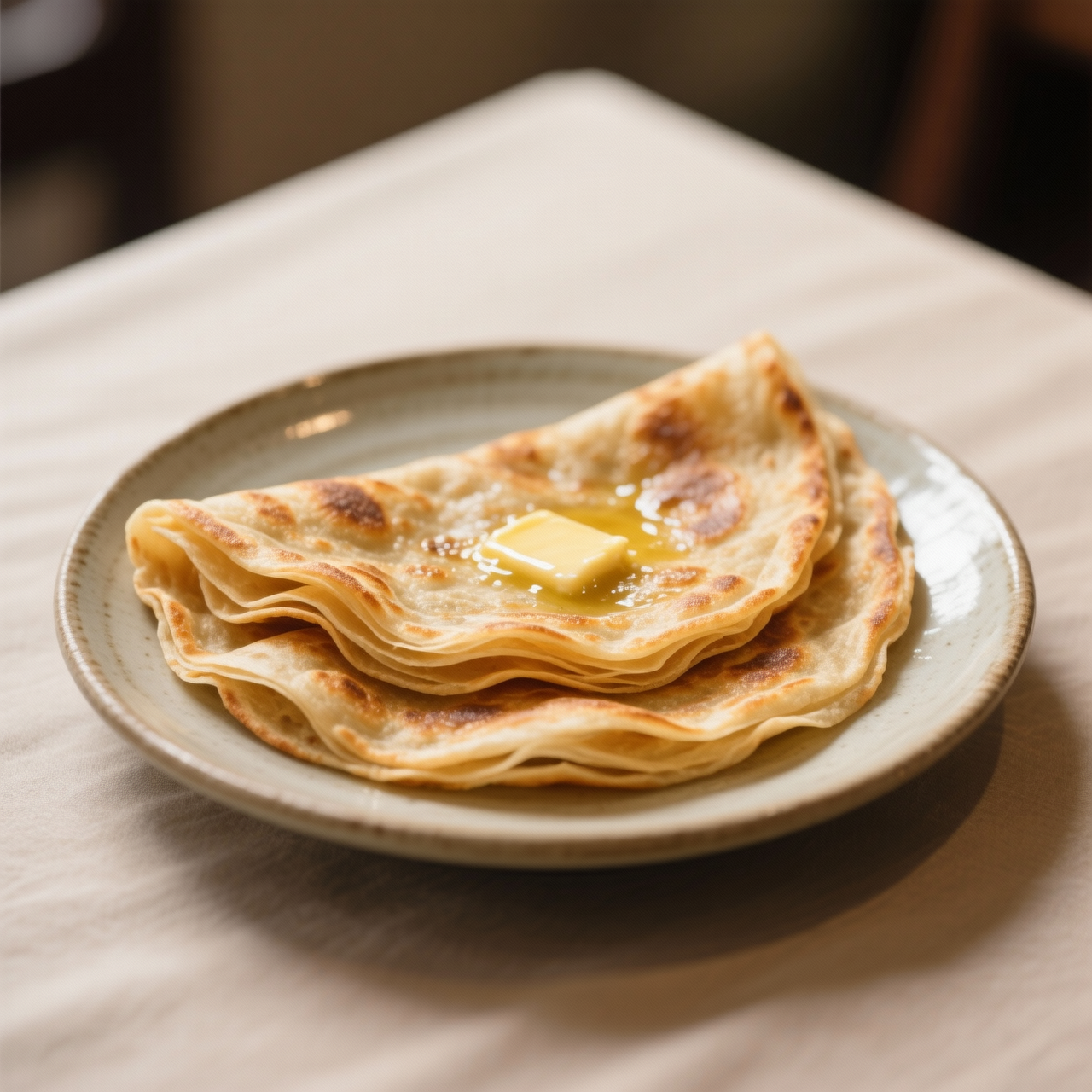
Roti (Thai Flatbread)
I first learned the rhythm of Thai roti in a humid Bangkok alleyway at dawn, watching vendors slap and stretch dough until it became paper-thin before folding it into a golden, flaky square. While its name and technique trace back to South Indian paratha, Thai roti has evolved into something distinctly its own, especially as a beloved breakfast staple draped in sweetened condensed milk or ripe banana. Making it from scratch matters because the commercial alternatives sold in supermarket freezers are usually heavy with industrial palm oil and chemical leaveners, costing around three pounds a pack yet yielding a dense, cardboard-like disc that shatters into grease rather than delicate, airy layers. The real magic lies in a simple, unadulterated dough of plain flour, warm water, a pinch of sugar, salt, and neutral oil, rested patiently until it completely surrenders to your hands. The most common pitfall is rushing this resting phase; without a full hour of relaxation, the gluten network remains too tight, tearing instead of stretching into those signature translucent sheets. Another frequent mistake is drowning the work surface in flour during the pull, which dries out the dough and ruins the delicate lamination. Pan temperature is equally unforgiving—too low and the roti steams into a gummy sheet, too high and it scorches before the interior cooks through. When you commit to the from-scratch method, you bypass every industrial shortcut and reclaim a tactile, meditative technique. The reward is a shatteringly crisp, impossibly chewy flatbread that transforms a simple morning into something quietly extraordinary.
Nutrition
| Per serving | Calories | Protein | Carbs | Fat | Sat fat | Fibre | Sugar | Sodium |
|---|---|---|---|---|---|---|---|---|
| beginner | 265kcal | 6g | 38g | 9g | 4g | 2g | 8g | 180mg |
| intermediate | 340kcal | 8g | 48g | 14g | 3g | 2g | 4g | 190mg |
| expert | 420kcal | 9g | 52g | 18g | 8g | 2g | 6g | 280mg |
Per serving · Ava-estimated — a guide, not a clinical figure.
- 250 gall-purpose flour— sifted
- 120 mlwater— lukewarm
- 40 mlsweetened condensed milk— adds tenderness and slight sweetness
- 1 largeegg— room temperature
- 3 gsalt
- 30 mlvegetable oil— for dough
- 50 gclarified butter— for folding and pan-frying
This beginner-friendly version strips away the intimidating hand-stretching theatrics of street vendors while keeping every ingredient completely from scratch. Store-bought frozen roti or paratha packs often cost around £3–£4 for a box of four, but they rely on palm oil, chemical dough conditioners, and excessive sodium to mimic the flaky layers you want. By making it yourself with just plain flour, water, a touch of egg, sugar, and butter, you get a cleaner taste, better texture control, and zero hidden additives. The dough is mixed in one bowl and rested longer than usual so gluten develops passively, making it forgiving and easy to roll or press out without tearing. Watch for the dough’s hydration—it should feel soft, tacky but not sticky, and spring back slowly when pressed. If it feels tight, give it a few extra minutes of rest before shaping. Cook the flatbreads in a lightly oiled pan over medium heat until golden and blistered, brushing with a little butter right after flipping. For meal prep, this recipe is a batch hero: portion the rested dough into balls, flatten slightly, layer with parchment, and freeze raw. They thaw and pan-fry beautifully straight from the freezer, giving you fresh-tasting breakfast roti on busy mornings with minimal effort.
Equipment
- Large mixing bowl— glass or stainless steel
- Heavy skillet or non-stick pan— 10 to 12 inches
- Rolling pin— or a flat, clean bottle
- Silicone pastry brush— for oil and butter
- Airtight freezer bags— for batch storage
Method
- 1
Whisk plain flour, salt, sugar, beaten egg, and melted butter in a large bowl until crumbly, then slowly drizzle in warm water while stirring until a shaggy dough forms.
Water temperature should be just warm to the touch, not hot.
mixing~ 5 min - 2
Turn the dough onto a lightly floured surface and knead gently for eight minutes until smooth, soft, and no longer sticky.
Add only a dusting of extra flour if the dough sticks aggressively.
kneading~ 8 min - 3
Return the dough to the bowl, cover tightly with a damp cloth or lid, and let it rest at room temperature for forty-five minutes to relax the gluten.
Longer resting makes the dough much easier to stretch without springing back.
resting~ 45 min - 4
Divide the rested dough into twelve equal pieces, roll each into a tight ball, and gently flatten them into thick discs with your palm.
Keep covered while working to prevent drying out.
portioning~ 3 min - 5
Heat a thin layer of neutral oil in a skillet over medium heat, then press each disc flat with a rolling pin before cooking for two minutes per side until blistered and golden.
Do not crowd the pan; cook in batches if needed.
pan-frying~ 4 minTricky bit - 6
Transfer cooked flatbreads to a plate, brush lightly with melted butter, and serve warm or cool completely before stacking with parchment for freezing.
Freeze raw for up to three months; cook from frozen by adding one extra minute per side.
finishing~ 2 min
Cooking from frozen
Reheat directly in a dry skillet over medium heat, flipping once, until warm and pliable.
Storage times are a guide — always use your judgement and store food safely.