
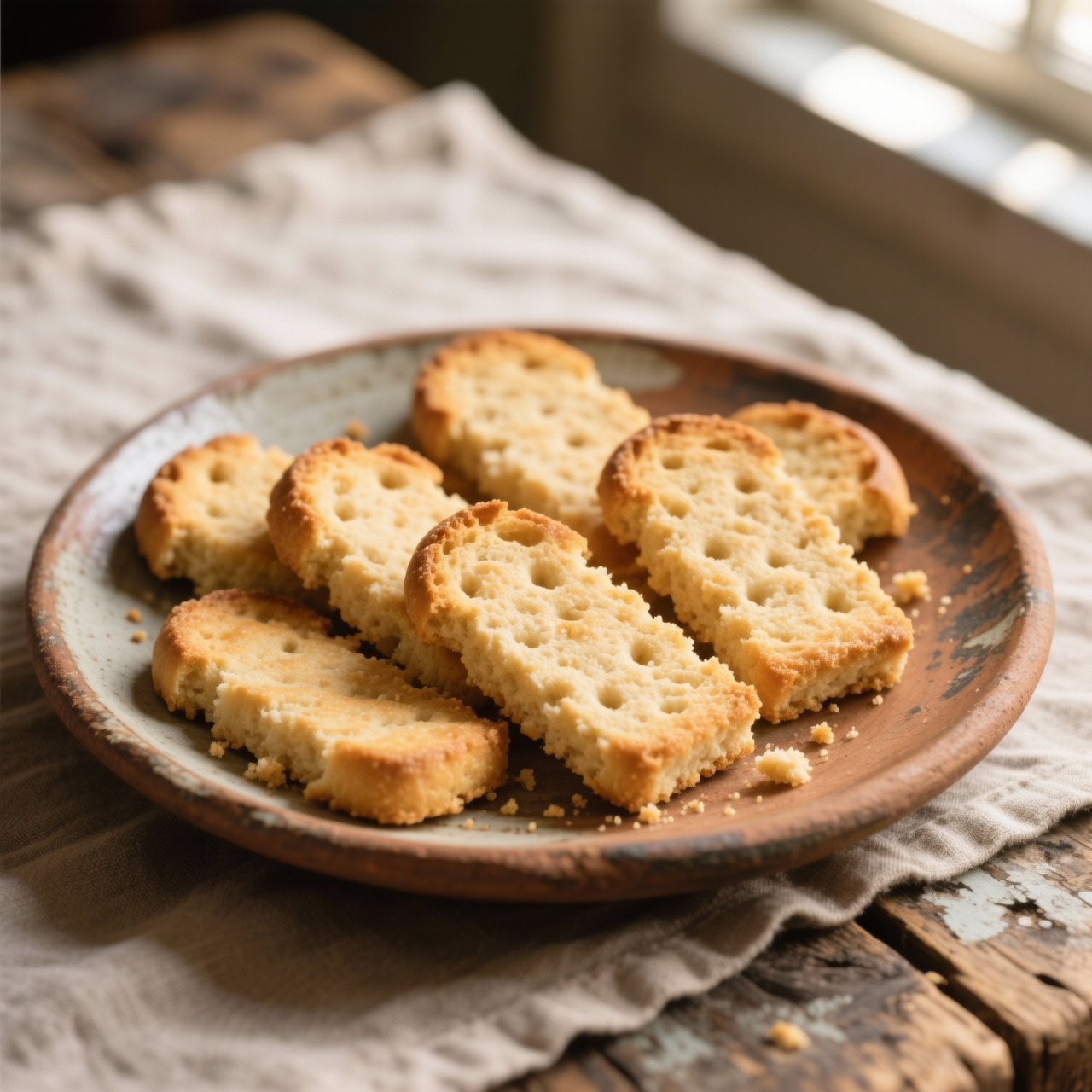
Rusks (beskuit)
I remember my first proper encounter with South African beskuit was not in a bakery aisle, but at a sun-drenched kitchen table where my aunt dunked a thick slab into steaming rooibos. True rusks are a twice-baked heritage, born from early settlers practical need for a shelf-stable travel biscuit that could survive months in the dry Karoo heat. Making them from scratch is not just nostalgia; it is a quiet rebellion against the supermarket aisle. Those shop-bought tins run you nearly eighty rand, yet they are loaded with cheap palm oil, artificial hardeners, and a dry, chalky mouthfeel that shatters on the teeth instead of melting when dipped. When I bake them at home, I control the crumb, the butter ratio, and the gentle second bake that transforms dough into those perfect, honeycombed dunkers. The pitfalls, though, are real and unforgiving. Rush the first bake or leave the oven too hot, and you will end up with scorched edges and a gummy center that refuses to dry properly. Slice the log too thick, and the interior stays stubbornly moist, inviting mold the moment humidity creeps in. Too thin, and they turn into brittle shards. The secret lies in patience: a low, steady temperature, a sharp serrated knife, and leaving them in the cooling oven with the door propped open to draw out every last trace of moisture. Done right, they become a quiet morning ritual, a sturdy companion to strong coffee, and a testament to how simple ingredients, treated with respect, outlast any factory shortcut. I promise you, the wait is entirely worth the crunch.
Nutrition
| Per serving | Calories | Protein | Carbs | Fat | Sat fat | Fibre | Sugar | Sodium |
|---|---|---|---|---|---|---|---|---|
| beginner | 265kcal | 6g | 38g | 9g | 5g | 2g | 10g | 310mg |
| intermediate | 315kcal | 7g | 42g | 12g | 5g | 2g | 11g | 210mg |
| expert | 385kcal | 8g | 54g | 15g | 8g | 3g | 12g | 210mg |
Per serving · Ava-estimated — a guide, not a clinical figure.
- 500 gall-purpose flour— Sifted before measuring
- 150 ggranulated sugar
- 15 gbaking powder
- 5 gbicarbonate of soda
- 5 gsalt— Fine sea salt
- 125 gunsalted butter— Cold, cubed
- 2 largeegg— Lightly beaten
- 250 mlbuttermilk— Room temperature
- 10 ganiseed(optional)— Whole or lightly crushed
South African rusks are a twice-baked breakfast staple built for long-term pantry storage and robust coffee dunking. While shop-bought packets cost little, they rely heavily on cheap vegetable oils, artificial flavourings, and chemical preservatives to mimic the tang and crunch of the real thing. This beginner version strips away the intimidation of traditional rusk-making by using a straightforward one-bowl method and forgiving ratios, so you get that authentic buttermilk tang and sturdy texture without the guesswork. The key is patience during the second drying phase: low, gentle heat is what transforms soft slices into shelf-stable, rock-hard biscuits. Watch the colour closely during the first bake to ensure a light golden crust before slicing; if the dough feels gummy when cut, it needs ten more minutes. Mix until just combined to keep the crumb tender, and let them cool completely before slicing and storing. The result is a cleaner, preservative-free dunker that actually improves over a few days of resting in a sealed tin.
Equipment
- Large mixing bowl— roomy enough to fold without spilling flour
- Rimmed baking sheet— line with parchment for easy transfer
- Serrated bread knife— prevents crumbling during the second cut
- Wire cooling rack— promotes even airflow during the drying phase
Method
- 1
Preheat the oven to 180°C (350°F) and lightly grease a standard loaf tin or line a rimmed baking sheet.
Greasing ensures clean edges for slicing later.
preheating~ 0 min - 2
Whisk the flour, baking powder, salt, and sugar together in a large mixing bowl until uniformly distributed.
Sifting the baking powder prevents bitter pockets.
aerating~ 1 min - 3
Rub the cold butter into the dry mixture using your fingertips until the texture resembles coarse breadcrumbs.
Keep the butter cold to maintain a tender crumb.
rubbing in~ 3 min - 4
Make a well in the centre, pour in the buttermilk, egg, and vanilla, then fold gently until a soft, slightly sticky dough forms.
Stop mixing as soon as no dry flour remains.
folding~ 2 minTricky bit - 5
Press the dough firmly and evenly into the prepared pan, smooth the top, and bake until pale gold.
The edges should just begin to pull away from the tin.
baking~ 40 minTricky bit - 6
Remove the pan from the oven, let it cool for ten minutes, then carefully slice the block into uniform rectangular pieces.
Use a gentle sawing motion to avoid squashing the soft centre.
portioning~ 2 minTricky bit - 7
Lower the oven temperature to 100°C (210°F), arrange the slices flat on a tray, and bake until completely dry and hardened.
Leave the door slightly ajar with a wooden spoon to vent moisture.
dehydrating~ 60 min
Cooking from frozen
Thaw sealed at room temperature overnight to prevent moisture absorption.
Storage times are a guide — always use your judgement and store food safely.