
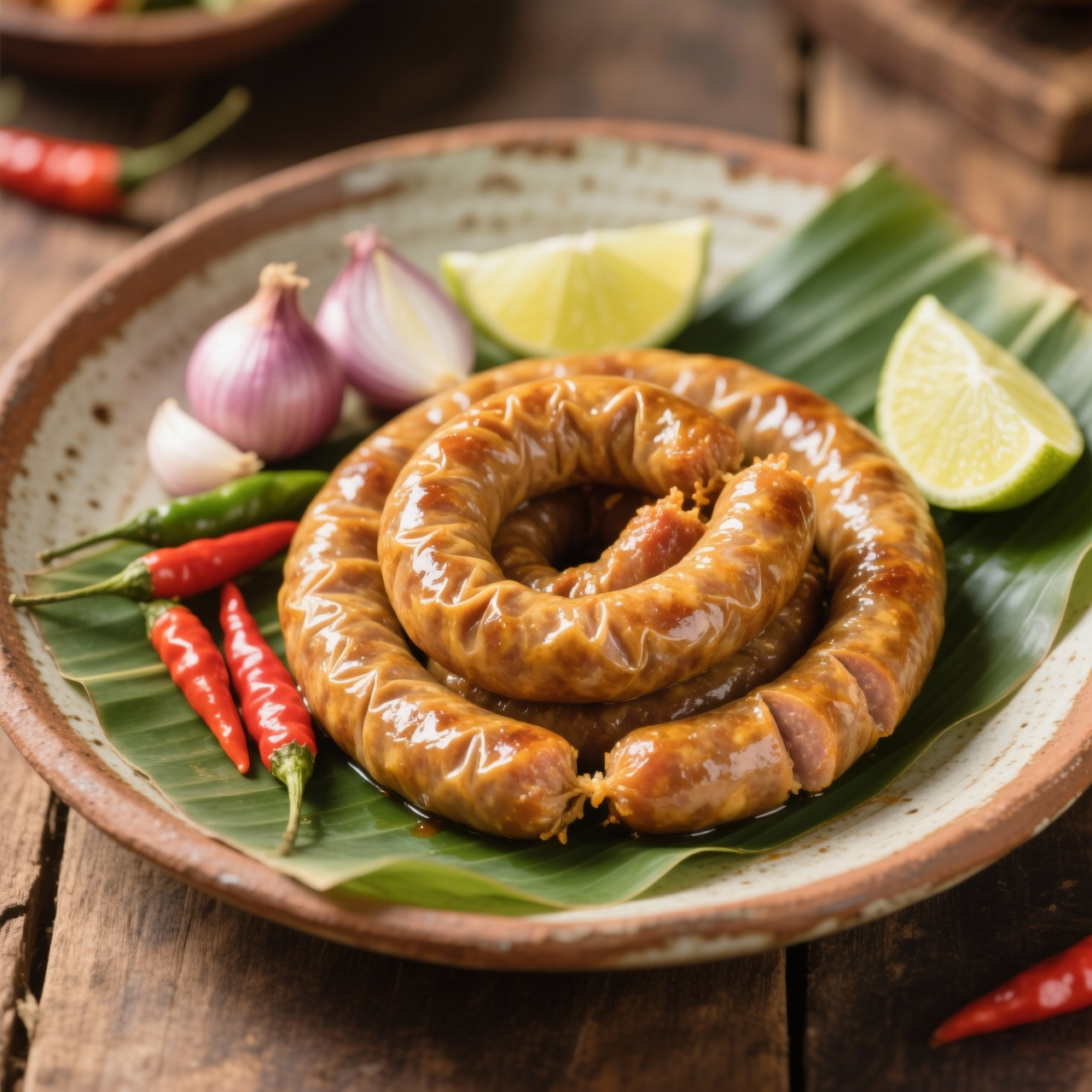
Sai Krok Isan (Fermented Sausage)
I first encountered Sai Krok Isan at a roadside stall in northeastern Thailand, where the sharp tang of natural fermentation cut through the heavy air. This sausage is a preservation craft born of rural necessity, traditionally packed with minced pork, toasted sticky rice, garlic, and salt, then left to culture in hog casings. Supermarkets sell artificial versions for about five dollars a pack, but they lean heavily on chemical starters and liquid smoke, resulting in a flat, overly sweet texture that completely misses the bright lactic acidity of the real thing. Making it entirely from scratch restores that balance. The biggest pitfall I see is temperature mismanagement. Fermenting above seventy-five degrees risks spoilage, while anything below sixty leaves the pork dangerously bland and uncultured. You must also toast the rice yourself to feed the bacteria properly; skipping this step or using instant rice starves the culture. Overstuffing casings is another frequent error, guaranteeing split skins during cooking. When you grind your own pork shoulder, carefully pack the links, and monitor the sourness, you get a crisp, tangy sausage that freezes exceptionally well. I always batch them, ferment until perfectly puckery, then flash-freeze the raw coils. Thaw overnight in the refrigerator and grill slowly to preserve the casing snap. It demands patience, but the reward is a deeply complex, shelf-stable snack that outshines any processed alternative.
Nutrition
| Per serving | Calories | Protein | Carbs | Fat | Sat fat | Fibre | Sugar | Sodium |
|---|---|---|---|---|---|---|---|---|
| beginner | 360kcal | 23g | 15g | 22g | 8g | 1g | 1g | 620mg |
| intermediate | 385kcal | 24g | 16g | 26g | 9g | 1g | 2g | 780mg |
| expert | 420kcal | 24g | 11g | 31g | 11g | 1g | 1g | 920mg |
Per serving · Ava-estimated — a guide, not a clinical figure.
- 800 gpork shoulder— kept very cold until mixing
- 150 gcooked jasmine rice— cooled completely before use
- 30 ggarlic— finely minced or pounded
- 10 gwhite peppercorn— freshly cracked
- 15 gfine sea salt— non-iodized for best fermentation
- 10 ggranulated sugar
- 10 mhog casing— rinsed thoroughly and soaked in warm water
- 15 mlfish sauce(optional)— adds depth of flavor
Shop-bought Sai Krok Isan costs around eight dollars per pack and relies on heavy preservatives, fillers, and artificial tang to mimic the traditional sour fermentation. This beginner-friendly, entirely from-scratch version strips away the complexity while keeping the authentic, clean flavor. Instead of hunting for specialty equipment, you will use a simple kitchen funnel or zip-lock bag to hand-stuff the mixture, and a straightforward room-temperature ferment that builds the signature tang safely over two days. The key difference here is a forgiving meat-to-rice ratio and a simplified spice prep that skips traditional mortar-and-pestle pounding in favor of a quick, rough chop that still blooms properly when cooked. Watch your fermentation temperature closely: keep the links at a steady twenty to twenty-four degrees Celsius out of direct sunlight, and trust your nose over a timer. The sausages should smell pleasantly sour and tangy, never rancid or slimy. Once fermented, a quick pan-fry or grill renders the fat, crisps the casing, and gives you a snack that is vastly cheaper, cleaner, and more rewarding than anything from a supermarket freezer aisle.
Equipment
- Heavy-bottomed pan— non-stick is fine here
- Kitchen funnel or large zip-top bag— for easy stuffing without a machine
- Mixing bowl— keep chilled until ready
- Meat thermometer(optional)— ensures safe internal temperature
Method
- 1
Combine minced pork, cooled cooked sticky rice, minced garlic, ground coriander, white pepper, and sea salt in a large bowl.
Cold meat binds better; chill bowl ten minutes if kitchen is warm.
kneading~ 7 min - 2
Pack the seasoned mixture into a kitchen funnel or a large zip-top bag with a snipped corner.
Do not overstuff; leave slight slack so casings do not burst during fermentation.
stuffing~ 8 minTricky bit - 3
Gently squeeze and guide the meat into natural or collagen casings, twisting into ten to twelve centimetre links.
Use a damp cloth to wipe your hands between twists to keep the casing pliable.
linking~ 5 minTricky bit - 4
Prick each link twice with a sterilized needle, arrange them in a single layer on a clean wire rack, and leave uncovered at room temperature.
Keep away from direct sun and drafts; discard if slimy or foul-smelling.
fermenting~ 5 minTricky bit - 5
Heat a heavy-bottomed pan over medium-low with a thin layer of neutral oil and cook the fermented links until the casings blister and the interior reaches seventy-one degrees Celsius.
Low heat prevents casing rupture; internal temperature guarantees food safety.
pan-searing~ 13 min
Cooking from frozen
Thaw overnight in the fridge, then reheat gently on a grill or skillet until the casing crisps and the center is piping hot.
Storage times are a guide — always use your judgement and store food safely.