
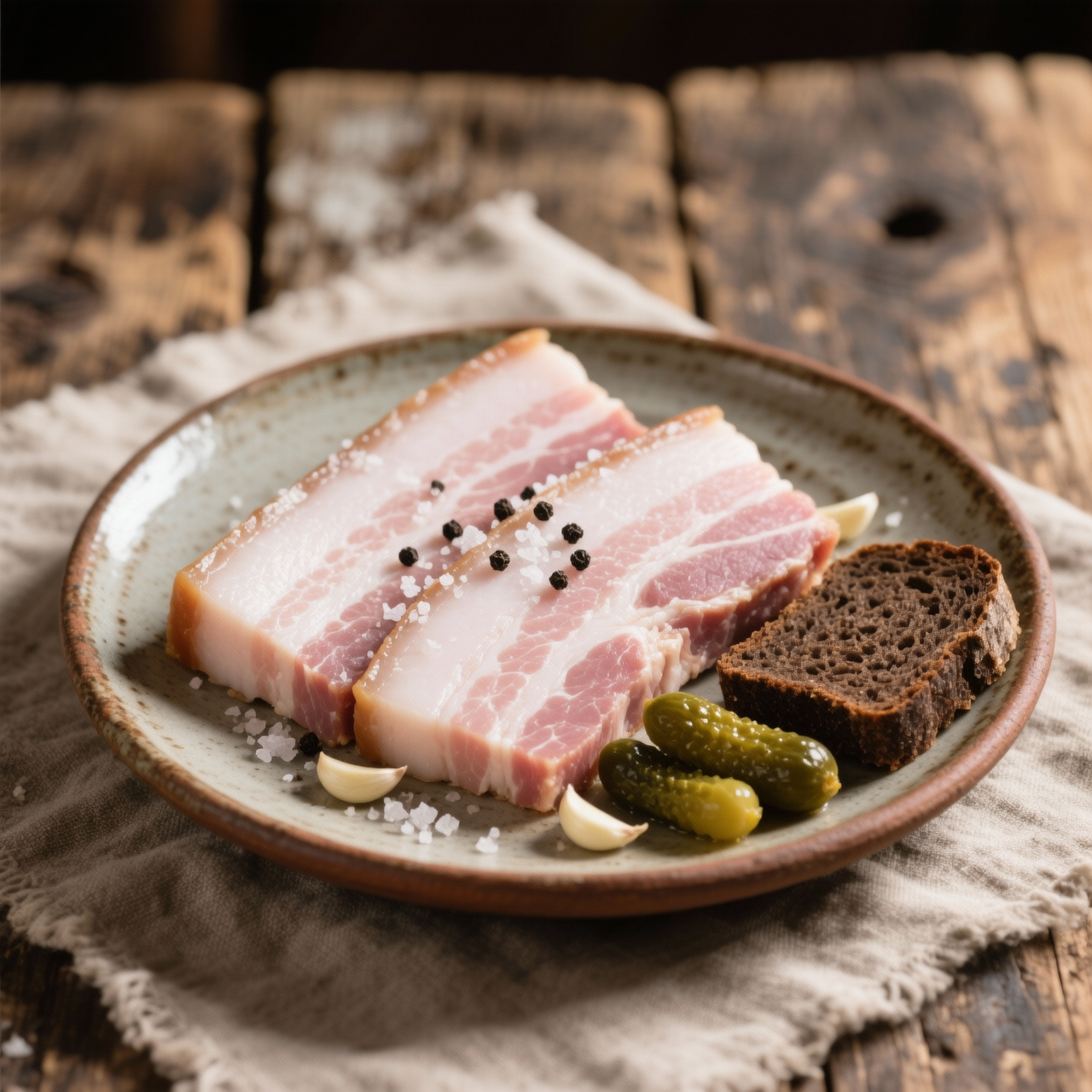
Salo (cured pork fat)
Salo is the undisputed soul of Ukrainian cuisine, a humble yet revered delicacy that speaks to a deep, historical reverence for the pig. In my kitchen, curing a beautiful slab of pork fat is an act of patience and respect. Historically, it was a vital survival food, preserving precious calories through harsh winters without the need for smoking or cooking. What matters most here is the quality of the fat; it should be pristine, snow-white, and sourced from a trusted butcher. The most common pitfall is using fat that is too thin or pink-streaked; you want a thick, pure layer of back fat, at least an inch and a half thick, which cures into a luxurious, buttery texture. You might be tempted to buy the vacuum-packed, commercially cured salo or cheap cured pork alternatives at the supermarket, but please don't. Those shop-bought versions often cost upwards of fifteen dollars for a small, rubbery slab that is heavily pumped with water, sodium nitrite, and liquid smoke to mask inferior, sometimes rancid fat. Making it from scratch costs just a few dollars for a massive, glorious batch, allowing you to control the salt and infuse it with fresh garlic, black pepper, and bay leaf. The result is a clean, rich, melt-in-the-mouth experience that no processed shortcut can replicate. Just remember to keep it buried in its salt and spices in the fridge, and never rush the cure.
Nutrition
| Per serving | Calories | Protein | Carbs | Fat | Sat fat | Fibre | Sugar | Sodium |
|---|---|---|---|---|---|---|---|---|
| beginner | 450kcal | 0g | 1g | 50g | 18g | 0g | 0g | 850mg |
| intermediate | 450kcal | 1g | 0g | 48g | 18g | 0g | 0g | 550mg |
| expert | 380kcal | 0g | 0g | 42g | 16g | 0g | 0g | 400mg |
Per serving · Ava-estimated — a guide, not a clinical figure.
- 1000 gpork back fat— skin on, cut into large slabs about 5 cm thick
- 200 gcoarse salt— non-iodized
- 6 clovesgarlic— peeled and sliced into thin slivers
- 10 gblack peppercorn— roughly crushed
- 3 piecesbay leaf(optional)— crumbled
Shop-bought salo often retails for exorbitant prices per ounce and frequently relies on artificial liquid smoke, excessive chemical preservatives, or lower-grade fat with poor texture. Making it at home guarantees pure, high-quality pork belly and costs a fraction of the price. This beginner version uses a straightforward dry-cure method, bypassing the need to boil and chill a wet brine. You simply rub the slab with salt and spices, then let time do the work. What to watch for: ensure your pork fat has a good ratio of meat to fat and a firm, white texture; avoid soft, yellowish fat. Use kosher salt rather than fine table salt to prevent over-salting, as the volume measurements differ drastically. Keep the curing environment consistently cold, ideally in the coldest part of your fridge. The salt will initially draw out moisture, creating a wet brine in the container—this is normal. After a few days, you will scrape off the excess salt and spices, wrap it tightly, and freeze it for easy, razor-thin slicing. It keeps for months, making it the ultimate batch-prep hero for impromptu gatherings.
Equipment
- Glass or ceramic container— non-reactive for curing
- Sharp chef's knife— for trimming and later slicing
- Parchment paper— for wrapping the cured fat
Method
- 1
Trim the pork fat slab into manageable blocks and pat completely dry with paper towels.
Moisture is the enemy of a good dry cure.
trimming~ 5 min - 2
Combine kosher salt, crushed garlic, black pepper, and paprika in a small bowl.
Do not use fine table salt, or the cure will be overwhelmingly salty.
mixing~ 3 min - 3
Rub the spice mixture thoroughly over all sides of the pork fat, pressing firmly so it adheres.
Ensure every crevice is coated to prevent bacterial growth.
rubbing~ 5 minTricky bit - 4
Place the coated fat into a glass container, cover loosely, and refrigerate for five to seven days.
Flip the slab daily and drain any accumulated liquid to ensure even curing.
dry_curing~ 2 min - 5
Scrape off the excess salt and spices, wrap tightly in parchment paper, and freeze until firm.
Freezing makes it possible to slice it paper-thin later.
storing~ 5 min
Cooking from frozen
Thaw in the refrigerator overnight before slicing thinly.
Storage times are a guide — always use your judgement and store food safely.