
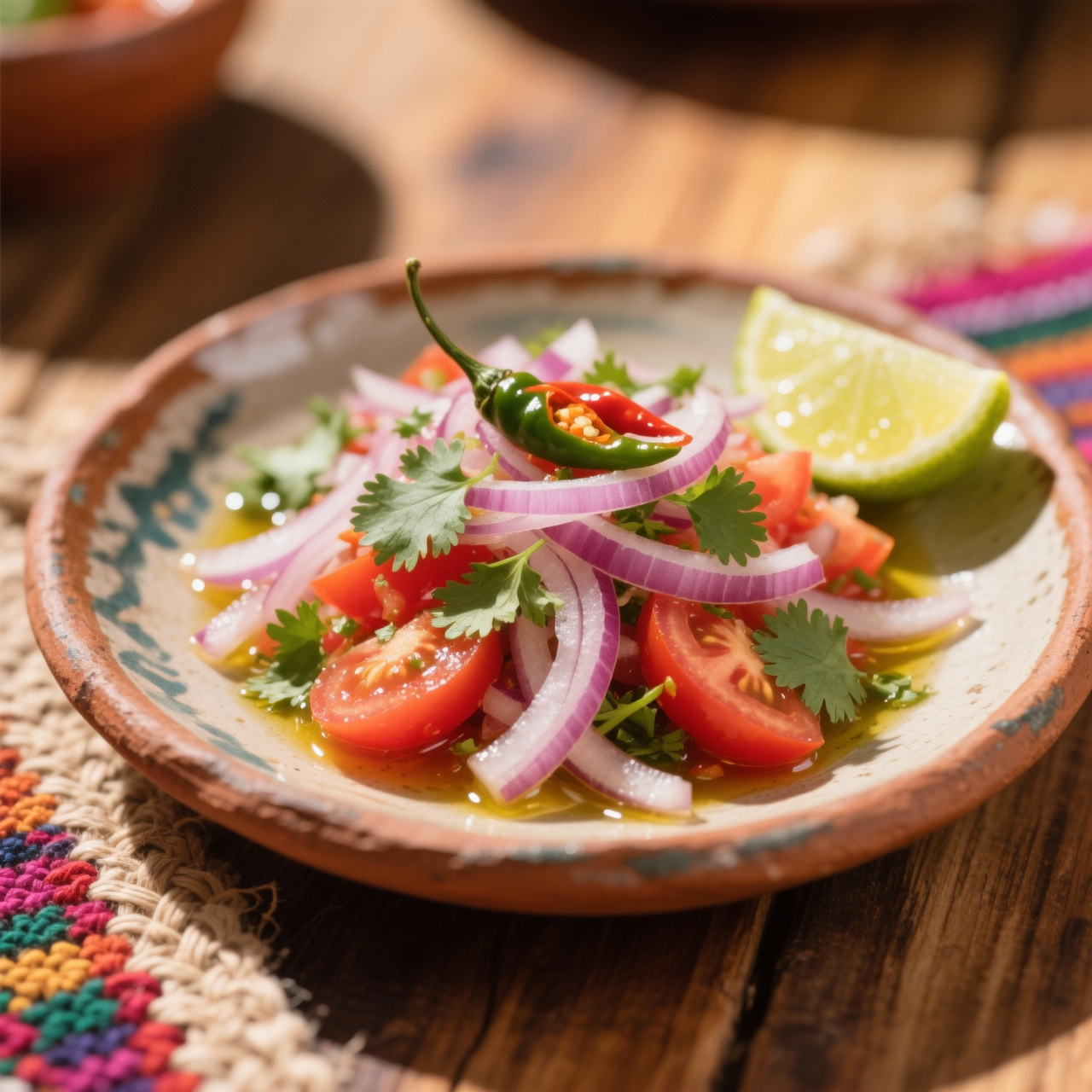
Salsa Criolla
Salsa Criolla is the vibrant, acidic heartbeat of Peruvian cuisine, a condiment that elevates everything from anticuchos to lomo saltado. As Ava, I often tell my cooks that this isn't just a side dish; it is the essential counterpoint to rich, savory, and fried foods. Originating from the coastal regions of Peru, its roots trace back to the Spanish introduction of onions and citrus, which local cooks brilliantly adapted, marrying them with native ají peppers. What makes Salsa Criolla so vital is its ability to cut through fat and awaken the palate with its sharp, bright crunch. The most common pitfall I see, especially in kitchens outside of Peru, is treating it like a cooked salsa or letting it sit for too long. The guidance is clear: this is a red-onion lime relish meant to be made to order. If you let the onions macerate for hours, they lose their crucial, peppery bite and turn into a mushy, overly sour mess. Another frequent mistake is skipping the ice-water bath for the red onions. I cannot stress this enough: soaking the thinly sliced onions in ice water for at least ten minutes draws out their harshest, most astringent compounds, ensuring the final relish is crisp and sweet rather than overwhelmingly pungent. When you drain them and toss them with fresh lime juice, a splash of vinegar, minced ají limo, cilantro, salt, and a touch of oil, you achieve that perfect, crunchy, acidic balance. It is a masterpiece of simplicity, but only if you respect the freshness of the ingredients and the timing of the preparation.
Nutrition
| Per serving | Calories | Protein | Carbs | Fat | Sat fat | Fibre | Sugar | Sodium |
|---|---|---|---|---|---|---|---|---|
| beginner | 85kcal | 1g | 6g | 6g | 1g | 1g | 2g | 300mg |
| intermediate | 85kcal | 1g | 11g | 4g | 1g | 2g | 5g | 180mg |
| expert | 155kcal | 1g | 9g | 15g | 2g | 2g | 3g | 580mg |
Per serving · Ava-estimated — a guide, not a clinical figure.
- 300 gred onion— peeled and very thinly sliced into half-moons
- 120 mllime juice— freshly squeezed
- 5 gsalt— fine sea salt
- 10 gaji limo pepper— seeds and ribs removed, finely minced
Salsa Criolla is a vibrant Peruvian red onion relish. For this beginner version, we use time-saving shortcuts like a quick ice-water soak to mellow the bite without waiting hours, and jarred aji amarillo paste instead of roasting and blending fresh peppers. This approach guarantees a confident first attempt with minimal fuss while delivering that essential bright, tangy, and slightly spicy flavor profile. Watch the onion slicing: aim for paper-thin julienne strips so they meld perfectly with the lime juice and seasonings. The crucial step is the quick ice-water soak, which crisps the onions and removes their harsh raw bite, ensuring a refreshing crunch. Toss everything together right before serving to maintain the onions' signature snap. This vibrant condiment is incredibly versatile, perfect for topping grilled meats, seafood, or roasted vegetables, bringing an instant pop of authentic Peruvian flavor to your table with zero cooking required.
Equipment
- Chef's knife— sharp enough to slice paper-thin
- Medium mixing bowl— for soaking and tossing
- Colander or fine-mesh strainer— for draining the onions
Method
- 1
Slice the red onions into very thin, uniform julienne strips.
Use a sharp knife; thick slices will be too pungent and hard to eat.
julienning~ 5 min - 2
Submerge the sliced onions in a bowl of ice water with a pinch of salt for ten minutes.
This crucial step mellows the harsh onion bite and crisps the texture.
soaking~ 10 min - 3
Drain the onions thoroughly and pat them completely dry with paper towels.
Excess water will dilute the vibrant lime dressing.
draining~ 2 min - 4
Whisk together fresh lime juice, jarred aji amarillo paste, olive oil, and salt in a large bowl.
Taste the dressing; it should be aggressively tangy and slightly salty.
whisking~ 2 min - 5
Add the dried onions and roughly chopped fresh cilantro to the dressing, tossing gently to coat.
Make to order and serve immediately for the best crunch.
tossing~ 1 min
Storage times are a guide — always use your judgement and store food safely.