
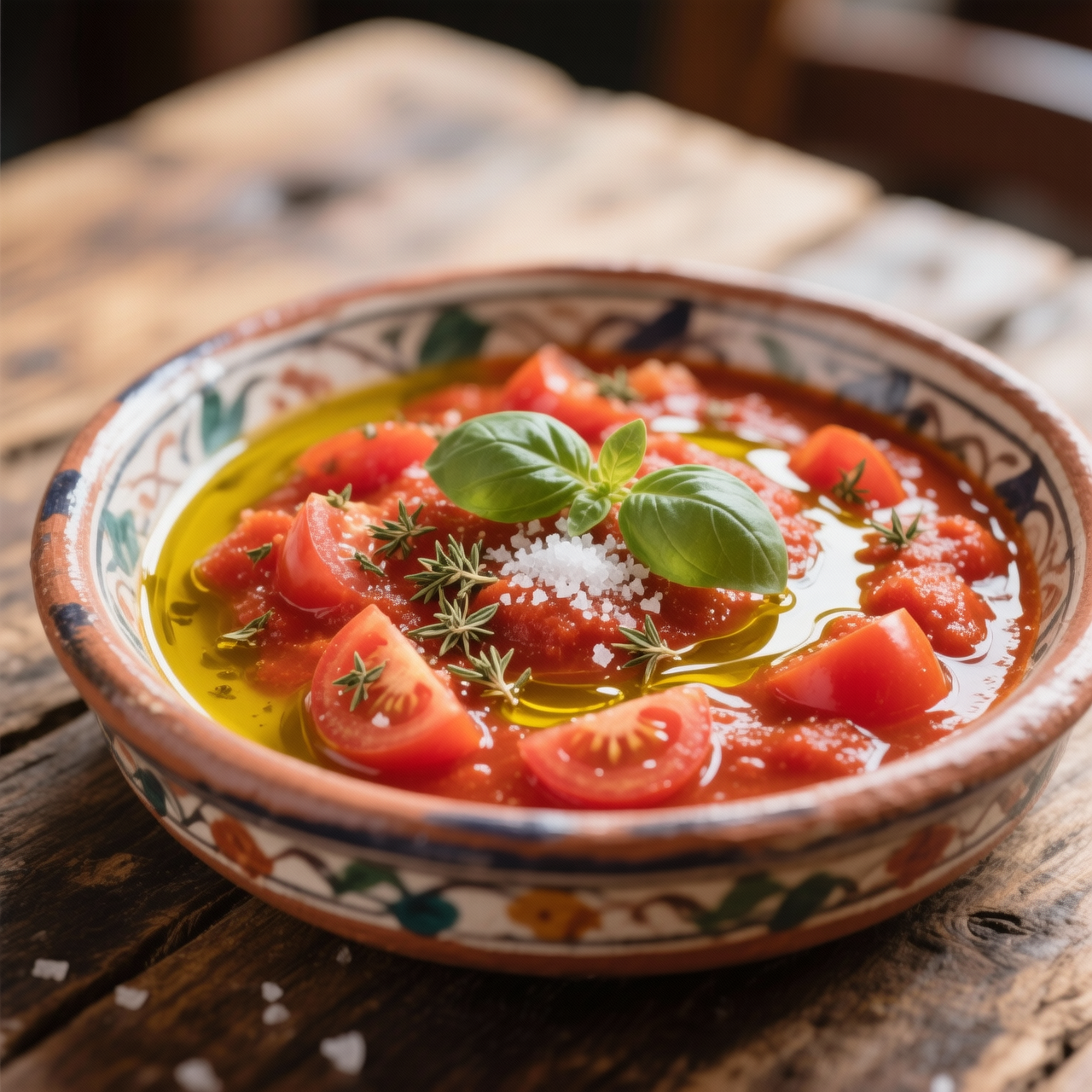
Salsa de tomate casera
In Argentina, Sunday is synonymous with the aroma of salsa de tomate casera simmering on the stove. This isn't just a condiment; it's the foundational heartbeat of our Sunday lunches, the soulful base for milanesas a la napolitana, and the essential canvas for fresh pasta. As Ava, I view this sauce as a labor of love that rewards patience. The origins of our Argentine tomato sauce trace back to the massive Italian immigration of the late nineteenth and early twentieth centuries, particularly in Buenos Aires and Rosario. Our nonnas adapted their rustic Italian recipes to local ingredients, creating a uniquely Argentine style that is often slightly sweeter and deeply concentrated. What matters most here is the quality of the tomatoes and the time you give them. A common pitfall is rushing the process or relying on unripe, pale tomatoes, which results in a thin, acidic sauce lacking depth. Another mistake is over-seasoning too early; the flavors need time to meld and reduce. I always recommend using San Marzano-style tomatoes or the ripest local varieties you can find during the peak of summer. Cook it down low and slow until it reaches a rich, velvety consistency. This is the ultimate batch hero. When you dedicate a whole afternoon to making a massive pot, you aren't just making dinner; you are stocking your freezer with liquid gold for the busy months ahead. It’s a tradition of preservation and love that I want to pass on to you, ensuring every jar you open tastes like a warm Argentine Sunday.
Nutrition
| Per serving | Calories | Protein | Carbs | Fat | Sat fat | Fibre | Sugar | Sodium |
|---|---|---|---|---|---|---|---|---|
| beginner | 115kcal | 2g | 12g | 8g | 1g | 3g | 6g | 520mg |
| intermediate | 155kcal | 2g | 12g | 12g | 2g | 2g | 6g | 650mg |
| expert | 215kcal | 4g | 24g | 11g | 2g | 6g | 14g | 450mg |
Per serving · Ava-estimated — a guide, not a clinical figure.
- 3 kgtomate perita— washed and halved
- 300 gcebolla— peeled
- 15 gajo— peeled
- 100 mlaceite de oliva— extra virgin
- 20 gsal— fine
- 5 gpimienta negra— freshly ground
- 10 gazúcar(optional)— to balance acidity
- 10 galbahaca fresca— leaves only
This beginner-friendly approach to traditional Argentine salsa de tomate casera swaps the tedious process of blanching, peeling, and seeding fresh tomatoes for high-quality jarred crushed tomatoes or passata. This shortcut guarantees a vibrant, consistent base without the extra fuss, letting you focus on building deep flavor. You will start by gently sweating aromatic onions and garlic in olive oil to create a sweet, fragrant foundation. The key technique here is a low, patient simmer; this allows the raw tomato edge to mellow and the sauce to naturally thicken without burning. Keep a close eye on the pot as it reduces, stirring occasionally to prevent the sugars from scorching on the bottom. Because this recipe is designed as a batch hero, you can easily double or triple it to stock your freezer with homemade sauce for future pasta nights, empanada fillings, or milanesa a la napolitana. Watch for splattering as the sauce bubbles, and always taste at the end to adjust the salt, ensuring a perfectly balanced, comforting sauce every time.
Equipment
- Heavy-bottomed pot— essential for even heat distribution during long simmers
- Wooden spoon— won't scratch the pot and handles thick sauces well
Method
- 1
Heat olive oil in a heavy-bottomed pot over medium heat, then add the finely chopped onion and minced garlic.
Cook until translucent and fragrant, about 5 minutes.
sweating~ 5 min - 2
Pour in the crushed tomatoes or tomato purée, add salt, and stir vigorously to combine.
Scrape the bottom of the pot to release any browned bits.
deglazing~ 1 min - 3
Bring the sauce to a gentle bubble, then reduce the heat to low and let it simmer uncovered.
Stir every 10 minutes to prevent scorching on the bottom.
simmering~ 40 minTricky bit - 4
Remove from heat and stir in fresh basil leaves, mashing them gently against the side of the pot.
Use an immersion blender if you prefer a completely smooth texture.
infusing~ 2 min
Cooking from frozen
Thaw overnight in the fridge and reheat gently on the stove, adding a splash of water if it has thickened too much.
Storage times are a guide — always use your judgement and store food safely.