
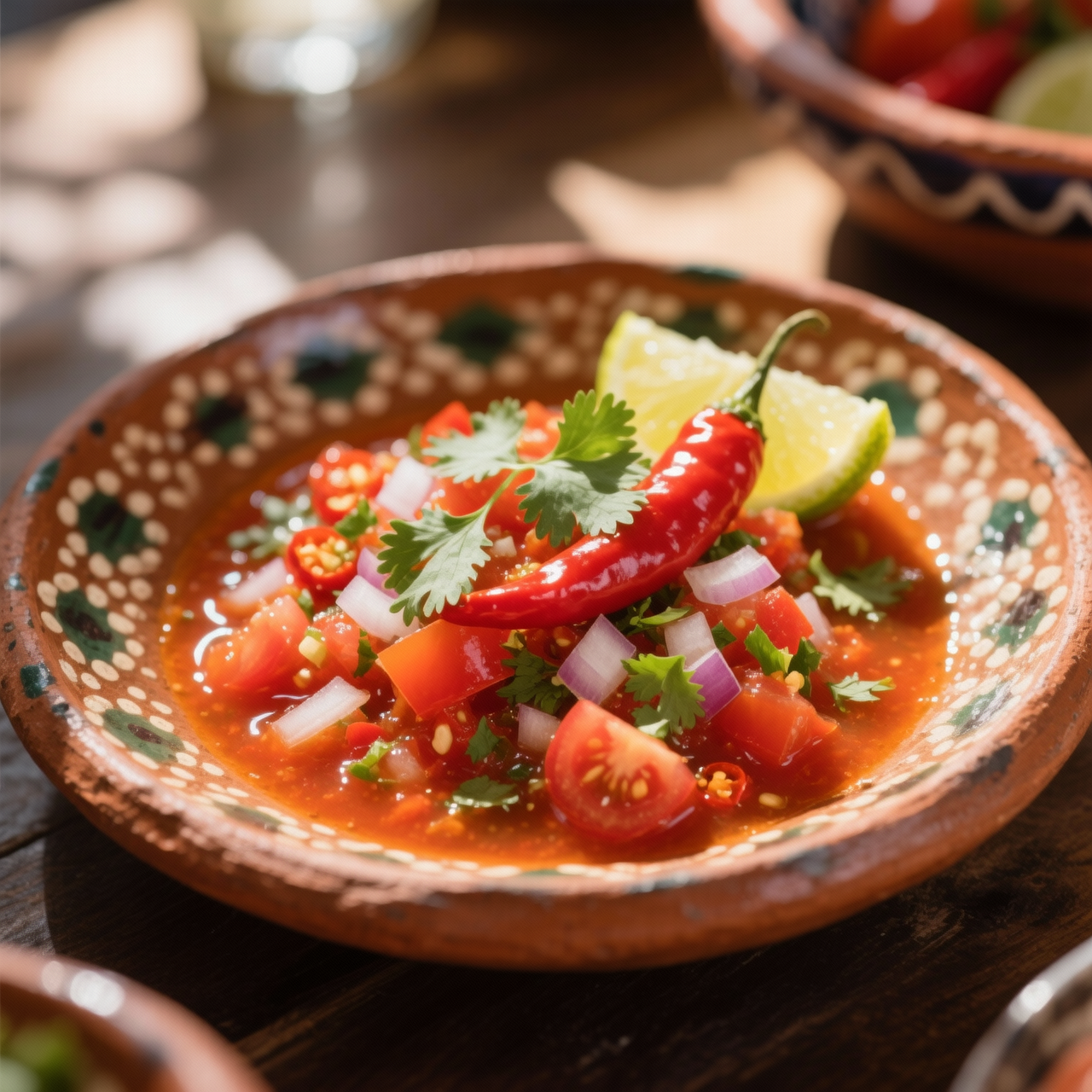
Salsa Habanero
When I first traveled through the Yucatán Peninsula, the sheer, unapologetic heat of a freshly made salsa habanero completely rewired my understanding of spice. This isn't just a condiment; it's a vibrant, fiery celebration of the habanero chili, a fruit that has been cultivated in Mexico for millennia. What makes this salsa so deeply meaningful to me is its beautiful, deceptive simplicity. It relies on the natural, almost floral heat of the habanero, brightened by the sharp acidity of fresh lime juice and grounded by a touch of salt and sometimes a whisper of roasted garlic or onion. The magic lies in the balance. A common pitfall I see home cooks fall into is overcooking the chilies, which can turn the sauce bitter and muddy its bright, fruity top notes. Another mistake is handling the habaneros without gloves—trust me, the capsaicin oils will haunt your hands for days! I always prefer to blend it raw or just lightly char the ingredients to preserve that crisp, zesty profile. It’s a vegan powerhouse that elevates everything from tacos and tamales to simple grilled vegetables. Making it at home allows you to control the heat, but remember, the habanero’s burn builds slowly, so taste as you go. This salsa is a testament to the idea that true culinary brilliance doesn't require a long list of ingredients, just a deep respect for the core components and the courage to embrace a little fire.
Nutrition
| Per serving | Calories | Protein | Carbs | Fat | Sat fat | Fibre | Sugar | Sodium |
|---|---|---|---|---|---|---|---|---|
| beginner | 30kcal | 1g | 6g | 0g | 0g | 2g | 3g | 250mg |
| intermediate | 25kcal | 1g | 5g | 0g | 0g | 1g | 3g | 140mg |
| expert | 15kcal | 0g | 3g | 0g | 0g | 1g | 1g | 120mg |
Per serving · Ava-estimated — a guide, not a clinical figure.
- 60 ghabanero pepper— stems removed
- 10 ggarlic clove— peeled
- 50 gwhite onion— roughly chopped
- 30 mllime juice— freshly squeezed
- 30 mlwhite vinegar
- 60 mlwater
- 5 gsalt
Handling raw habaneros can be incredibly intimidating and dangerous for novices due to the intense capsaicin oils. This beginner version safely bypasses the risk of handling raw, fiery peppers by utilizing a high-quality jarred habanero paste as the flavor and heat base. This shortcut guarantees a consistent, fiery kick without the need for gloves, ventilation, or the fear of accidentally touching your eyes. The technique focuses on building fresh, bright flavors to complement the concentrated paste. You will quickly char some pre-chopped vegetables and easily emulsify them with the paste, fresh lime juice, and cilantro. Watch out carefully for the blending process; habanero steam or splashes can still be potent, so pulse the blender with the lid firmly secured and allow the steam to escape if heating. This simple method yields a vibrant, fiery habanero-lime hot sauce in under an hour, giving you a confident first attempt at Mexican salsas with zero stress and maximum flavor.
Equipment
- Blender or food processor— A small personal blender works perfectly for this volume.
- Small skillet— Cast iron or non-stick is fine for dry charring.
Method
- 1
Open the jar of habanero paste and measure out the required amount, ensuring you wash your hands immediately after touching the lid or spoon.
Even with jarred paste, residual capsaicin can linger on surfaces.
measuring~ 1 minTricky bit - 2
Heat a dry skillet over medium-high heat and quickly char the pre-chopped tomatoes and onions until blistered, about 3 minutes per side.
Do not overcook; you just want slight blackening for depth.
charring~ 6 min - 3
Transfer the charred vegetables to a blender, add the habanero paste, fresh lime juice, cilantro, and a pinch of salt.
Let the vegetables cool for 2 minutes before blending to avoid steam buildup.
blending~ 2 min - 4
Pulse the blender until the salsa reaches your desired consistency, then taste and adjust the lime or salt as needed.
Pulse rather than continuous blend to maintain a rustic texture.
pulsing~ 1 min
Cooking from frozen
Thaw overnight in the refrigerator and whisk vigorously to recombine separated liquids.
Storage times are a guide — always use your judgement and store food safely.