
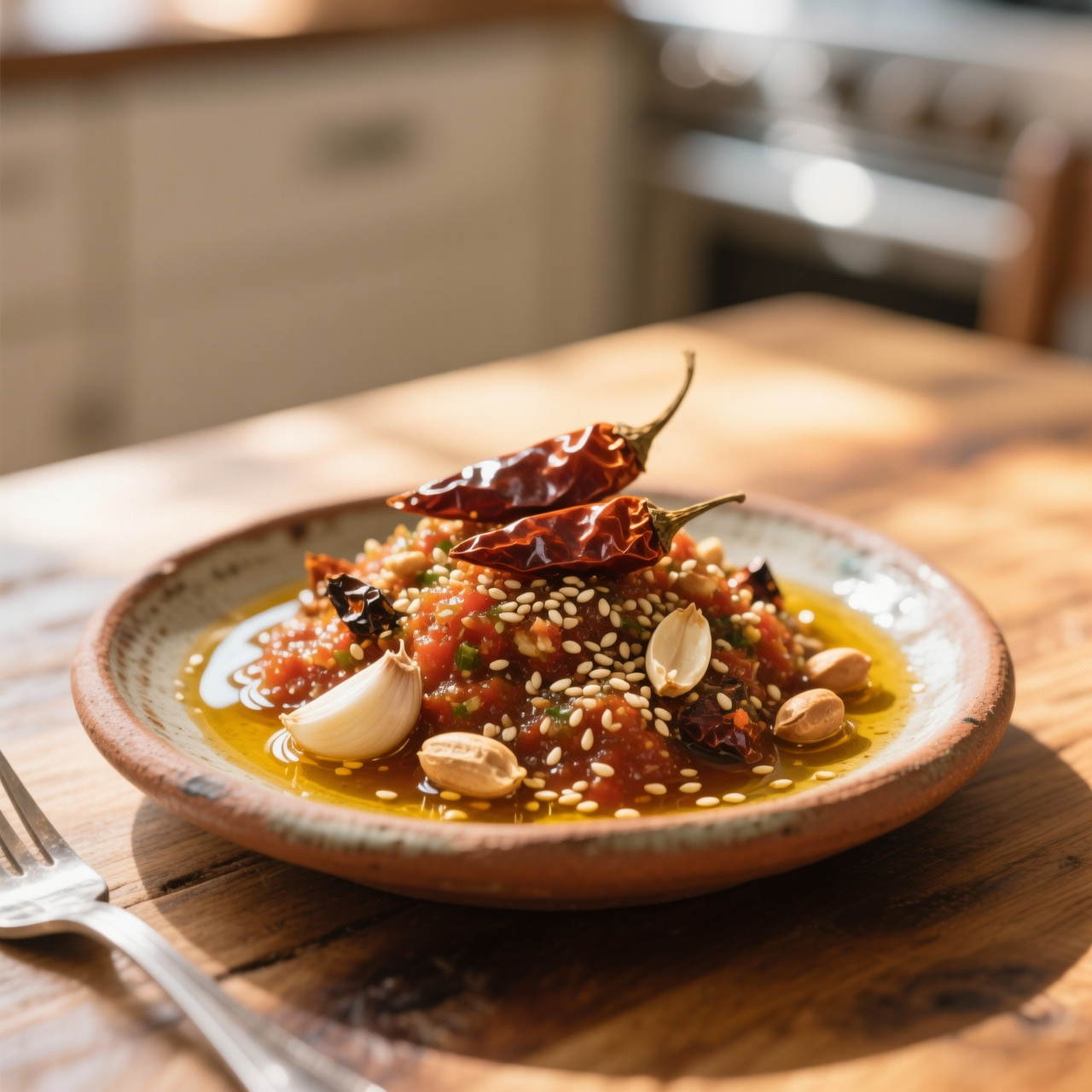
Salsa Macha
Salsa Macha, often called Mexican chili oil, is a deeply personal and fiercely guarded recipe in many households across Veracruz and beyond. As Ava, I see it not just as a condiment, but as a liquid history of the Mexican pantry. It matters because it transforms the simplest meals—a bowl of pozole, a slice of pizza, or just some crusty bread—into something extraordinary. The beauty of Salsa Macha lies in its alchemy: toasting dried chiles like árbol and morita, blending them with nuts or seeds like peanuts and sesame, and submerging them in oil. However, the most common pitfall I see is burning the ingredients. The chiles and nuts must be toasted gently until fragrant, never blackened, or the salsa will turn bitter. Another mistake is rushing the infusion; the oil needs to fry the garlic and chiles slowly to extract their deep, complex flavors without scorching. Since this is a vegan version, we skip any traditional honey, relying instead on the natural sweetness of the morita chiles and a splash of apple cider vinegar to balance the heat. Because it is a true batch hero, making a large quantity is essential. The low moisture content and high oil acidity mean this salsa is incredibly stable, aging beautifully and deepening in flavor over time. It is a testament to the resourcefulness of Mexican cuisine, turning humble, dried pantry staples into a fiery, nutty, umami-rich elixir that keeps for months, ready to elevate any dish at a moment's notice.
Nutrition
| Per serving | Calories | Protein | Carbs | Fat | Sat fat | Fibre | Sugar | Sodium |
|---|---|---|---|---|---|---|---|---|
| beginner | 210kcal | 2g | 2g | 22g | 2g | 1g | 1g | 230mg |
| intermediate | 250kcal | 4g | 6g | 24g | 3g | 2g | 1g | 150mg |
| expert | 250kcal | 5g | 7g | 23g | 3g | 2g | 1g | 150mg |
Per serving · Ava-estimated — a guide, not a clinical figure.
- 30 gdried morita chili— stems and seeds removed
- 10 gdried chile de árbol— stems removed
- 400 mlneutral cooking oil
- 100 graw peanut— unsalted
- 30 gsesame seed
- 20 ggarlic clove— peeled
- 5 gfine sea salt
This beginner-friendly Salsa Macha skips the tedious process of toasting, rehydrating, and grinding whole dried chiles by using a convenient jarred chili paste, such as chipotle in adobo or a store-bought Mexican chili puree, as the foundational flavor base. You will simply fry sliced garlic and pre-roasted peanuts in neutral oil until golden and fragrant, then carefully stir in the jarred paste and toasted sesame seeds to bloom the spices. This clever shortcut yields a delicious, nutty, and deeply savory condiment in a fraction of the traditional time. Watch closely when adding the jarred paste to the hot oil, as the residual moisture will cause vigorous splattering; use a splatter screen or temporarily lower the heat to stay safe. The final result is a vibrant, crispy salsa that perfectly elevates everything from street tacos to fried eggs, and it stores beautifully in a sealed jar in the fridge for weeks.
Equipment
- Small saucepan— A light-colored pan helps monitor the browning of the garlic
- Splatter screen— Crucial when adding wet paste to hot oil
- Glass jars— For storing the finished salsa
Method
- 1
Pour 1 cup of neutral oil into a small saucepan and add 4 cloves of thinly sliced garlic and 1/2 cup of pre-roasted unsalted peanuts.
Use a light-colored pan to easily see when the garlic turns golden.
frying~ 5 min - 2
Heat the pan over medium-low heat, stirring frequently until the garlic is lightly golden and the peanuts are toasted.
Do not let the garlic turn brown or it will become bitter.
toasting~ 7 minTricky bit - 3
Remove the pan from the heat and carefully stir in 1/3 cup of jarred chipotle in adobo puree and 2 tablespoons of sesame seeds.
Stand back and use a splatter screen, as the wet paste will splatter violently in the hot oil.
blooming~ 1 minTricky bit - 4
Season with 1/2 teaspoon of kosher salt and let the mixture cool completely before transferring to sterilized glass jars.
The salsa will thicken as it cools and the oil solidifies slightly.
cooling~ 30 min
Storage times are a guide — always use your judgement and store food safely.