
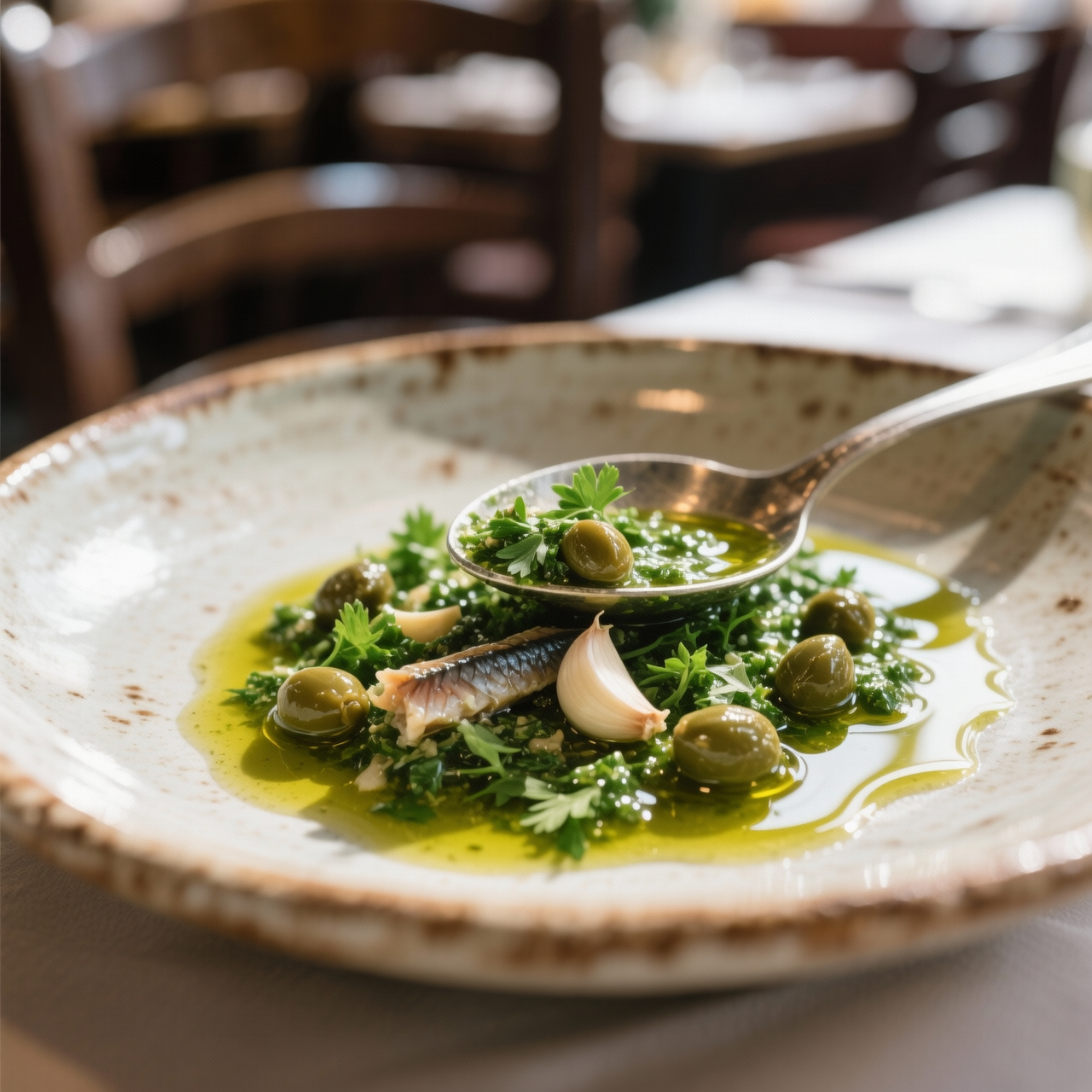
Salsa verde
I’ve always believed that salsa verde is less of a recipe and more of a quiet rebellion against culinary rigidity. Born in the sun-baked kitchens of Piedmont and Emilia-Romagna, this vibrant green condiment began as a practical solution for preserving the fleeting abundance of summer herbs. At its core, it’s a testament to Italian resourcefulness, transforming humble parsley, capers, garlic, and olive oil into a bright, bracing finish for roasted vegetables, grilled bread, or even simple grains. What makes it so essential to my table is its versatility; it cuts through richness with effortless grace, waking up the palate without demanding attention. Yet, I see it mangled more often than I’d like. The most frequent pitfall is treating it like a pesto, whipping it into a smooth paste until the herbs bruise and turn bitter. Salsa verde should be chopped by hand or pulsed just enough to retain its rustic, leafy texture. Another common misstep is drowning it in cheap, overly peppery olive oil or forgetting to balance the sharpness of capers with a splash of good vinegar. And if you’re making a vegan version like mine, a touch of toasted walnuts or extra lemon can mimic that savory depth without compromising the clean, herbal brightness. Finally, respect its shelf life: store it in a jar, press a layer of oil over the top to seal out air, and use it within a week. Beyond that, the delicate chlorophyll fades, and what was once a vivid emerald turns to a dull, muddy sludge. Make it fresh, keep it bright, and let it do exactly what it was meant to do.
Nutrition
| Per serving | Calories | Protein | Carbs | Fat | Sat fat | Fibre | Sugar | Sodium |
|---|---|---|---|---|---|---|---|---|
| beginner | 150kcal | 1g | 2g | 16g | 2g | 1g | 0g | 220mg |
| intermediate | 250kcal | 2g | 4g | 26g | 4g | 2g | 1g | 420mg |
| expert | 112kcal | 1g | 2g | 12g | 2g | 1g | 0g | 155mg |
Per serving · Ava-estimated — a guide, not a clinical figure.
- 150 gflat-leaf parsley— fresh, washed and thoroughly dried
- 10 ggarlic— peeled
- 30 gcaper— rinsed and patted dry
- 120 mlextra virgin olive oil— room temperature
- 20 mlred wine vinegar
- 3 gfine sea salt— to taste
- 1 gblack pepper(optional)— freshly ground
This beginner-friendly salsa verde prioritizes speed and accessibility without sacrificing the bright, herbaceous punch that defines the classic Italian condiment. Instead of laboriously hand-chopping parsley and garlic, we rely on pre-washed flat-leaf parsley bundles, jarred capers, and a mini food processor to achieve a consistent, rustic texture in minutes. The key is to pulse, not puree, preserving those tiny flecks of green that give the sauce its character. Watch closely as you drizzle in the extra-virgin olive oil; stopping the processor just before the mixture becomes homogenous ensures a vibrant, slightly chunky finish that clings beautifully to grilled vegetables or pasta. Because traditional anchovies are omitted here to align with a vegan profile, we lean on a splash of red wine vinegar and a pinch of crushed red pepper to build depth and acidity. Store the finished sauce in a clean, airtight jar, completely submerged under a thin layer of olive oil to preserve its color and prevent oxidation. This method guarantees a confident, foolproof first attempt that will keep beautifully for a week in the refrigerator, ready to elevate any weeknight dish with zero stress.
Equipment
- Mini food processor— A small blender attachment works equally well
- Airtight glass jar— 4-8 oz capacity is ideal for storage
- Rubber spatula(optional)— For scraping the bowl completely
Method
- 1
Rinse and thoroughly dry the pre-washed flat-leaf parsley, then pack the leaves and tender stems into a measuring cup.
Excess moisture will break the emulsion, so pat completely dry with paper towels before processing.
mise en place~ 2 min - 2
Transfer the parsley to a mini food processor along with the jarred capers, pre-minced garlic, and red wine vinegar.
No need to pre-chop the garlic; the processor blades handle it safely and evenly.
rough chop~ 1 min - 3
Pulse the processor in short one-second bursts until the herbs are finely minced but still distinctly textured.
Stop before it turns into a smooth paste to maintain that traditional rustic bite.
pulsing~ 1 minTricky bit - 4
With the processor running on low, slowly drizzle in the extra-virgin olive oil through the feed tube until the mixture just comes together.
Watch the oil pool on the sides and stop immediately once combined to prevent separation.
emulsifying~ 1 minTricky bit - 5
Transfer the salsa verde to a clean glass jar, smooth the top with a spatula, and pour a thin protective layer of olive oil over the surface.
The oil barrier prevents browning and extends fridge life to seven days as instructed.
preserving~ 1 min
Cooking from frozen
Thaw completely in the refrigerator, then stir vigorously to recombine the separated oil before serving cold.
Storage times are a guide — always use your judgement and store food safely.