
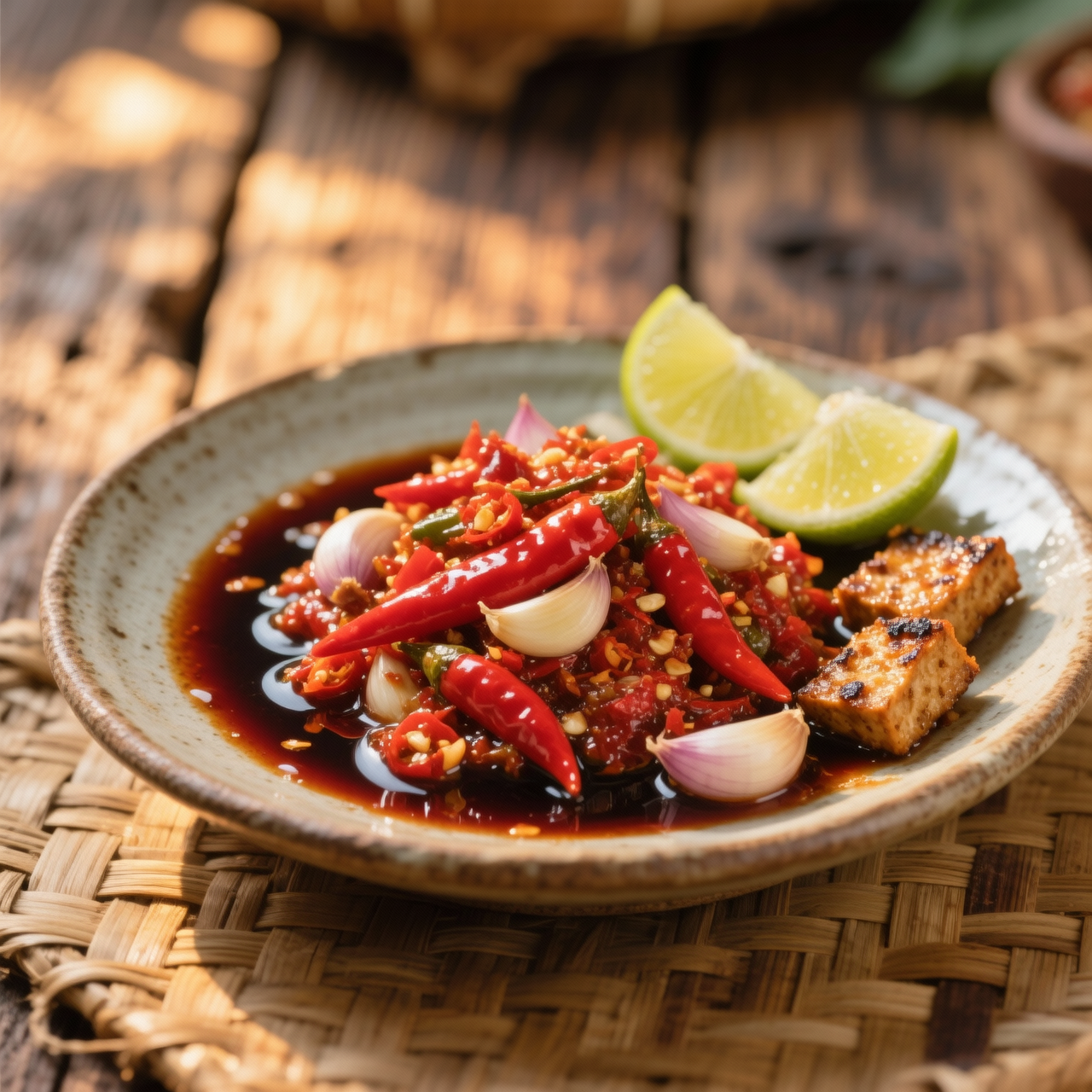
Sambal Kecap
When I first learned to make sambal kecap at a bustling warung in Yogyakarta, I quickly realized that its magic lies not in complexity, but in restraint. This sweet-soy chilli dip is the quiet backbone of Indonesian street food, transforming humble satay skewers and charcoal-grilled meats into something deeply satisfying. The foundation, of course, is kecap manis—a thick, palm-sugar-infused soy sauce that carries both history and flavor in its dark, syrupy pour. What makes this condiment so essential is its ability to bridge contrasting tastes: the sharp bite of fresh bird’s eye chilies, the earthy punch of shallots and garlic, and the lingering caramel sweetness that rounds it all out. I’ve seen countless cooks stumble by rushing the simmer, turning what should be a glossy, pourable glaze into a sticky, burnt mess. The most common pitfall is treating it like a quick stir-fry rather than a slow reduction; the shallots must soften and sweat gently before the kecap enters, and the chilies should only be folded in at the very end to preserve their vibrant heat and fresh crunch. Another frequent misstep is reaching for regular soy sauce and adding extra sugar, which completely misses the molasses-like depth that authentic kecap manis provides. When balanced correctly, sambal kecap should cling to grilled proteins without overwhelming them, offering a glossy finish that tastes equally good on tofu or tempeh. It’s a reminder that Indonesian cooking thrives on harmony, where every ingredient knows its place and waits for its moment to shine.
Nutrition
| Per serving | Calories | Protein | Carbs | Fat | Sat fat | Fibre | Sugar | Sodium |
|---|---|---|---|---|---|---|---|---|
| beginner | 100kcal | 1g | 19g | 0g | 0g | 1g | 15g | 380mg |
| intermediate | 45kcal | 1g | 10g | 1g | 0g | 1g | 8g | 850mg |
| expert | 72kcal | 1g | 15g | 1g | 0g | 1g | 11g | 560mg |
Per serving · Ava-estimated — a guide, not a clinical figure.
- 150 mlSweet soy sauce— Use authentic Indonesian kecap manis
- 15 gBird's eye chili— Finely chopped, adjust heat to preference
- 30 gShallot— Thinly sliced
- 5 gGarlic— Minced
- 1 pieceLime— Juiced
- 50 gTomato(optional)— Deseeded and finely diced
- 2 gSalt— To taste
This beginner-friendly version of Sambal Kecap strips away the traditional mortar-and-pestle grinding for a streamlined, foolproof approach that delivers the same sweet, spicy, and savory punch in under fifteen minutes. Instead of toasting and pounding whole dried chilies, you will rely on readily available jarred chili paste or finely sliced fresh red chilies to control the heat without the extra prep. The key technique here is a gentle simmer, which quickly melds the thick, syrupy kecap manis with sharp shallots, minced garlic, and a bright splash of lime juice. Watch the heat closely; kecap manis has a high sugar content that can scorch easily, so keep the flame low and stir constantly until the sauce just begins to bubble. This brief cooking step tames the raw bite of the aromatics while preserving the fresh, tangy character that makes the dip perfect for satay or grilled meats. Once cooled, the consistency will thicken slightly, making it ideal for drizzling or dipping. Store any leftovers in a tightly sealed jar in the refrigerator, where it will keep safely for up to two weeks.
Equipment
- Small heavy-bottomed saucepan— prevents sugary soy from burning
- Chef's knife— sharp blade ensures safe, quick mincing
- Cutting board— stable surface for prep
Method
- 1
Finely dice the shallot, mince the garlic, and thinly slice the fresh red chilies or measure out your jarred chili paste.
Keep seeds in for extra heat, or remove them for a milder dip.
mincing~ 3 min - 2
Transfer the diced shallots, garlic, chilies, kecap manis, and lime juice into the prepared saucepan.
A heavy-bottomed pan prevents the sugary soy sauce from sticking and burning.
combining~ 1 min - 3
Heat the mixture over low-medium heat, stirring constantly until it reaches a gentle simmer and thickens slightly.
Do not let it boil vigorously; high heat will cause the sugars to scorch and turn bitter.
simmering~ 5 minTricky bit - 4
Remove the pan from the heat and let the sambal cool completely to room temperature before transferring to a serving bowl.
The sauce will continue to thicken as it cools, so adjust consistency with a teaspoon of warm water if needed.
resting~ 6 min
Cooking from frozen
Thaw overnight in the refrigerator, whisk thoroughly to restore emulsion, and serve at room temperature or gently warm if a thinner consistency is preferred.
Storage times are a guide — always use your judgement and store food safely.