
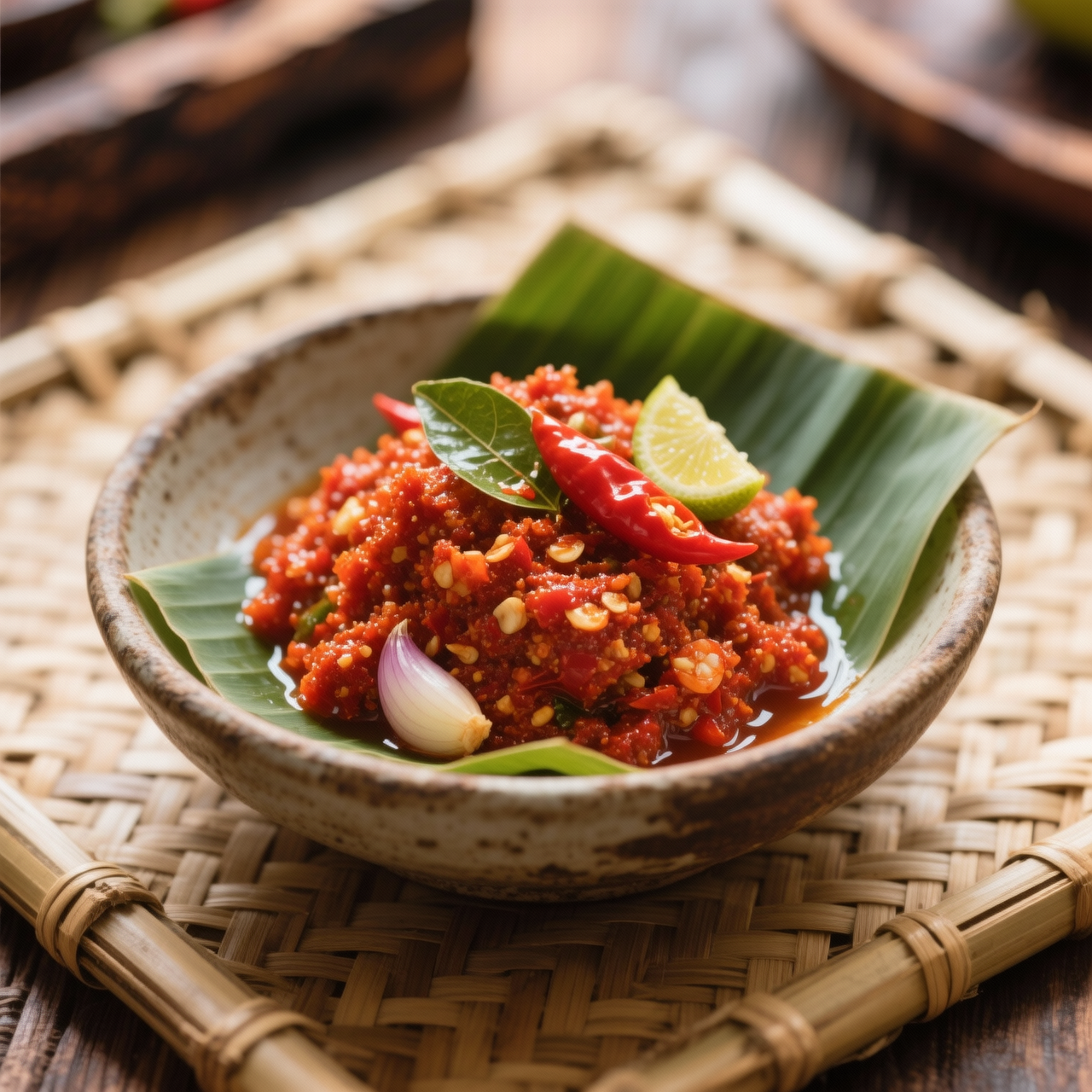
Sambal Terasi
I’ve always believed that the true soul of an Indonesian kitchen isn’t found in elaborate banquet dishes, but in the humble, fiercely aromatic condiments that grace every meal. Sambal terasi is exactly that—a vibrant, unapologetic marriage of fresh red chilies, pungent fermented shrimp paste, garlic, shallots, and a touch of tamarind that cuts through the heat. Its origins trace back to the coastal spice routes where traders brought dried chilies and local fishermen developed terasi from ground krill, creating a preservation method that doubled as a flavor bomb. This sambal matters because it’s the great equalizer at the table; it transforms plain steamed rice, grilled fish, or even a simple fried egg into something deeply comforting and complex. Yet, it’s deceptively simple to ruin. The most common pitfall I see is rushing the terasi. If you don’t toast or fry it first, that raw, fishy bitterness lingers and overwhelms the delicate balance. Another mistake is over-blending. A mortar and pestle aren’t just traditional; they’re functional. They bruise the chilies just enough to release their oils while leaving a rustic, uneven texture that holds up beautifully against hot rice. Over-processing in a blender turns it into a watery, homogenized paste that loses its soul. Finally, salt and sugar must be added with restraint. The terasi already brings a salty depth, and the tamarind provides the necessary sour counterpoint. When you respect these boundaries—proper toasting, hand-pounding, and measured seasoning—you don’t just get a sauce. You get a living, breathing staple that will anchor your meals for generations.
Nutrition
| Per serving | Calories | Protein | Carbs | Fat | Sat fat | Fibre | Sugar | Sodium |
|---|---|---|---|---|---|---|---|---|
| beginner | 42kcal | 1g | 4g | 3g | 0g | 1g | 2g | 490mg |
| intermediate | 145kcal | 3g | 10g | 11g | 2g | 2g | 7g | 650mg |
| expert | 65kcal | 1g | 5g | 5g | 1g | 2g | 3g | 420mg |
Per serving · Ava-estimated — a guide, not a clinical figure.
- 150 gred chili— Use fresh cayenne or bird's eye chilies for authentic heat
- 100 gshallot— Peeled and roughly chopped
- 15 ggarlic— Peeled
- 15 gshrimp paste— Traditionally wrapped in banana leaf and toasted before use
- 1 piecelime— Juice only, preferably calamansi or kaffir lime
- 5 gsalt— Fine sea salt
- 10 gpalm sugar— Finely chopped or grated
- 80 gtomato(optional)— Roma or vine-ripened, seeds removed
This beginner-friendly approach strips away the traditional stone-grinding marathon while preserving the punchy, umami-rich character that makes sambal terasi a table essential. Instead of wrestling with raw chilies and a heavy mortar, we rely on pre-chopped bird’s eye chilies and a quality store-bought shrimp paste to guarantee a balanced foundation on your first try. The key here is controlled heat management and patience during the initial frying stage; rushing will scorch the aromatics and turn the paste bitter. You will bloom the shrimp paste and shallots gently in oil until fragrant, then fold in the chilies, sugar, and lime juice for a quick simmer that melds the sharp, salty, and sweet notes. Watch for the oil separating slightly at the edges, which signals that the water content has evaporated and the flavors have properly concentrated. This method prioritizes accessibility and consistency over artisanal texture, yielding a smooth, spoonable condiment perfect for drizzling over grilled fish, fried rice, or fresh cucumber slices. Trust your nose over the clock—if it smells deeply savory and makes your mouth water, it is ready to cool and serve.
Equipment
- Heavy-bottomed pan— non-stick is fine here
- Mini food processor— speeds up the chopping process significantly
- Heat-resistant spatula— silicone tip prevents scratching
Method
- 1
Pulse the chilies, shallots, and a splash of oil in a mini food processor until a coarse paste forms.
Avoid turning it completely smooth; a little texture prevents mushiness.
blending~ 1 min - 2
Heat the neutral oil in a heavy-bottomed pan over medium heat and gently fry the shrimp paste until it crumbles and smells fragrant.
Keep the heat moderate to prevent burning the delicate seafood notes.
toasting~ 2 minTricky bit - 3
Stir in the chili paste and cook slowly, pressing down occasionally, until the mixture darkens and the oil begins to pool at the edges.
Lower the heat immediately if you hear aggressive sputtering.
reducing~ 5 min - 4
Whisk in the sugar, salt, and fresh lime juice, then remove the pan from the heat to let the flavors settle.
Taste before adding extra salt, as the shrimp paste is already quite salty.
balancing~ 1 min - 5
Transfer the warm sambal to a clean glass jar and let it cool completely before sealing.
Store in the refrigerator for up to two weeks.
preserving~ 1 min
Cooking from frozen
Thaw overnight in the fridge and stir vigorously to reincorporate separated oil before serving.
Storage times are a guide — always use your judgement and store food safely.