
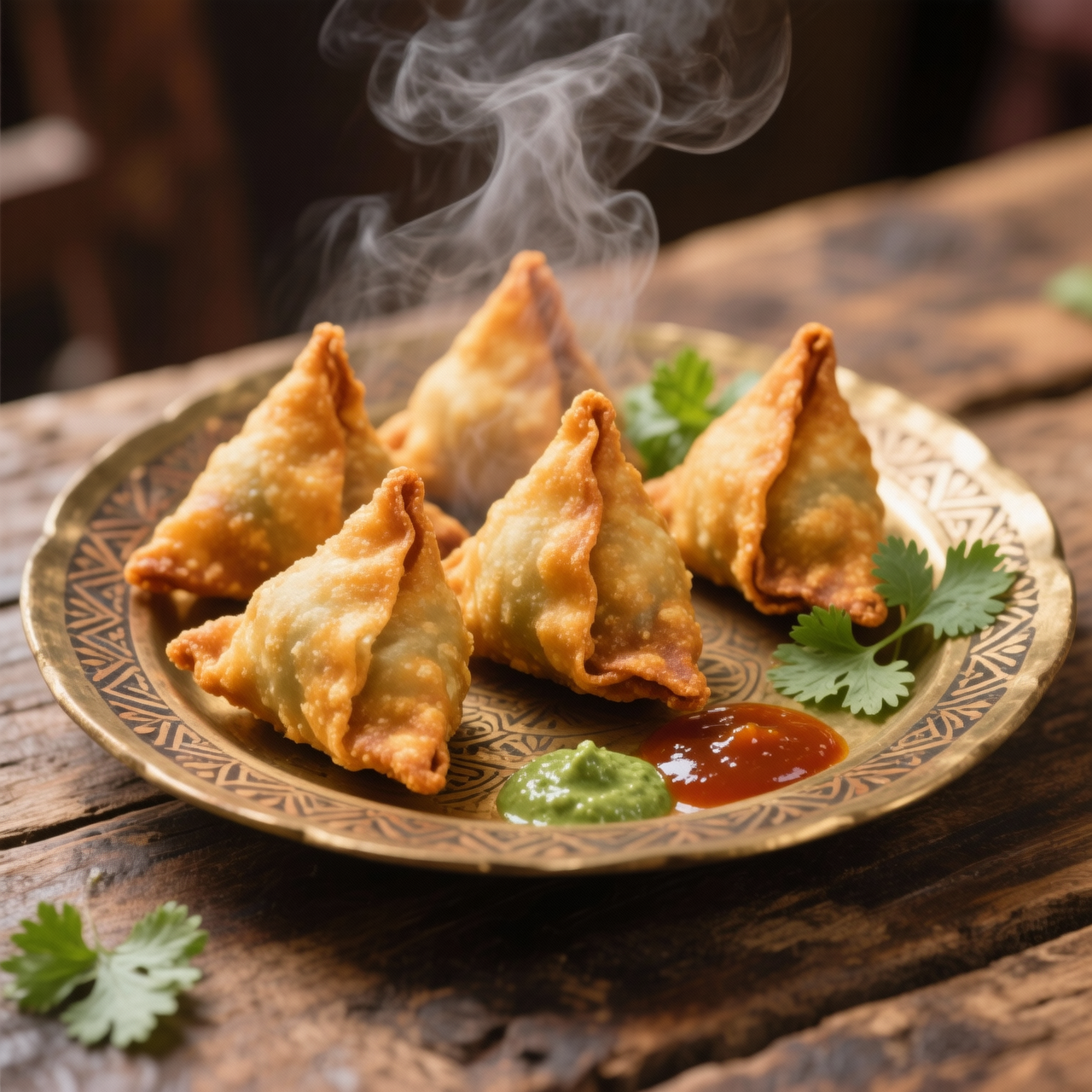
Samosas
I still remember the exact moment I realized why store-bought samosas never quite satisfy the craving. Those frozen triangles, usually priced around five dollars for a box of twelve, arrive with a greasy, shatteringly hard shell and a filling that tastes like muted cardboard and excess salt. Real samosas, the kind that traveled along trade routes from Central Asia to find their permanent home in India, deserve better. This dish is a quiet triumph of patience and spice. The magic lives in the contrast: a hand-rolled dough that puffs into flaky, blistered layers, giving way to a fragrant mash of potatoes, peas, and toasted cumin. Making them from scratch matters because you control every layer, from the carom seeds kneaded into the pastry to the precise moment the oil bubbles around the folded edge. The most common pitfall I see is overworking the dough or sealing the seams too tightly without leaving a tiny vent, which causes them to burst when fried. Another is rushing the spice bloom; if you don’t toast the whole cumin and coriander before grinding them, the filling loses its soul. I always recommend folding a large batch on a Sunday, laying them raw on parchment-lined trays, and freezing them solid before bagging. When the craving strikes, you drop them straight into hot oil, watching them transform into golden, steaming pockets of comfort that no supermarket freezer aisle could ever replicate.
Nutrition
| Per serving | Calories | Protein | Carbs | Fat | Sat fat | Fibre | Sugar | Sodium |
|---|---|---|---|---|---|---|---|---|
| beginner | 415kcal | 9g | 51g | 17g | 3g | 5g | 3g | 420mg |
| intermediate | 315kcal | 7g | 41g | 13g | 2g | 5g | 3g | 460mg |
| expert | 460kcal | 11g | 52g | 20g | 7g | 6g | 3g | 390mg |
Per serving · Ava-estimated — a guide, not a clinical figure.
- 250 gAll-purpose flour— Sifted to remove lumps
- 60 mlVegetable oil— Divided for dough and deep frying
- 12 gSalt— Split between dough and filling
- 125 mlCold water— Added gradually to form stiff dough
- 400 gPotato— Boiled until tender, peeled and coarsely mashed
- 100 gGreen pea— Fresh or thawed from frozen
- 8 gCumin seed— Whole seeds for tempering
- 10 gGround coriander
- 5 gGaram masala
- 15 gFresh ginger— Peeled and finely grated
- 10 gGreen chili(optional)— Finely chopped, adjust heat to preference
- 20 gFresh cilantro— Leaves and tender stems finely chopped
Store-bought samosas often cost over six dollars per pack and rely on hydrogenated oils, stale fillings, and brittle, pre-rolled wrappers that shatter upon biting. This beginner-friendly from-scratch version strips away the intimidation while keeping the pastry crisp and flaky using only pantry staples. You will work with a simple, forgiving dough that rests briefly to relax the gluten, making it far easier to stretch and fold without springing back. The filling skips complex tempering in favor of a straightforward mash-and-sauté method, ensuring the potatoes stay cohesive and the peas retain a pleasant bite. Watch your dough hydration closely: it should feel like soft playdough, not sticky, so you can roll thin circles without tearing. When folding, press firmly along the edges and seal with a dab of water to prevent bursting during frying. Keep your oil at a steady medium heat—too hot will brown the crust before the centre cooks through, while too cool will make the pastry greasy. This recipe is designed to be forgiving for first-timers, yielding reliable, golden pockets that freeze beautifully raw for later batches. Embrace the slight imperfections in your folds; they seal just as well and taste exactly like homemade.
Equipment
- Large mixing bowl— stainless steel or glass works best
- Rolling pin— any standard size
- Heavy-bottomed skillet— for frying at steady temperature
- Kitchen scale(optional)— helps ensure even dough portions
Method
- 1
Combine all-purpose flour, vegetable oil, and salt, then gradually add warm water while mixing until a cohesive dough forms.
Add water two tablespoons at a time to avoid a sticky mess.
kneading~ 5 min - 2
Cover the dough with a damp towel and let it rest undisturbed to relax the gluten.
This prevents the dough from shrinking back when you roll it.
resting~ 15 min - 3
Boil diced potatoes until fork-tender, drain thoroughly, and mash them roughly before mixing in frozen peas.
Drain well so excess water does not make the pastry soggy.
boiling~ 10 min - 4
Heat oil in a heavy pan over medium heat, toast whole cumin seeds, and stir in minced ginger and ground spices.
Keep the heat moderate so the spices release their oils without burning.
blooming~ 2 min - 5
Fold the mashed vegetables into the spiced oil, season with salt, and let the filling cool completely to room temperature.
Hot filling will melt the dough and cause leaks during frying.
cooling~ 10 min - 6
Divide the rested dough into eight equal pieces, roll each into a thin oval, and cut it straight down the center.
Aim for uniform thickness to ensure even cooking.
rolling~ 8 minTricky bit - 7
Cone each dough half, pack in the cooled filling, and press the wetted edges together to seal tightly.
Use a few drops of water as edible glue along the seams.
pleating~ 10 minTricky bit - 8
Fry the sealed pockets in medium-hot oil until golden brown on all sides, then drain on a wire rack.
Maintain steady oil temperature around 325°F for crisp results.
shallow frying~ 8 minTricky bit
Cooking from frozen
Fry straight from frozen at 325°F for two extra minutes until crisp, or bake at 400°F for 15 minutes.
Storage times are a guide — always use your judgement and store food safely.