
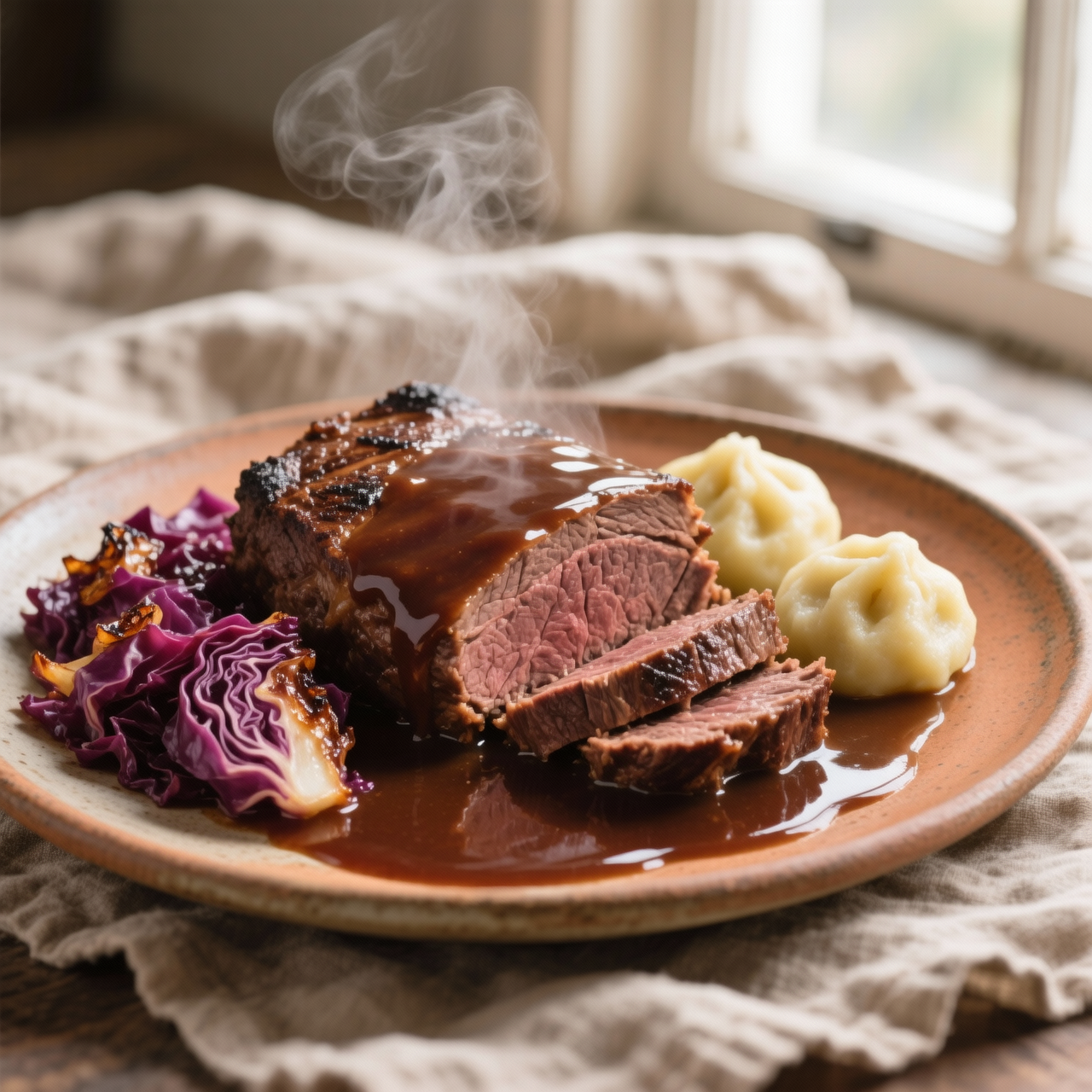
Sauerbraten
I still remember the first time I truly understood why Sauerbraten is more than just a pot roast; it is a testament to patience. Born in the kitchens of medieval Germany and refined across the Rhineland, this dish emerged from necessity, a brilliant preservation method for tough cuts of meat long before modern refrigeration. The name translates to sour roast, hinting at the vinegar-heavy marinade that transforms humble beef into something deeply complex. What makes it matter to me is how it bridges centuries of culinary memory, demanding that we slow down and respect the quiet alchemy of time, acid, and spice. Yet, so many cooks rush the process, and that is precisely where the dish falls apart. The most common pitfall I see is skipping the full three to five day soak, which leaves the meat tasting harshly acidic rather than harmoniously tangy and tender. Another frequent mistake is boiling the roast instead of maintaining a gentle simmer, which turns a silky braise into stringy leather. Home cooks also routinely forget to balance the sweet and sour elements in the final gravy, leaning too heavily on vinegar or sugar when the true magic lies in carefully reducing the strained marinade with crushed gingerbread or dark raisins. When executed properly, the beef yields effortlessly to a fork, and the sauce clings to every slice like dark velvet. I have learned that Sauerbraten forgives nothing, but rewards everything. It remains a quiet reminder that the finest culinary traditions cannot be hurried.
Nutrition
| Per serving | Calories | Protein | Carbs | Fat | Sat fat | Fibre | Sugar | Sodium |
|---|---|---|---|---|---|---|---|---|
| beginner | 920kcal | 62g | 40g | 55g | 18g | 4g | 15g | 1300mg |
| intermediate | 920kcal | 62g | 40g | 55g | 18g | 4g | 15g | 1300mg |
| expert | 920kcal | 62g | 40g | 55g | 18g | 4g | 15g | 1300mg |
Per serving · Ava-estimated — a guide, not a clinical figure.
- 1500 gbeef chuck roast— well-marbled, trimmed of excess fat
- 250 mlred wine vinegar— unfiltered, five percent acidity
- 250 mldry red wine— full-bodied
- 250 mlwater— room temperature
- 250 gyellow onion— roughly chopped
- 150 gcarrot— peeled and thickly sliced
- 100 gcelery stalk— leaves removed
- 10 gwhole black peppercorns— freshly cracked
- 8 gjuniper berries— lightly crushed
- 3 pcsbay leaves— dried, whole
- 5 pcswhole cloves— aromatic grade
- 10 gyellow mustard seeds— whole
- 45 mlneutral vegetable oil— high smoke point
- 30 gall-purpose flour— for dusting and thickening
- 40 ggingersnap cookies— traditional lebkuchen style
- 20 glight brown sugar— packed
- 15 gkosher salt— coarse grain
- 10 gfresh thyme— tied in a bundle
This version streamlines the traditional marathon into a manageable weeknight project without sacrificing the dish’s comforting soul. Instead of toasting and grinding whole spices from scratch, you will rely on a high-quality jarred seasoning paste and a pre-thickened gravy base to anchor the flavor profile. The beef still marinates briefly, but the heavy lifting of flavor extraction is handled by the commercial blend, which guarantees a balanced sour-sweet ratio every single time. Watch the initial sear carefully; the goal is a deep, even crust that will enrich the final sauce, not a charred exterior. When adding the liquid and paste, scrape the pan thoroughly to lift every browned bit of fond. The sauce will thicken rapidly during the final simmer, so keep a close eye on the heat to prevent scorching or breaking. This approach removes the guesswork while preserving the traditional essence, proving that authentic German cooking can be both highly approachable and deeply rewarding for first-time cooks.
Equipment
- Dutch oven— heavy-lidded, five-quart capacity
- Instant-read thermometer(optional)— for checking internal doneness
Method
- 1
Combine the vinegar, wine, water, and seasoning paste in a large bowl, then submerge the beef and refrigerate for at least two hours.
Cover tightly with plastic wrap.
marinating~ 120 min - 2
Remove the meat, pat it completely dry, and season generously with salt before searing in hot oil until deeply browned on all sides.
Do not move the meat until it naturally releases from the bottom.
searing~ 10 minTricky bit - 3
Deglaze the pot with a splash of red wine, scraping up the fond, then return the meat and add the remaining marinade and vegetables.
The liquid should reach halfway up the roast.
deglazing~ 3 min - 4
Cover tightly and braise at a low simmer until the meat yields easily to a fork, then remove it and whisk the gravy base into the pot liquid until smooth.
Adjust sweetness with brown sugar if needed.
braising~ 90 min