
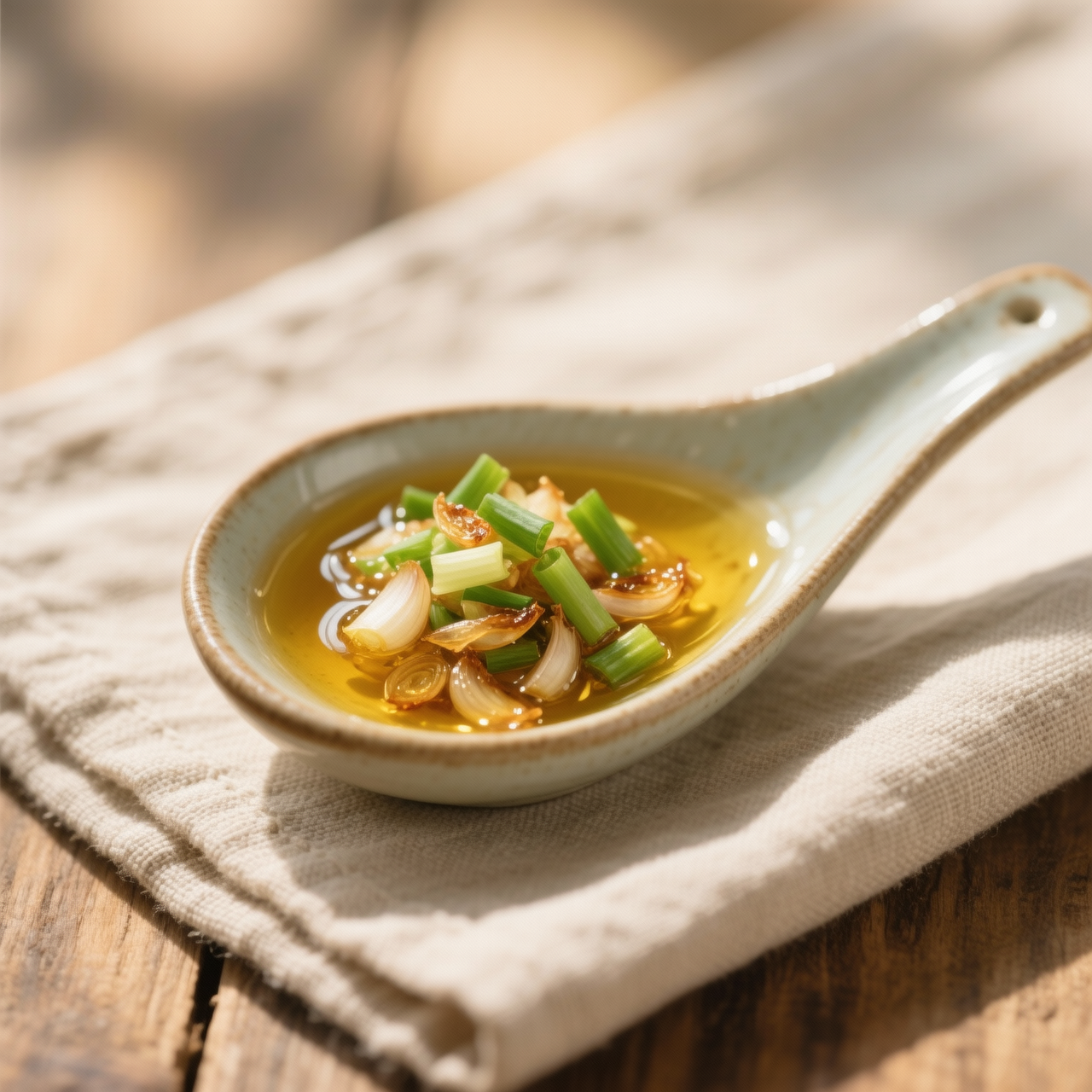
Scallion Oil (Mo Hanh)
When I first learned to make mỡ hành in my grandmother’s kitchen, I thought it was just a quick trick, a way to dress up plain rice with whatever grew in the backyard. But as I’ve cooked my way through Vietnamese home kitchens and street stalls, I’ve come to understand that this scallion oil is actually a quiet masterclass in restraint and timing. Its origins are deeply tied to everyday resourcefulness, where cooks took inexpensive green onions, vegetable oil, and a pinch of salt to create a fragrant, glossy finish that elevates everything from broken rice bowls to charred tofu. What makes it so vital to the cuisine is its ability to deliver a sudden, bright contrast: the hot oil wilts the scallions just enough to release their sharp, oniony sweetness while preserving a tender bite, and the salt acts as both a preservative and a flavor amplifier. For those of us cooking plant-based, it’s an indispensable tool, bringing a savory richness that mimics the mouthfeel of animal fats without compromising the dish’s clean profile. The most common mistake I see is treating it like a deep fry. Crank the heat too high, and you’ll scorch the greens into a bitter, papery ruin. Rush the cooling process, and the residual heat will turn your vibrant green garnish into a dull, mushy sludge. The secret is patience: warm the oil gently until it just shimmers, pour it carefully over tightly packed, finely sliced scallions, and let it rest until the sizzle fades completely. When done right, it keeps its vivid color and delivers that unmistakable, aromatic punch that turns a simple meal into something deeply comforting.
Nutrition
| Per serving | Calories | Protein | Carbs | Fat | Sat fat | Fibre | Sugar | Sodium |
|---|---|---|---|---|---|---|---|---|
| beginner | 280kcal | 1g | 4g | 30g | 4g | 1g | 2g | 290mg |
| intermediate | 245kcal | 0g | 1g | 27g | 4g | 1g | 0g | 285mg |
| expert | 125kcal | 1g | 2g | 14g | 2g | 0g | 1g | 45mg |
Per serving · Ava-estimated — a guide, not a clinical figure.
- 150 gScallion— Trimmed, washed, dried thoroughly, and finely sliced into thin rounds
- 120 mlVegetable oil— Neutral-tasting oil such as canola, sunflower, or grapeseed
- 3 gSalt— Fine grain, mixed in to draw out moisture and preserve vibrant color
This beginner-friendly version of Mỡ Hành prioritizes safety, visual cues, and forgiving techniques so you can build confidence without worrying about scorching your first batch. Instead of relying on precise thermometers or advanced knife work, you will use a straightforward stovetop method with clear temperature markers: look for gentle shimmering in the oil and tiny, lazy bubbles around the edges rather than aggressive smoking or popping. If you are nervous about handling hot oil, we include a foolproof microwave alternative. The single most important watch-point is moisture control. You must pat the scallions completely dry before they meet the hot oil to prevent dangerous splashing and steam burns. You will also practice the gentle wilting technique, where the heated liquid softly cooks the greens without frying them, preserving their vibrant color and fresh, aromatic punch. Seasoning happens entirely off the heat, and a quick taste adjustment guarantees a perfectly balanced condiment every time. Store your batch in a clean, sealed jar in the refrigerator for up to a week. This streamlined approach removes guesswork, giving you a reliable, restaurant-quality garnish on your very first attempt.
Equipment
- Small heavy-bottomed saucepan— even heat distribution prevents localized hot spots
- Heatproof glass bowl— must withstand sudden temperature changes without cracking
- Silicone spatula or wooden spoon— for gentle, continuous stirring during oil pour
- Airtight glass storage jar— for refrigeration and portion control
Method
- 1
Wash the scallion bunches and thoroughly pat every layer completely dry with paper towels.
Any lingering moisture will cause violent splattering when it contacts hot oil.
drying~ 2 minTricky bit - 2
Trim the root ends and dark tips, then finely chop the white and green parts into uniform 1/4-inch pieces.
Uniform sizing ensures every piece wilts at the same rate.
chopping~ 3 min - 3
Place the chopped scallions in a heatproof bowl and sprinkle evenly with salt.
Resting for a few minutes draws out surface moisture that could cause splashing.
resting~ 3 min - 4
Heat the neutral oil in a small saucepan over medium-low until it shimmers and a wooden skewer dipped into it produces tiny, steady bubbles.
Do not let the oil smoke; aim for roughly 300°F (150°C) for a gentle cook.
tempering~ 4 minTricky bit - 5
Carefully pour the hot oil over the scallions and immediately stir gently until all greens are coated and slightly softened.
The mixture will sizzle loudly; step back slightly and keep the spoon moving to prevent burning.
wilting~ 1 min - 6
Let the infused oil cool completely at room temperature before transferring to a clean, airtight jar.
The oil will naturally thicken when chilled; spoon or drizzle as needed.
steeping~ 20 min
Cooking from frozen
Thaw overnight in the refrigerator, bring to room temperature, and whisk thoroughly to recombine before drizzling.
Storage times are a guide — always use your judgement and store food safely.