
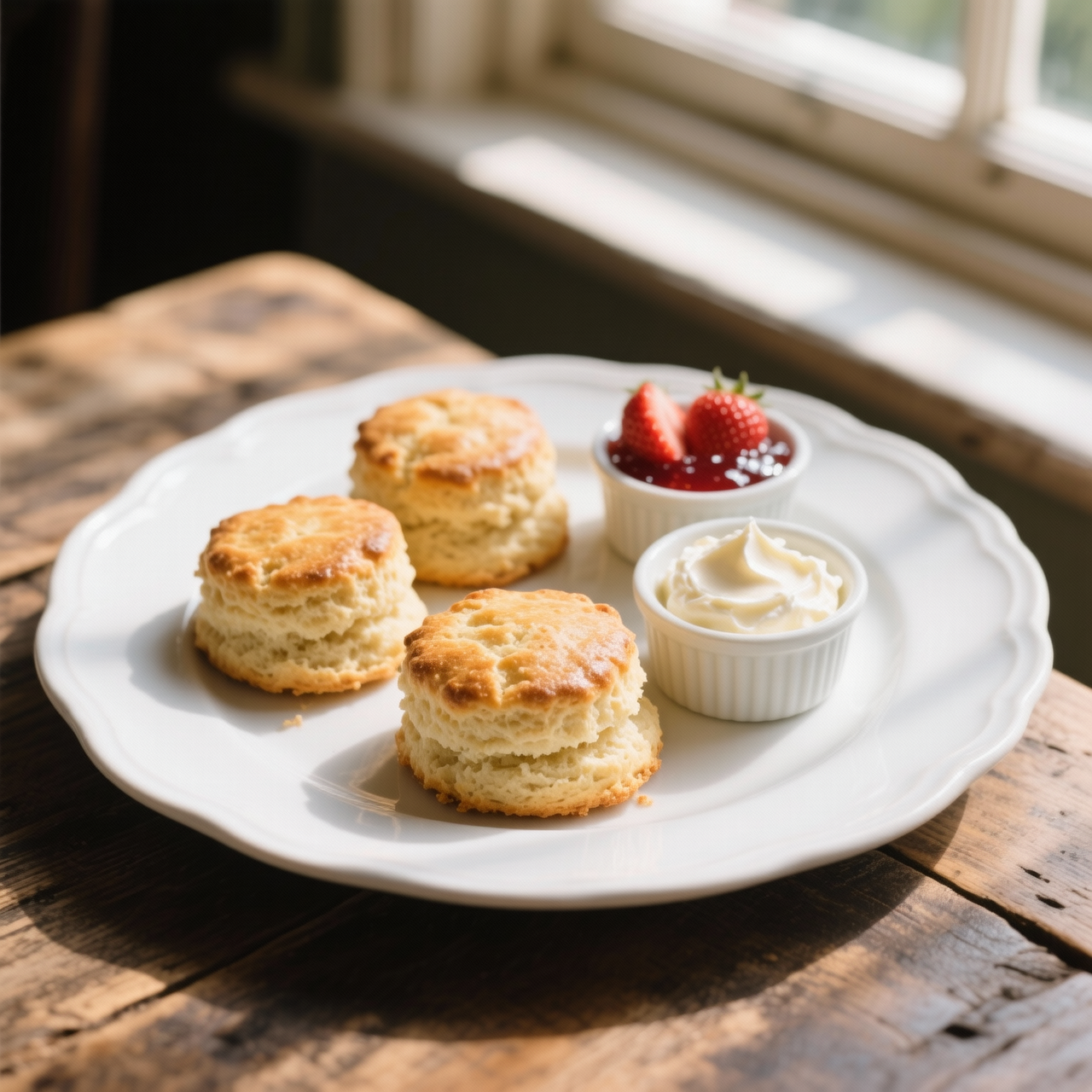
Scones
There is something profoundly comforting about the ritual of a British cream tea, and at its heart sits the humble scone. Originating in 19th-century Scotland as dense oatmeal bannocks, they evolved into the light, wheat-based treats we know today once baking powder became widely available. I cannot stress enough how vital it is to make these from scratch rather than relying on supermarket plastic-wrapped packets or overpriced café versions. Shop-bought scones often cost upwards of two pounds each in tea rooms, or come in multipacks that are disappointingly dry, dense, and loaded with preservatives and palm oil to survive weeks on a shelf. By contrast, baking them at home costs mere pennies per portion and delivers a tender, craggy crumb that practically melts when split open. The secret lies in treating the dough with absolute reverence. The most common pitfall is overworking the mixture; you must rub cold butter into the flour until it resembles breadcrumbs, then bring it together with a light hand and just enough cold milk to form a soft dough. When cutting, press straight down and pull straight up—never twist the cutter, or you will seal the edges and stunt the rise. While they are best eaten warm on the day of baking, they are a brilliant batch hero. Bake a large batch, freeze the leftovers, and you will always have the foundation for a perfect afternoon tea ready to thaw and warm in minutes.
Nutrition
| Per serving | Calories | Protein | Carbs | Fat | Sat fat | Fibre | Sugar | Sodium |
|---|---|---|---|---|---|---|---|---|
| beginner | 370kcal | 8g | 53g | 14g | 9g | 2g | 5g | 310mg |
| intermediate | 520kcal | 9g | 62g | 26g | 16g | 2g | 11g | 420mg |
| expert | 390kcal | 7g | 52g | 16g | 10g | 2g | 8g | 450mg |
Per serving · Ava-estimated — a guide, not a clinical figure.
- 225 gself-raising flour— plus extra for dusting
- 55 gbutter— cold and diced
- 10 gcaster sugar
- 100 mlmilk— plus extra for glazing
- 1 gsalt
Shop-bought scones cost around £3 for a pack of four, yet they are often dry, crumbly, and loaded with preservatives like calcium propionate to extend their shelf life. Making them from scratch is remarkably cheap and yields a tender, buttery crumb that supermarket versions simply cannot match. At the beginner level, we bypass the traditional, intimidating rubbing-in method that often leads to melted butter and tough scones. Instead, we use a simple trick: grating frozen butter directly into the flour. This ensures perfect, pea-sized butter distribution without the heat of your hands ruining the texture. Watch out for overmixing the dough once the milk is added; a shaggy, slightly sticky dough is exactly what you want. Handle it as little as possible to keep the gluten relaxed, ensuring your scones rise tall and light rather than spreading into dense biscuits. This straightforward approach guarantees a confident first attempt at a British baking staple, perfect for freezing and enjoying with jam and cream later.
Equipment
- Box grater— Essential for the frozen butter trick
- Large mixing bowl— Wide enough to toss the grated butter easily
- Baking sheet— Flat and sturdy
- Round pastry cutter— About 5cm wide; a clean glass works in a pinch
Method
- 1
Preheat your oven to 220°C (200°C fan) and line a large baking sheet with parchment paper.
A hot oven is critical for the initial rise.
preheating~ 10 min - 2
Sift the plain flour, baking powder, and salt into a large mixing bowl, then stir in the caster sugar.
Sifting aerates the flour and distributes the raising agents evenly.
sifting~ 2 min - 3
Coarsely grate the frozen butter directly into the flour mixture, tossing gently with your hands to coat every strand in flour.
Keep the butter frozen until the exact moment you grate it to prevent melting.
grating~ 3 min - 4
Pour in the cold whole milk and mix with a wooden spoon until a shaggy, slightly sticky dough forms.
Stop mixing as soon as no dry flour remains; overworking develops gluten and makes them tough.
mixing~ 1 min - 5
Turn the dough onto a lightly floured surface, gently pat it into a 3cm thick rectangle, and stamp out rounds using a fluted cutter.
Push the cutter straight down and pull straight up; twisting seals the edges and stops them rising.
cutting~ 5 minTricky bit - 6
Place the scones on the prepared baking sheet and bake until well-risen and golden brown on top.
They should sound hollow when tapped on the base.
baking~ 15 min
Cooking from frozen
Thaw at room temperature and warm in a moderate oven for five minutes before serving.
Storage times are a guide — always use your judgement and store food safely.