
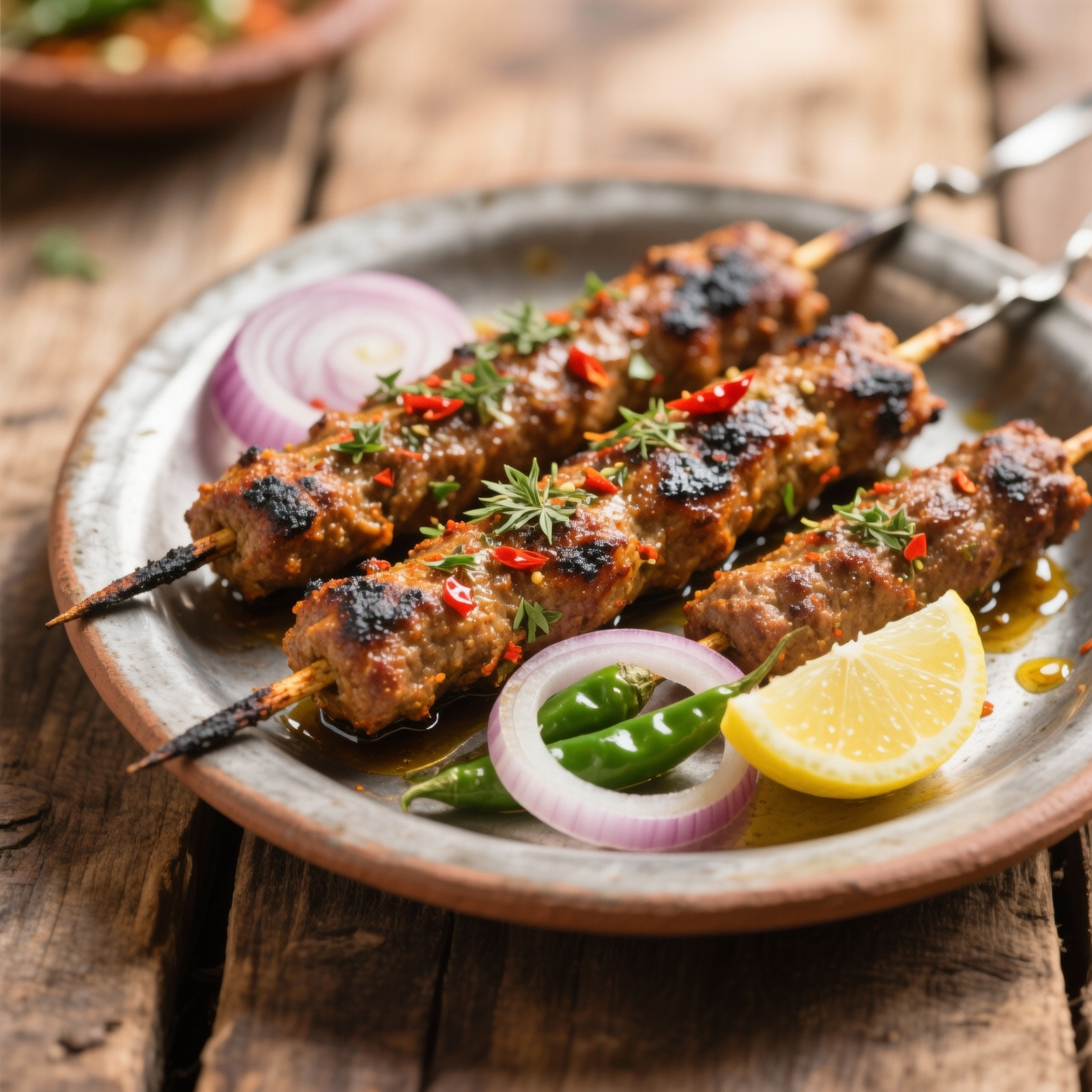
Seekh Kebabs
When I first learned to shape seekh kebabs in a cramped Lahore kitchen, I quickly understood that this isn’t just minced meat threaded onto metal rods; it’s a lesson in patience, texture, and spice balance. Historically rooted in the Mughal courts but perfected by Pakistani street vendors, the seekh kebab relies entirely on the integrity of its ingredients. Today, you’ll find pale, rubbery frozen versions in supermarket freezers for barely two pounds, but they’re packed with fillers, excessive sodium, and that unmistakable artificial smoke flavor that masks poor meat quality. Making them from scratch isn’t merely a culinary upgrade—it’s a reclamation of what this dish actually is. The magic happens when raw, cold lamb or beef is kneaded thoroughly with freshly toasted cumin, coriander, and green chilies until it transforms into a sticky, cohesive paste. That stickiness is non-negotiable. The most common pitfall I see is rushing the kneading or using meat that’s too lean or too warm; the fat melts before it hits the grill, and the kebabs simply slide off the skewers. Another frequent mistake is overloading the mixture with raw onion juice without wringing it out, which guarantees a mushy, falling-apart result. I always insist on hand-chopping the herbs rather than blitzing them in a food processor, as bruised blades turn vibrant cilantro and mint into a bitter, weeping slurry. When you commit to building these by hand, using nothing but whole spices and fresh binders, you create something that snaps satisfyingly when bitten and releases a clean, smoky char that no factory line could ever replicate. It’s a dish that rewards attention, and it scales beautifully for batch preparation.
Nutrition
| Per serving | Calories | Protein | Carbs | Fat | Sat fat | Fibre | Sugar | Sodium |
|---|---|---|---|---|---|---|---|---|
| beginner | 385kcal | 28g | 6g | 26g | 11g | 1g | 3g | 580mg |
| intermediate | 390kcal | 28g | 3g | 29g | 11g | 1g | 1g | 580mg |
| expert | 385kcal | 29g | 6g | 28g | 10g | 1g | 3g | 620mg |
Per serving · Ava-estimated — a guide, not a clinical figure.
- 500 gLamb mince— Preferably 80% lean, 20% fat for optimal moisture
- 100 gOnion— Finely grated and excess moisture thoroughly squeezed out
- 15 gFresh ginger— Peeled and finely grated
- 10 gGarlic clove— Peeled and finely minced
- 20 gFresh cilantro— Leaves only, finely chopped
- 10 gGreen chili— Finely chopped, adjust to heat preference
- 5 gCumin powder
- 5 gCoriander powder
- 3 gRed chili powder— Adjust to desired spice level
- 3 gGaram masala
- 6 gSalt— Or to taste
- 1 pieceLarge egg— Lightly beaten, acts as a binder
- 15 mlVegetable oil— For lightly coating hands and skewers
While premium shop-bought seekh kebabs typically cost upwards of $12 per pack and rely on cheap starch fillers, artificial smoke flavorings, and excessive sodium, this from-scratch approach delivers authentic Pakistani flavor for under $4 per portion. This beginner version strips away the intimidation of traditional skewered meat without sacrificing quality. The key difference here is technique simplification: instead of mastering complex hand-pressing on hot metal skewers, you will shape the mixture into uniform cylinders using wide, flat skewers or even a sturdy spatula, which dramatically reduces sticking and tearing. Watch closely for moisture balance; if the mixture feels too wet to hold its shape, a brief twenty-minute rest in the refrigerator will firm the natural meat proteins. The spice blend is gently toasted to awaken the flavors without burning, and the mixture is kneaded just until it becomes slightly tacky, ensuring the kebabs stay intact during grilling or pan-frying. This approach guarantees a forgiving first attempt with juicy results every time.
Equipment
- Wide flat metal skewers— Essential for easy shaping and turning
- Large mixing bowl— Roomy enough for vigorous kneading
- Grill pan or cast iron skillet— Must be preheated before cooking
Method
- 1
Toast the whole spices in a dry pan over medium heat until fragrant, then grind them into a fine powder.
Do not let the seeds smoke or they will turn bitter.
toasting~ 2 min - 2
Finely grate the onion and squeeze out all excess liquid using a clean kitchen towel before adding it to the mixing bowl.
Removing water is critical to prevent the mixture from falling apart.
moisture-extraction~ 3 minTricky bit - 3
Add the minced meat, ground spices, chopped cilantro, green chilies, and ginger-garlic paste to the bowl, then knead vigorously for three minutes until the mixture turns sticky and cohesive.
The proteins will bind together naturally without binders.
kneading~ 3 min - 4
Cover the bowl tightly and refrigerate for at least twenty minutes to firm the fat and improve binding.
Cold meat shapes much more easily on the skewer.
chilling~ 20 min - 5
Divide the meat into equal portions, press each firmly around a lightly oiled skewer, and smooth the surface with damp hands to seal any cracks.
Uniform thickness ensures even cooking.
molding~ 5 minTricky bit - 6
Cook the kebabs on a preheated grill pan over medium-high heat, turning every two minutes until deeply browned and fully cooked through.
Avoid moving them too early to develop a proper crust.
searing~ 10 min
Cooking from frozen
Cook directly from frozen on a medium grill or in a hot oven, turning frequently until fully cooked through and lightly charred.
Storage times are a guide — always use your judgement and store food safely.