
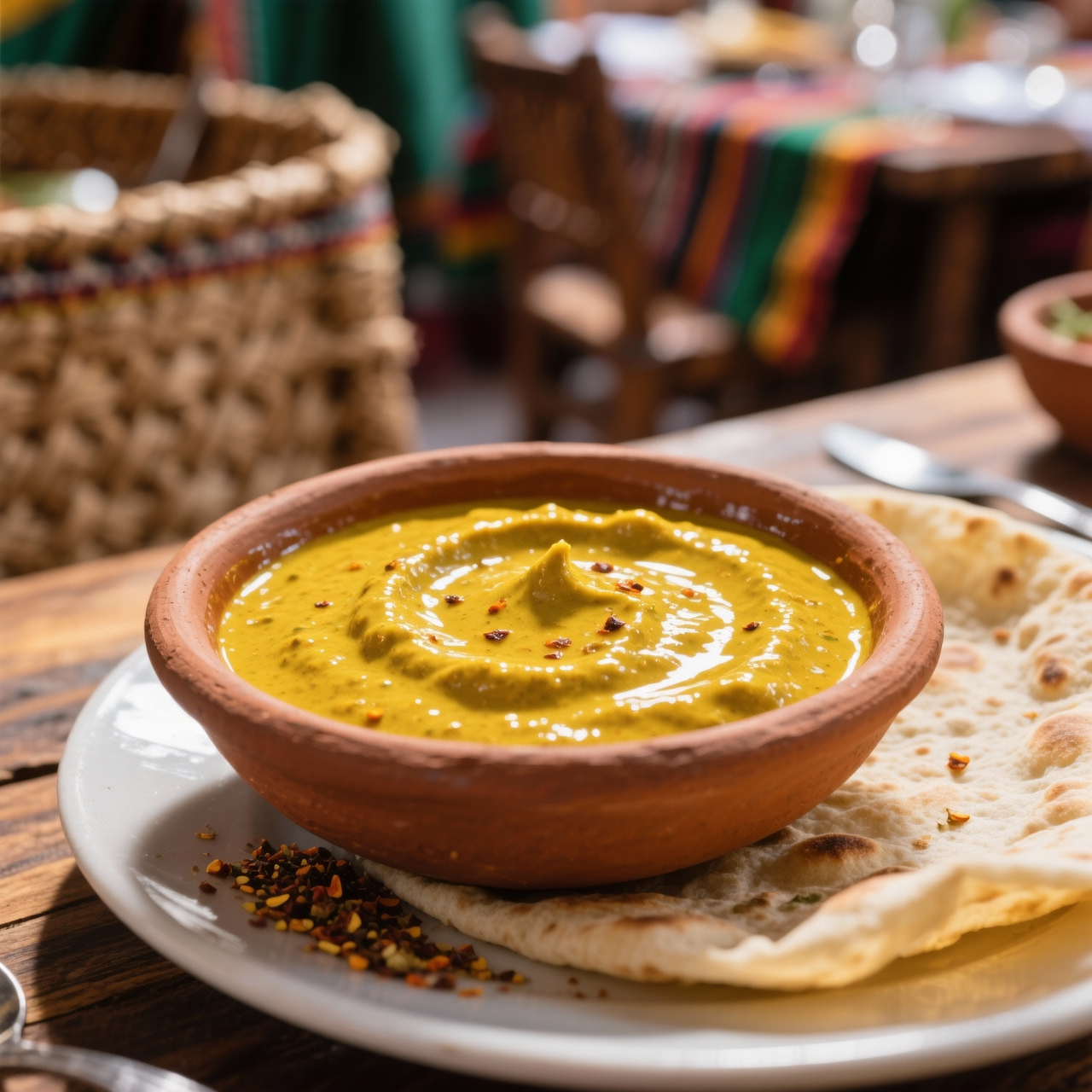
Senafich (Ethiopian mustard)
When I first encountered senafich in an Addis Ababa kitchen, I was immediately struck by how something so fundamentally simple could carry such profound heat and depth. At its core, senafich is an Ethiopian mustard paste that bridges the gap between a sharp table condiment and a foundational spice blend. Unlike Western mustards that rely heavily on vinegar and sugar, traditional senafich leans into toasted yellow or brown mustard seeds, ground fine and hydrated with water, niter kibbeh, or a touch of oil, sometimes finished with a whisper of berbere or turmeric for color and warmth. It matters because it represents a quieter, essential rhythm in Ethiopian cooking—a condiment that cuts through rich stews, brightens injera rolls, and stands proudly on its own as a palate-cleansing kick. Yet, making it at home is where many stumble. The most common pitfall is rushing the hydration process, which leaves the mustard aggressively bitter and gritty instead of mellowing into that signature pungent heat. Another frequent misstep is overcooking or over-heating the mixture after grinding, which dulls the volatile isothiocyanates responsible for that sharp nasal hit. I always remind myself to let the ground seeds rest in cool water for at least twenty minutes before whisking in the fat, allowing the enzymes to work their magic without turning acrid. This patience transforms a harsh powder into a smooth, complex paste that lingers beautifully. When done right, senafich becomes an indispensable companion to any meal, proving that true flavor doesn’t require complexity, just respect for the ingredient and time to let it breathe.
Nutrition
| Per serving | Calories | Protein | Carbs | Fat | Sat fat | Fibre | Sugar | Sodium |
|---|---|---|---|---|---|---|---|---|
| beginner | 35kcal | 2g | 2g | 3g | 0g | 1g | 0g | 190mg |
| intermediate | 38kcal | 2g | 2g | 3g | 0g | 2g | 1g | 195mg |
| expert | 38kcal | 2g | 3g | 3g | 0g | 1g | 1g | 290mg |
Per serving · Ava-estimated — a guide, not a clinical figure.
- 80 gmustard seed— Finely ground into powder before use
- 120 mlwater— Room temperature
- 4 gsalt— Fine grain
- 1 gturmeric powder(optional)— Provides traditional color
- 2 clovegarlic clove(optional)— Finely grated
This beginner-friendly approach bypasses the traditional labor of soaking and grinding whole mustard seeds, relying instead on high-quality pre-ground mustard powder or a prepared mustard paste as your base. The key to success here is temperature control: mustard’s signature sharpness comes from an enzyme reaction that is quickly destroyed by high heat. After mixing your powder with lukewarm water and letting it rest to fully activate, you will gently fold it into lightly warmed oil in a heavy pan. Keep the heat at the lowest possible setting, stirring constantly for just a few minutes to meld the flavors without cooking out the pungency. Watch for the mixture to thicken slightly and release a clean, nasal-clearing aroma—that is your cue to remove it from the heat immediately. Adding salt at the end helps stabilize the emulsion and preserves the heat. This method guarantees a reliable, vibrant condiment in under twenty minutes, perfect for drizzling over injera, roasted vegetables, or grain bowls. Store it in a sealed jar in the refrigerator, where it will continue to mellow and develop over the next few days.
Equipment
- Small mixing bowl— glass or ceramic works best for heat retention
- Heavy-bottomed pan— non-stick is fine here
- Whisk— silicone or wire
- Silicone spatula(optional)— for gentle folding
Method
- 1
Whisk mustard powder and lukewarm water in a small bowl until completely smooth.
Water should be warm, not hot, to preserve enzymatic heat.
hydrating~ 2 min - 2
Let the mixture sit uncovered for ten minutes to fully activate the mustard compounds.
Covering it traps the volatile oils that create the signature sharp bite.
resting~ 10 min - 3
Gently warm the oil in a heavy-bottomed pan over the lowest heat setting.
Oil should shimmer but never smoke.
tempering~ 2 min - 4
Fold the rested mustard paste into the warm oil and stir constantly for two minutes.
Continuous agitation prevents the bottom from scorching.
emulsifying~ 2 minTricky bit - 5
Remove the pan from the heat immediately and stir in salt and any chosen spices.
Residual heat will continue to thicken the condiment safely.
finishing~ 1 min
Cooking from frozen
Thaw completely in the refrigerator overnight and whisk vigorously to recombine separated oils; no reheating is necessary.
Storage times are a guide — always use your judgement and store food safely.