
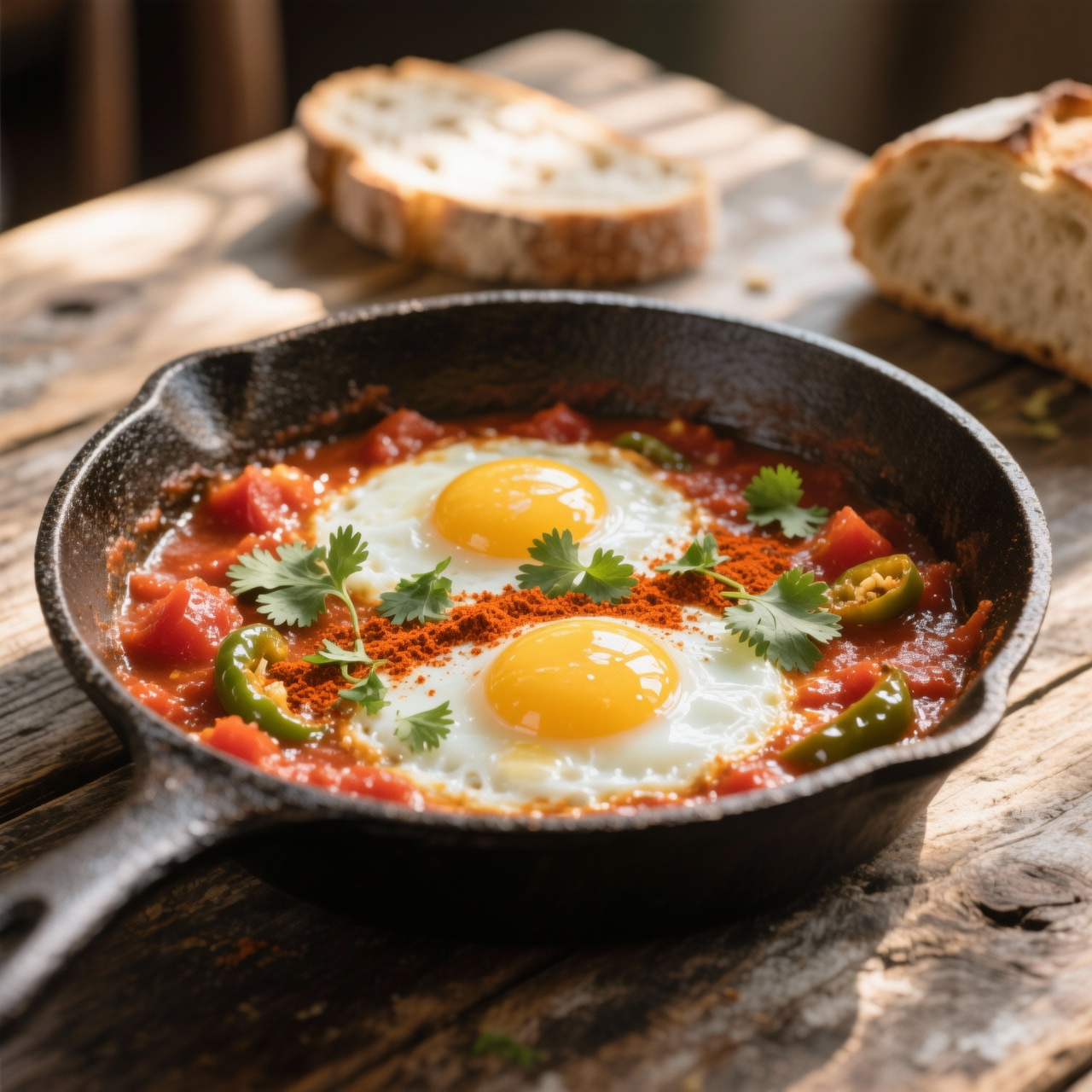
Shakshuka
When I first learned to coax shakshuka into being, I thought it was simply a matter of cracking eggs into simmering tomatoes. I quickly discovered that this North African staple, deeply rooted in Moroccan morning rituals, demands a quiet kind of patience. Historically, it emerged as a humble, resourceful dish across the Maghreb, transforming pantry staples like tomatoes, bell peppers, and warm spices into a vibrant communal breakfast that still graces family tables from Marrakech to Casablanca. For me, shakshuka matters because it refuses to be rushed; it asks you to linger at the stove, to let cumin, smoked paprika, and harissa bloom slowly in olive oil until the kitchen smells like a sunlit courtyard. The true magic lies in the balance, rich but not heavy, spicy but never overwhelming. Yet so many cooks stumble on the same pitfalls. I have seen too many versions drown in a watery, under-reduced sauce that never clings to the eggs, or worse, eggs that are overcooked to rubbery perfection, stripping away that luxuriously runny yolk meant to mingle with the sauce. The secret is gentle heat and a tight lid, allowing the whites to set while the yolks remain tender. It is a dish that teaches you to trust the simmer, to taste as you go, and to understand that breakfast can be both a quiet ritual and a bold declaration of flavor. When done right, shakshuka becomes more than a meal; it is a shared pause in the morning, a reminder that simplicity, when treated with care, yields something profoundly sustaining.
Nutrition
| Per serving | Calories | Protein | Carbs | Fat | Sat fat | Fibre | Sugar | Sodium |
|---|---|---|---|---|---|---|---|---|
| beginner | 330kcal | 14g | 22g | 22g | 5g | 6g | 10g | 1020mg |
| intermediate | 330kcal | 14g | 22g | 22g | 5g | 6g | 10g | 1020mg |
| expert | 330kcal | 14g | 22g | 22g | 5g | 6g | 10g | 1020mg |
Per serving · Ava-estimated — a guide, not a clinical figure.
- 60 mlolive oil— extra virgin, high quality
- 200 gyellow onion— finely diced
- 150 gred bell pepper— diced, seeds removed
- 20 ggarlic clove— peeled and minced
- 30 gtomato paste— concentrated
- 800 gwhole peeled tomato— canned, San Marzano preferred
- 10 gground cumin— freshly ground if possible
- 5 gsmoked paprika— Spanish or Hungarian
- 5 gground coriander— freshly toasted and ground
- 2 gcayenne pepper— adjust to heat preference
- 6 countlarge egg— room temperature for even cooking
- 10 gkosher salt— fine grain
- 3 gblack pepper— freshly cracked
- 15 gfresh cilantro— leaves and tender stems only
This version prioritizes confidence and clarity over culinary tradition, making it the perfect entry point for your first skillet. While the ingredient list remains identical, your approach relies on streamlined techniques that guarantee success without demanding constant attention. You will gently sweat the aromatics until translucent, allowing measured spices to bloom without burning. The tomatoes are simply crushed and simmered until thickened, eliminating the need for complex layering or reduction monitoring. When adding the eggs, the key is maintaining a gentle, steady heat rather than a rolling boil. Create small wells in the sauce, crack the eggs directly into them, and cover the pan immediately to trap steam. This hands-off poaching method prevents rubbery whites and ensures the yolks stay luxuriously runny. Watch closely for the moment the edges turn fully opaque, which usually happens within minutes. Remove from heat while the centers still jiggle slightly, allowing residual warmth to finish the cooking process. Garnish simply and serve directly from the pan with plenty of bread. The goal is a reliable breakfast that builds your intuition for timing and heat control.
Equipment
- heavy-bottomed pan— non-stick is perfectly fine here
- spatula— heat-resistant silicone preferred
- measuring spoons— for accurate spice ratios
- small bowl(optional)— to crack eggs before adding
Method
- 1
Heat olive oil in a large skillet over medium heat.
Pan should shimmer but not smoke.
heating~ 1 min - 2
Add onion and bell pepper, stirring occasionally until softened.
Vegetables should glisten but not brown.
sweating~ 5 min - 3
Stir in tomato paste, cumin, paprika, coriander, and cayenne for one minute.
Fragrance should hit the air immediately.
blooming~ 1 minTricky bit - 4
Pour in whole peeled tomatoes and salt, crushing gently with a spoon, then simmer until thickened.
Sauce should coat the back of a spoon.
reducing~ 10 min - 5
Make six small wells in the sauce and crack an egg into each.
Keep yolks intact for even cooking.
nesting~ 2 minTricky bit - 6
Cover the skillet and cook until egg whites are fully set.
Remove from heat while centers still jiggle.
steaming~ 5 minTricky bit - 7
Sprinkle with black pepper and fresh cilantro before serving.
Garnish while sauce is still bubbling gently.
finishing~ 1 min